
What Is Visual Storytelling: A Complete Guide to Building Stories
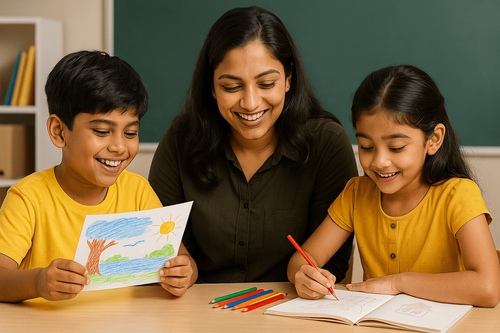

Table of Contents
- Understanding the Basics: What Is Visual Storytelling
- Why Visual Storytelling Works
- The Psychology Behind Visual Storytelling
- Elements of a Strong Visual Story
- 5. Resolution
- How Visual Storytelling Helps Develop Communication Skills
- What Is Visual Storytelling in Education and Learning
- Why Iswaran Is Considered a Fascinating Storyteller
- The Modern Shift: What Is Digital Storytelling
- Why Digital Storytelling Is Growing
- What Is Visual Storytelling: Step-by-Step Guide for Beginner
- Visual Storytelling Activities for Daily Practice
- How to Be a Good Storyteller Using Visual Techniques
- How Visual Storytelling Helps Build Speaking Confidence
- Using Visual Storytelling for Personality Development
- A Complete Visual Storytelling Journal: Daily Practice Bluep
- What Is Visual Storytelling: Advanced Techniques
- How PlanetSpark Helps Children Master Visual Storytelling
- Conclusion
Stories shape the way we understand the world. They help us interpret emotions, remember information, build connections, and express ourselves. While most people think of storytelling as a purely verbal or written act, visuals play a powerful, often overlooked role in how stories are created and understood. This brings us to a central question many learners and educators ask today: what is visual storytelling?
Visual storytelling is the practice of using images, drawings, symbols, sequences, or visual cues to convey a narrative. It blends imagination with observation and encourages the storyteller to express ideas in both concrete and abstract ways.
Understanding the Basics: What Is Visual Storytelling
Visual storytelling is the art of communicating ideas, emotions, and narratives through images. Instead of relying only on words, it uses:
drawings
comic panels
storyboards
picture sequences
symbols
photographs
illustrations
digital visuals
A visual story does not need detailed text. Sometimes a single image is powerful enough to convey a complete message. Think of a child drawing a stormy cloud above a small stick figure. Without a single word, you understand the mood, situation, and meaning.
When we ask what is visual storytelling, the core answer is simple: it is storytelling through what we can see, imagine, interpret, and illustrate.
Why Visual Storytelling Works
Visual storytelling works because the human brain processes visuals faster than text. Research suggests that:
Images are understood in less than a second
The brain remembers visuals more strongly
Visual cues help form emotional connections
Pictures allow people to interpret meaning creatively
This makes visual storytelling a powerful tool for both children and adults.
The Psychology Behind Visual Storytelling
Visuals touch parts of the brain responsible for imagination, pattern recognition, memory, and emotion. When a story begins with images, the brain immediately forms connections without overthinking. This leads to:
stronger comprehension
better emotional response
faster recall
richer imagination
improved expression
For children, visuals help structure thoughts. For adults, visuals encourage clarity and creativity. That is why visual storytelling is widely used in classrooms, presentations, movies, advertising, therapy, and creative writing.
Elements of a Strong Visual Story
To truly understand what is visual storytelling, you must understand its core elements. A compelling visual story usually includes the following components:
1. Characters
Even simple shapes can represent characters. The way they are drawn, placed, or coloured shows their personality or emotional state.
2. Setting
A background sketch, a location hint, or a symbolic environment is enough to create context.
3. Conflict or Emotion
A story needs tension, curiosity, or emotion. Visuals like storms, broken objects, shadows, or contrasting colours express this beautifully.
4. Sequence
Pictures arranged in order show the transformation or progression of the story.
5. Resolution
The final image provides closure. It may solve a conflict, deliver a message, or end on a thoughtful note.
6. Symbolism
Objects often carry meaning. A flame may show hope. A rope may represent connection. A bird may signify freedom.
Great visual storytellers balance these elements intentionally or instinctively.
How Visual Storytelling Helps Develop Communication Skills
Visual storytelling strengthens communication in multiple ways:
improves clarity of expression
helps articulate abstract thoughts
makes complex ideas easier to understand
builds confidence in presenting ideas
enhances imagination and creativity
strengthens emotional awareness and empathy
supports both speaking and writing skills
Children who practice visual storytelling often become better speakers and writers because visuals organise their thinking.
What Is Visual Storytelling in Education and Learning
Teachers and educators often use visual storytelling because it supports diverse learners. It works particularly well for:
Visual learners
Children with speech hesitation
Students who struggle with writing
Early learners are developing vocabulary
Children learning sequencing and structure
A simple drawing prompt in class can spark discussion, teamwork, analysis, and creativity. It can also help students express emotions they cannot yet put into words.
Help your child express ideas with confidence and creativity.
Enroll now in PlanetSpark’s Visual Storytelling and Communication Program.
Why Iswaran Is Considered a Fascinating Storyteller
While this blog focuses on what is visual storytelling, your secondary keyword requires us to address a classic question: is Iswaran a fascinating storyteller?
Iswaran, from R. K. Narayan’s story “Iswaran the Storyteller,” is often celebrated for his dramatic narration, imaginative exaggeration, and powerful ability to hold an audience. He uses tone, expression, and rhythm to breathe life into stories.
What makes Iswaran fascinating is that he blends visual imagination with spoken description. Even without drawings, his words create vivid mental images. Readers can almost see the ghostly roads, wild elephants, and dramatic scenes he describes. In that sense, Iswaran embodies the essence of visual storytelling through verbal expression.
Analysing him helps us understand how to be a good storyteller:
use vivid imagery
build suspense
pace your delivery
use expressive tone and body language
make the listener imagine the scene
This connection strengthens the bridge between verbal and visual storytelling.
The Modern Shift: What Is Digital Storytelling
Another important aspect of your keyword set is understanding what is digital storytelling and how it relates to visuals.
Digital storytelling combines traditional story elements with digital tools such as:
images
animations
slides
video clips
audio narration
interactive elements
digital art
comics and graphic panels
Digital storytelling makes it easier to blend visuals, voice, music, and text to create immersive stories.
Don’t wait for confidence to build on its own. Give your child the right tools today.
Book a free trial class with PlanetSpark’s expert communication coaches.
Why Digital Storytelling Is Growing
It captures attention quickly
It matches modern learning styles
It allows easy sharing
It improves digital literacy
It motivates children to create
It helps shy speakers communicate confidently
Digital storytelling is a natural extension of visual storytelling, especially in classrooms and home learning environments.
What Is Visual Storytelling: Step-by-Step Guide for Beginners
If you want a simple, structured way to build visual storytelling skills, here is a practical guide:
Step 1: Start With a Prompt
Pick an object, emotion, location, or situation.
Examples:
a lost key
a rainy day
a mysterious door
Step 2: Draw the First Scene
Keep it simple. Focus on shapes and emotions.
Step 3: Add Characters
Give your characters expressions, actions, or unique traits.
Step 4: Build a Sequence
Use two to six frames.
Each frame should show a small change.
Step 5: Show Emotion
Use colours, angles, or expressions to show how characters feel.
Step 6: Create a Conflict
This is the turning point.
Examples:
a challenge
a mystery
a fear
a problem
Step 7: Resolve the Story
Show how the character grows or what they learn.
Step 8: Add a One-Line Message
This reinforces the theme without overpowering the visuals.
Visual Storytelling Activities for Daily Practice
Here are effective activities to build consistency and creativity:
1. Picture Sequencing
Give a child three random pictures and ask them to arrange them into a logical story.
2. Story Drawing Challenge
Pick a word and draw a story around it.
3. Comic Strip Creation
Simple boxes with stick figures are enough to build narrative confidence.
4. Memory Sketching
Look at an image for 10 seconds; close your eyes and recreate it.
5. Emotion Panels
Draw characters expressing different emotions.
6. Storyboarding Everyday Life
Sketch the steps of a morning routine or a day at school.
How to Be a Good Storyteller Using Visual Techniques
Your secondary keyword, how to be a good storyteller, aligns perfectly with visual storytelling skills. Good storytellers:
use imagery intentionally
create clear sequences
show emotions visually
use pacing and suspense
make characters relatable
use contrast and symbolism
connect visuals to a deeper message
Visual tools help beginners become strong storytellers because they simplify structure.
Unlock stronger imagination, clearer speech, and powerful storytelling skills.
Get your child started with PlanetSpark’s interactive learning sessions.
How Visual Storytelling Helps Build Speaking Confidence
Use visual aids as anchors. When someone looks at a drawing they created, they remember:
What happens next
What emotion did they want to show
What details matter
This reduces hesitation and increases fluency.
Children often speak more confidently when describing a picture than when delivering a memorised speech. Visual cues support improvisation, which builds both clarity and confidence.
Using Visual Storytelling for Personality Development
Visual storytelling strengthens personality traits such as:
creativity
emotional expression
problem-solving
confidence
leadership
empathy
reflective thinking
Each image becomes a safe space for exploration, interpretation, and communication.
A Complete Visual Storytelling Journal: Daily Practice Blueprint
If you want to build a daily habit, here is a journal format you can follow:
Daily Sections
A visual prompt of the day
A quick sketch or comic frame
Emotion tag (happy, confused, scared, curious)
A one-line summary
A reflection question such as:
What surprised you in today’s story?
How did the character change?
Weekly Activities
story expansion
character redesign
colour symbolism challenge
perspective shift (tell story from another character’s angle)
This routine improves imagination, expression, and storytelling structure.
What Is Visual Storytelling: Advanced Techniques
1. Cinematic Framing
Use wide, close-up, or angled frames to add drama.
2. Colour Psychology
Warm colours can show excitement.
Cool colours can show sadness.
3. Symbolic Objects
A broken pencil can show frustration.
A rising sun can show hope.
4. Environmental Storytelling
Objects in the background hint at personality or conflict.
5. Layering
Include foreground, background, and action layers to create depth.
How PlanetSpark Helps Children Master Visual Storytelling
PlanetSpark’s programs build the core skills children need to understand visuals, craft narratives, and express ideas with clarity. Through guided activities and personalised feedback, kids learn to turn images and scenes into meaningful stories.
Teaching the Basics of Visual Storytelling
Children learn how visuals communicate emotion, context, and meaning. Trainers break down scenes, characters, and expressions into simple storytelling elements.
Strengthening Observation and Interpretation
Kids practise interpreting images through:
picture prompts
scene analysis
character emotion identification
These activities train them to notice details and understand visual cues.
Building Stories From Visuals
Children create narratives using:
image sequences
comic panels
real-life photographs
They learn to form structured plots with beginnings, conflict, and resolutions.
Conclusion
Visual storytelling is a powerful tool that blends imagination, expression, and emotional intelligence. It helps children and adults articulate ideas clearly, build confidence, and understand the world creatively. Whether through drawings, digital tools, comic strips, or picture sequences, visual storytelling strengthens both communication and comprehension. When learners practice daily, they unlock their ability to observe, interpret, and express ideas in meaningful ways. Now that you understand what is visual storytelling, you can begin exploring and applying these techniques to build richer, more confident narratives.
Frequently Asked Questions
It is the practice of telling stories using images, drawings, and visual cues instead of only words.
It is storytelling that uses digital tools like videos, photos, animations, sound, and slides.
Yes. In literature, Iswaran is known for vivid descriptions and dramatic narration that create strong visual images in the listener’s mind.
Use imagery, pacing, expression, and emotional cues. Build clear sequences and develop relatable characters.
Yes. Visual prompts reduce hesitation and help speakers recall ideas clearly.