
Learn Strong World-Building Skills in Storytelling


Table of Contents
- Understanding World-Building and Why It Matters
- Core Elements of Strong World-Building
- How to Build a Fictional World Step by Step
- World-Building Examples Children Can Learn From
- Using World-Building to Improve Storytelling Delivery
- Practicing World-Building at Home
- PlanetSpark: Structured Storytelling Growth for Children
- Final Thoughts on Building Strong World-Building Skills
World-Building helps children create vivid, engaging
story environments that make their storytelling more expressive and clear. Parents searching for world-building techniques or how to build a fictional world want their child to tell stories with stronger structure, imagination, and delivery. When children understand how to construct a fictional world, their storytelling becomes easier to follow and far more captivating.
PlanetSpark teaches young storytellers step-by-step world-building in storytelling, helping them convert imaginative ideas into organized, expressive narratives.
Understanding World-Building and Why It Matters
World-Building forms the foundation of impactful
storytelling. It shapes the environment where characters act, emotions develop and the story unfolds, giving the narrative its identity and atmosphere. When children understand world-building meaningfully, they learn how to use setting and structure to communicate more confidently and purposefully. A well-constructed world helps them make intentional storytelling choices instead of relying on scattered ideas.
A strong fictional world does not simply decorate a story. It provides direction, clarity and emotional depth, allowing young storytellers to anchor their narration in a setting that makes sense. This improves how they organize thoughts, describe scenes and guide listeners through their story with confidence and expressive detail. When children feel secure about the world they have created, their storytelling becomes more natural, fluent and engaging.

What World-Building Means for Young Storytellers
For young storytellers, World-Building means designing the setting, atmosphere, rules and emotional tone of a story in a way that brings it alive for listeners. They learn that every story takes place somewhere, and that this fictional world shapes how characters behave, how conflicts unfold and how emotions are experienced.
By creating a fictional world that feels believable, children gain confidence when narrating because they know exactly where events are happening and how characters should react within that environment. This clarity reduces hesitation during storytelling and helps children stay consistent in their narration. World-building in storytelling improves descriptive clarity and helps children hold the listener’s attention by painting a vivid mental picture. It also teaches them to think visually and emotionally, strengthening both imagination and delivery.
Why Students Struggle to Create a Fictional World
Many children imagine characters but cannot visualize the fictional world around them, which causes stories to feel incomplete or disconnected. They may jump from one idea to another without understanding how setting influences story flow. Others describe places that do not support the plot, creating confusion for listeners because the environment lacks relevance or coherence. Some young storytellers simply do not know how to translate imagination into structured storytelling and need a framework to organize their thoughts.
With guided coaching, students learn world-building techniques that help them create a fictional world that is consistent, meaningful and supportive of the story’s emotional flow. They discover how setting can build suspense, influence character actions and strengthen overall delivery. By learning how to organize their fictional world step by step, children develop smoother narration, clearer structure and stronger confidence while storytelling.
Join now with PlanetSpark to help your child become a confident and expressive storyteller.
Core Elements of Strong World-Building
World-Building becomes easier and more effective when children understand its core elements. These elements act as building blocks that help young storytellers organize ideas, maintain consistency and narrate stories with structure. When children learn how each element influences plot, character behavior and emotional tone, their storytelling becomes clearer, more immersive and more engaging for listeners. Strong world-building also reduces hesitation because children know exactly where their story is happening and why events unfold the way they do.
Setting the Physical World
The physical world includes locations, landscapes, weather and space, all of which create the visual foundation of storytelling. When children learn to describe these aspects with clarity, listeners can imagine the world easily and remain engaged throughout the narration.
By building environments that feel real, students strengthen storytelling clarity and learn how setting influences mood, pacing and emotional intensity. A detailed fictional world setting helps listeners visualize scenes and makes narration more immersive and expressive. Whether it is a quiet forest, a bustling kingdom or a futuristic city, the physical world guides how the story feels and how characters experience events.
Creating Culture, Rules and Social Systems
A believable fictional world has systems that explain how life works within it. This includes traditions, laws, languages, celebrations, hierarchy and overall social behaviour. When children create these details, their world becomes richer and more meaningful.
These cultural elements help young storytellers understand how characters should respond to situations, how conflicts may arise and how the story progresses naturally within its environment. Understanding these structures helps storytellers maintain consistency and avoid contradictions during narration, especially when telling long or complex stories. It also deepens emotional connection because the world feels purposeful rather than random.
Building Characters That Fit the World
Characters must feel naturally connected to the fictional world they inhabit. Their personalities, strengths, challenges and emotions should align with the environment and rules of the world. When children understand this connection, they begin to shape character actions and dialogue that match the setting.
This connection strengthens storytelling because events unfold in a way that feels coherent and intentional. Characters grow based on the world they live in, and listeners can follow their journey with greater clarity and interest. When world and character support each other, young storytellers deliver stories that feel complete, emotionally grounded and memorable.
Enroll now at PlanetSpark and build strong storytelling skills with expert guidance.
How to Build a Fictional World Step by Step
A step-by-step world-building process helps children convert imagination into clear, structured storytelling elements. When young storytellers learn to follow an organized sequence, they avoid confusion, maintain narrative flow and feel more confident while narrating. A structured approach also teaches them how each decision they make about the fictional world influences plot, mood and character behaviour. As children begin applying these steps consistently, their storytelling becomes more intentional, expressive and easy for listeners to visualize.
Defining the World’s Logic and Boundaries
Every fictional world needs rules that determine what is possible, what is not and how characters interact with their surroundings. These rules may include magical limits, emotional influences, physical laws or cultural expectations. When children define boundaries early, they develop a foundation that supports consistent storytelling.
Clear rules help them avoid contradictions, maintain control over narrative events and explain situations more confidently during storytelling. Defining boundaries supports clearer world-building in storytelling and helps children narrate without confusion because they always know how their world behaves. Over time, this understanding strengthens both creativity and structure, allowing children to build more compelling fictional worlds.
Designing Environments That Support the Story
Storytellers learn to design environments that shape mood, influence pacing and support narrative direction. Exciting, peaceful, mysterious or tense spaces guide how emotions unfold within the story and how listeners interpret key moments. Children discover that every scene has a purpose and that the environment must complement the action taking place.
Understanding this helps children build a fictional world that strengthens plot direction and emotional depth. Instead of simply naming places, they learn to describe environments in a way that enhances the storytelling experience. This skill makes narration richer, more engaging and more immersive for the audience.
Adding Conflict, Mystery and Discovery
A fictional world becomes more engaging when it contains hidden mysteries, secrets or conflicts that spark curiosity. Children learn how unexpected challenges, unusual discoveries or unresolved tensions create narrative interest and keep listeners engaged.
Adding meaningful obstacles and discoveries strengthens overall world-building examples and enhances story momentum, helping children build stories that unfold naturally and feel exciting to follow. These elements also encourage young storytellers to think critically about cause and effect, ensuring the fictional world influences the plot rather than remaining a passive backdrop.
World-Building Examples Children Can Learn From
Strong world-building examples help children understand how writers and storytellers create believable environments. When young learners see how a fictional world grows from one idea into a complete setting, they learn how to organize imagination and build stories with clarity. Examples also help them recognize how rules, environments and conflicts influence narrative flow.
Simple Examples for Beginners
Beginner storytellers may describe:
• a floating island where the wind carries secrets through the trees
• a quiet village where shadows act as guides
• a marketplace where colours change based on emotions
These examples show children how a single imaginative idea can anchor a fictional world and give the story its identity.
They also help children practice describing environments clearly and connecting setting details to character actions.
Advanced Examples to Strengthen Storytelling Structure
Advanced storytellers may imagine:
• a kingdom where memories shape the landscape
• a futuristic planet that changes colours at sunrise and sunset
• a world where storms speak to characters who listen
These world-building examples demonstrate how deeper rules, environments and conflicts can influence storytelling.
They teach children to think about how the world reacts to characters, how mysteries shape the plot and how setting can create emotional depth.
Using World-Building to Improve Storytelling Delivery
World-Building enhances not just imagination but also the way stories are told aloud. It gives children a structured mental picture to rely on, helping them narrate confidently, clearly and without hesitation. When the fictional world is well understood, children are no longer guessing what comes next. They know where their characters are, what surrounds them and how events unfold. This boosts fluency, improves expression and makes storytelling more engaging for listeners.
How World-Building Supports Plot and Character Growth
When children create a fictional world with purpose, they begin to understand how characters respond to their environment. The world itself becomes a guide for character decisions, emotional shifts and narrative direction.
Storytelling becomes smoother because children can explain why something happens, where it takes place and how characters are influenced by their surroundings.
Key improvements include:
• Characters react more naturally to challenges and events
• Conflicts feel meaningful because they arise from the world
• Narration becomes organized instead of fragmented
Events feel more meaningful because they emerge naturally from the world that has been created. This connection strengthens the listener’s understanding and creates a storytelling flow that feels intentional and emotionally grounded.
How a Strong Fictional World Improves Imagination and Clarity
A well-built fictional world helps children visualize scenes clearly, giving them a mental stage where every action and emotion takes place. When young storytellers can see their world vividly, they describe it with confidence and expression.
This leads to:
• clearer descriptions during narration
• stronger emotional delivery
• more engaging pacing and scene transitions
• reduced confusion or hesitation
Listeners remain engaged because the narration feels structured and vivid. A strong fictional world acts like a roadmap for storytelling, helping children move through events with clarity and maintain the listener’s attention from beginning to end.
Practicing World-Building at Home
Parents can help children practice world-building in storytelling through simple creative exercises. Small, consistent activities make it easier for children to explore imagination, organize ideas and build confidence in narrating stories aloud. When parents encourage world-building at home, children begin to understand how settings influence characters, mood and plot. This practice also helps them express ideas more clearly and strengthens their ability to deliver structured, engaging stories.
Daily Creative Storytelling Exercises
Children can describe one unique location each day, draw maps of their fictional world or invent rules that shape character behaviour. These small prompts encourage them to think visually and logically about the worlds they create.
They may also build short stories around these locations, explore how characters would feel in different environments or imagine what challenges the world might present.
These exercises strengthen imagination, clarity and structured narration by helping children:
• practice describing places with detail
• explore how settings influence events
• form consistent rules within their fictional world
• develop smoother transitions during storytelling
The more they practice world-building in short bursts, the more naturally they integrate these skills into their storytelling.
Why Guided Storytelling Coaching Accelerates Progress
Many children have strong ideas but cannot organize them into a consistent fictional world, leading to stories that feel scattered or unfinished. PlanetSpark mentors teach world-building techniques that help children create structured, expressive and engaging stories through step-by-step guidance.
Coaches help students visualize their settings, define rules, connect character behaviour to the world and maintain narrative flow.
With expert support, children narrate with more confidence and improved storytelling clarity because they understand:
• how world-building supports plot and emotion
• how to structure their ideas before narrating
• how to keep listeners engaged with expressive detail
• how to describe environments without losing focus
This guided approach ensures children learn world-building as a storytelling skill rather than relying on spontaneous imagination alone.
PlanetSpark: Structured Storytelling Growth for Children
PlanetSpark helps children become expressive and confident storytellers through live 1:1 sessions and structured narrative training. Each class builds imagination, clarity and delivery so students learn to tell stories that engage and connect.
1:1 Expert Coaching
Children learn storytelling with certified communication trainers who guide them on body language, voice modulation, speech structuring, and delivery through personalized 1:1 sessions.
Step-by-Step Storytelling Skill Building
The curriculum includes storytelling techniques, speech structuring, persuasive elements, and content organization, helping children build clear and engaging narratives.
Real-Time Storytelling Practice
Kids participate in storytelling circles, panel discussions, and group activities where they narrate stories and receive live feedback from global peers.
AI-Based Story Analysis with SparkX
Children upload their storytelling videos for AI evaluation on voice clarity, body language, grammar usage, confidence, and organization, enabling measurable improvements.
Consistent Progress Tracking
Structured progress reports assess content quality, critical thinking, grammar, voice modulation, confidence, and delivery, with trainer notes and customized action plans.
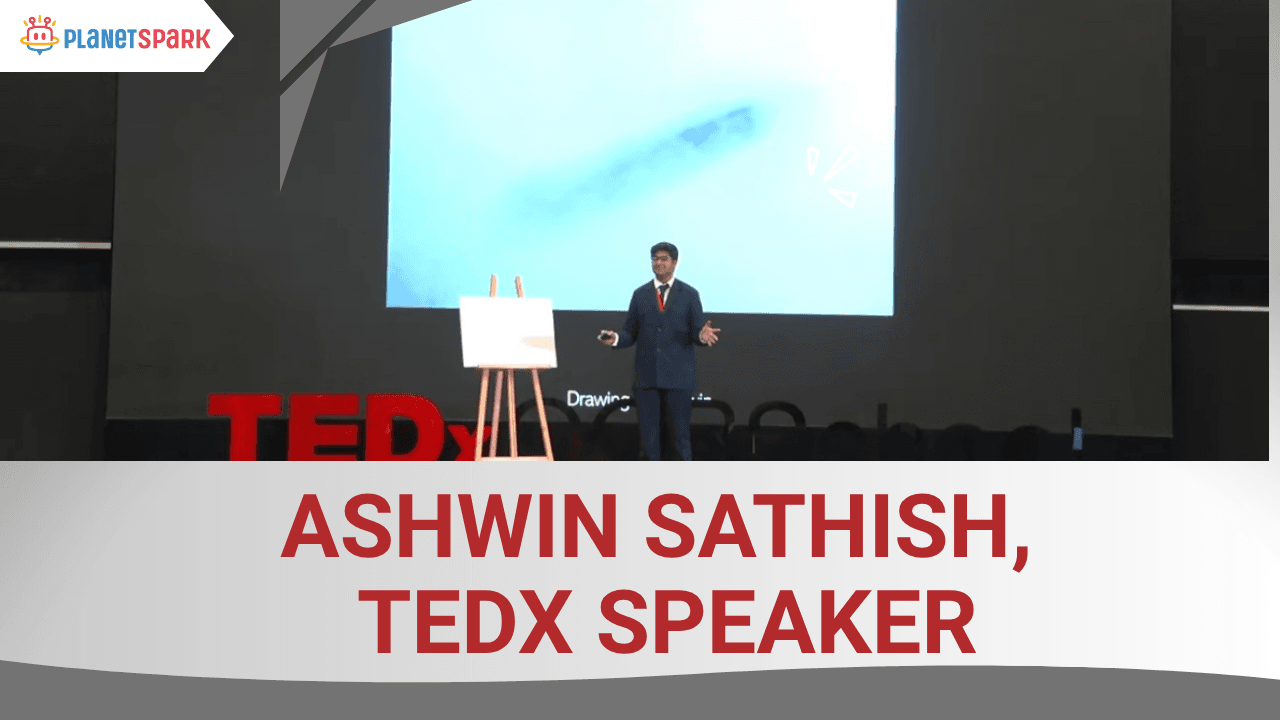
Ashwin’s Journey: From Confident Speaker to Imaginative Story Builder
Ashwin Sathish, a sharp Grade 8 learner aged 13, has grown far beyond classroom discussions, using his strong expressive skills to shape vivid stories and meaningful ideas. Known for his TEDx appearance in New Delhi, Ashwin’s confidence on stage has naturally flowed into his writing, helping him build worlds that feel alive and purposeful. With steady practice and a curiosity for “what could be,” he continues to turn simple ideas into rich, engaging narratives that show the power of imagination and clarity of thought.
Final Thoughts on Building Strong World-Building Skills
World-Building teaches children how to structure imagination into a clear fictional world that supports storytelling. It transforms scattered ideas into a organized foundation where characters, emotions and events make sense. When young storytellers understand how to connect setting, culture and character with plot, their stories become more expressive and compelling because every detail serves a purpose. They learn that storytelling is not just about what happens, but where it happens and why it matters within the fictional world they have created.
Strong world-building also helps children think visually, speak with clarity and describe scenes in a way that captures the listener’s attention. As they design the rules, environments and emotional tone of their fictional world, they become more confident in narrating long stories without losing track of details. This leads to smoother storytelling, stronger pacing and more impactful delivery.
With guided practice, children learn to narrate confidently and use world-building to enhance narrative flow, structure and imagination. They understand how to keep listeners engaged, how to maintain consistency in their worlds and how to use descriptive cues effectively while speaking. PlanetSpark’s expert coaching ensures they master these storytelling techniques step by step, helping them become confident storytellers capable of engaging any audience with clarity, expression and creativity.
Frequently Asked Questions
World-building in storytelling is the process of creating the setting, rules, and environment where a story takes place. It helps children design a fictional world that supports characters, emotions, and plot.
When young storytellers understand world-building, they narrate stories with more clarity, flow, and confidence. It also teaches them how to connect imagination with structure, making their storytelling more engaging for listeners.
World-building is important because it helps children organize imagination into a structured fictional world. A clear world makes narration smoother, strengthens character development, and keeps listeners engaged.
It also improves descriptive detail, pacing, and emotional depth during narration. Children who use world-building effectively deliver stories that feel more complete and are easier to visualize.
Children can learn to build a fictional world by describing locations, inventing rules, creating maps, and exploring how environments shape characters. Simple daily prompts help them practice consistently.
Parents can support this by encouraging small imagination-based exercises that build clarity and structure. With guided storytelling coaching, children learn to apply world-building naturally in their narration.
The key elements of strong world-building include setting, culture, rules, character fit and environmental details. These elements work together to create a fictional world that feels organised and believable.
When children understand these parts, their stories become more expressive and coherent. Strong world-building also helps them explain events more clearly during storytelling.
World-building improves storytelling by helping children visualise scenes, structure events and explain character actions with clarity. When young storytellers can imagine their fictional world clearly, their narration becomes more expressive and immersive.
It also boosts confidence because children always know where their characters are and why events unfold. This leads to better pacing, clearer descriptions and more engaging stories.
PlanetSpark teaches world-building through structured storytelling sessions, guided imagination exercises, and personalized coaching. Children learn how to design fictional worlds, connect them to plot, and narrate with confidence.
Mentors help students refine clarity, expressive detail, and narrative logic through step-by-step training. This consistent guidance strengthens storytelling skills and prepares children to engage any audience effortlessly.