
Because, So, When Conjunctions – Grade 3 Grammar Practice Sheet
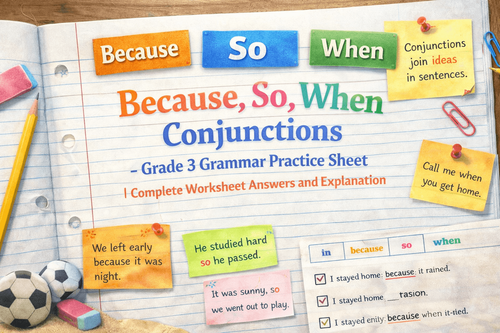

Because, So, When Conjunctions – Grade 3 Grammar Practice Sheet | Complete Worksheet Answers and Explanation
Learning grammar becomes much easier when students practice through engaging activities and simple sentence exercises. In Grade 3, students begin to understand how words connect ideas in sentences. One important topic is conjunctions, especially words like because, so, and when. These small words help explain reasons, results, and time in sentences. This English grammar worksheet for Grade 3 gives students the chance to practice using these conjunctions in different types of questions so they can understand how sentences work together naturally.
What Is The Topic?
Conjunctions are joining words that connect ideas in sentences. In this worksheet, students learn how to use the conjunctions because, so, and when.
The word because is used to explain a reason. It tells why something happens.
The word so is used to show a result or consequence. It explains what happened because of something else.
The word when is used to show time. It tells us when something happened.
In this Grade 3 English grammar worksheet, students practice identifying and using these conjunctions through several exercises such as filling in blanks, identifying correct sentences, choosing the correct conjunction, rewriting sentences, and writing a short paragraph.
What’s In This Worksheet?
This English grammar worksheet includes different types of questions to help students understand conjunctions clearly.
1. Fill in the blanks where students choose the correct conjunction from a word bank.
2. True and false questions to check whether the conjunction is used correctly in a sentence.
3. Multiple choice questions where students choose the best conjunction to complete a sentence.
4. Sentence rewriting where students replace incorrect words with the correct conjunction.
5. Paragraph writing to practice using conjunctions in a short piece of writing.
These exercises help students build confidence in sentence formation and strengthen their grammar skills through structured practice.
Definitions, Examples, Techniques, And Tips
Because
This conjunction explains the reason for something.
Example pattern:
Action + because + reason
So
This conjunction explains the result of something.
Example pattern:
Reason + so + result
When
This conjunction explains the time when something happens.
Example pattern:
Action + when + time/event
Techniques students practice in the worksheet include:
• Identifying the correct conjunction based on sentence meaning
• Understanding cause and result
• Recognizing time-based events
• Correcting sentences by replacing incorrect joining words
Quick learning tips from the worksheet practice:
• Use because to explain why something happened.
• Use so to show the result of an action.
• Use when to connect actions with time.
Why Is It Important To Learn This?
Learning conjunctions helps students create meaningful and complete sentences. Without conjunctions, sentences may feel incomplete or disconnected.
Understanding conjunctions helps students:
• Explain reasons clearly
• Show cause and result
• Describe when events happen
• Connect ideas smoothly in writing
For Grade 3 students, mastering conjunctions builds a strong foundation for writing longer sentences and better paragraphs in the future.
Where Will This Knowledge Help You?
This grammar topic helps students in many learning situations.
Students will use conjunctions in:
• School exams and grammar tests
• Writing assignments
• Story writing
• Speaking activities in class
• Reading comprehension
Understanding conjunctions like because, so, and when helps students express their thoughts clearly and logically.
How To Use This Worksheet?
1. First read each sentence carefully before choosing a conjunction.
2. Think about whether the sentence is explaining a reason, a result, or time.
3. Fill in the blanks or choose the correct answer based on meaning.
4. Check the answers carefully with the complete answer key.
5. Practice writing sentences using because, so, and when.
The answers in the next section follow the exact worksheet order so students can easily compare their responses.
Important Tips And Tricks
1. If a sentence explains a reason, the conjunction is usually because.
2. If a sentence shows the result of something, the conjunction is usually so.
3. If a sentence talks about time, the conjunction is usually when.
4. Read the full sentence carefully before selecting the conjunction.
5. While rewriting sentences, replace only the incorrect word with the correct conjunction.
6. In paragraph writing tasks, try to use all the conjunctions learned in the worksheet.
Complete Answer Key
Exercise No. 1
Fill each blank with one word from the bank.
1. I stayed home because it rained.
2. He was late because he missed the bus.
3. We left early when it was dark.
4. She studied hard so she passed.
5. I was tired so I slept.
6. He ran fast so he won.
7. She smiled because she was happy.
8. He shouted because he was angry.
9. We clapped when the play ended.
10. She jumped because she was excited.
Exercise No. 2
Write true if each statement uses correct conjunctions else write false.
1. I was sad because I lost my toy. – True
2. He was hungry so he ate food. – True
3. We went home when it rained. – True
4. She cried so she was happy. – False
5. I smiled because I was glad. – True
6. He danced when the bell rang. – True
7. She smiled because she was happy. – True
8. He shouted but he was angry. – False
9. We clapped so the play ended. – False
10. She slept because she was tired. – True
Exercise No. 3
Choose the best conjunction that fits the sentence.
1. He stayed home because it rained.
2. She was late because she missed the bus.
3. We clapped when the song ended.
4. I was happy so I won a prize.
5. He studied hard so he passed.
6. We laughed because the joke was funny.
7. She left early because it was dark.
8. He shouted because he was angry.
9. She smiled because she was glad.
10. We sat down when the class began.
Exercise No. 4
Replace the underlined word in each sentence using a correct conjunction from the box.
1. I stayed home because it was raining.
2. It was getting late, so we hurried home.
3. She didn’t go out because she was sick.
4. She is happy although she got good marks.
5. He studied hard so he passed.
6. Call me when you reach school.
7. It was very hot, so we switched on the fan.
8. He shouted because he was angry.
9. I was reading when the lights went off.
10. We clapped when the show ended.
Exercise No. 5
Write a paragraph on how you spend your weekends and why it is fun for you using conjunctions.
On weekends I wake up late because I do not have school. I play cricket with my friends when the weather is nice. Sometimes we go to the park so we can ride our bicycles and play games. I enjoy weekends because I can spend time with my family. In the evening we watch movies together and eat snacks so everyone feels happy. Weekends are fun because I relax, play, and spend time with the people I love.
Practicing conjunctions like because, so, and when helps Grade 3 students connect ideas clearly and write better sentences. This English grammar worksheet allows learners to understand reasons, results, and time relationships in sentences through structured exercises. With regular practice, students become more confident in both writing and speaking.