
Build Vocabulary with Grade 3 100 Antonym Words
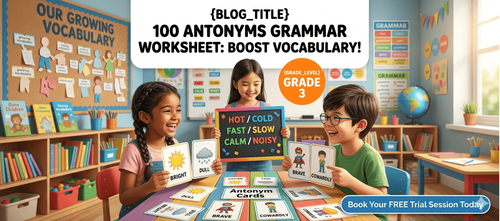

Strengthen Vocabulary Skills with This English Grammar Worksheet for Grade 3 on 100 Antonym Words
Learning antonyms is a fun and effective way to improve vocabulary and language skills. This English grammar worksheet for Grade 3 on 100 Antonym Words helps students understand opposite meanings through simple and engaging practice. By solving antonym exercises regularly, children can improve their reading, writing, comprehension, and speaking abilities in an easy and enjoyable manner.
This worksheet includes carefully selected opposite words that help Grade 3 students build strong grammar foundations. Students can practice identifying opposite meanings, improve word usage, and become more confident while using English in school and daily conversations. The activities are designed in a student-friendly format so learners can practice independently and strengthen their understanding step by step.
Download these English grammar worksheets and practice regularly to strengthen your language skills and build a strong foundation. You can also book a free trial to get expert guidance and improve your reading, writing, and comprehension abilities. The worksheets are designed in a simple and structured way to help K–8 students learn grammar concepts easily and use them confidently in everyday communication.
What Is the Topic?
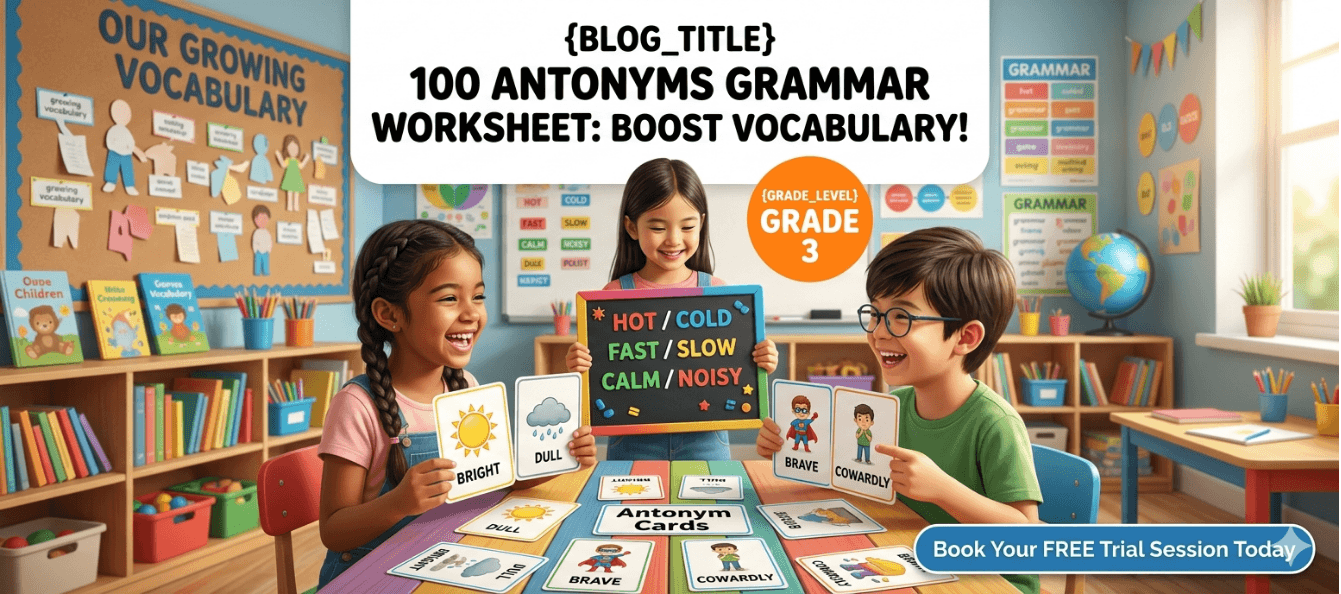
Antonym words are words that have opposite meanings. This English grammar worksheet for Grade 3 focuses on helping students identify and write antonyms correctly. Learning antonyms helps children understand vocabulary better and improves their ability to communicate clearly.
In this worksheet, students are expected to:
1. Read the given words carefully
2. Identify their opposite meanings
3. Write the correct antonyms in order
4. Improve vocabulary and grammar skills through practice
The worksheet contains 100 antonym words for regular practice and vocabulary improvement.
What’s in This Worksheet?
1. A list of 100 words for antonym practice
2. Simple vocabulary-building exercises for Grade 3 students
3. Word-based grammar practice to improve understanding of opposite meanings
4. Easy and structured questions arranged in serial number order
5. Practice focused on reading, writing, and vocabulary development
6. Exercises designed to improve grammar confidence and classroom performance
7. Student-friendly worksheet structure for independent learning and revision
Definitions, Examples, Techniques, and Tips
Definition:
Antonyms are words with opposite meanings.
Examples from the worksheet:
1. Calm – Noisy
2. Brave – Cowardly
3. Wide – Narrow
4. Busy – Lazy
5. Soft – Hard
Techniques:
1. Read each word carefully before writing its opposite.
2. Think about the meaning of the word in daily life.
3. Practice opposite words regularly to improve vocabulary.
4. Revise commonly used antonym pairs frequently.
Quick Learning Tips:
1. Learn antonyms in pairs.
2. Use opposite words while speaking and writing.
3. Read the words aloud for better memory.
4. Practice writing neatly and correctly.
Why Is It Important to Learn This?
Learning antonyms is important because it helps students improve vocabulary and sentence-building skills. Opposite words make communication clearer and help children understand meanings more effectively.
This topic also helps students:
1. Improve reading comprehension
2. Build stronger writing skills
3. Speak confidently using correct vocabulary
4. Understand word meanings quickly
5. Perform better in grammar activities and exams
Where Will This Knowledge Help You?
Students can use antonym knowledge in many situations such as:
1. English grammar exams
2. Classroom assignments
3. Vocabulary-based activities
4. Creative writing tasks
5. Reading comprehension exercises
6. Daily conversations
7. School competitions and language activities
How to Use This Worksheet?
1. Read every word carefully before answering.
2. Attempt the antonyms independently first.
3. Compare your answers carefully with the answer key.
4. Follow the exact worksheet order while checking answers.
5. Correct mistakes neatly after revision.
6. Practice difficult antonym pairs again for better understanding.
7. Revise regularly to improve vocabulary and grammar confidence.
Important Tips and Tricks
1. Always read the given word properly before writing the antonym.
2. Do not confuse similar meanings with opposite meanings.
3. Practice commonly used opposite word pairs regularly.
4. Maintain correct spelling while writing antonyms.
5. Follow the serial number order carefully during practice.
6. Examiners expect neat writing and correct vocabulary usage.
7. Revise antonyms daily to score full marks in grammar sections.
8. Read English books and stories to learn more opposite words naturally.
Complete Answer Key
Write antonym of each word.
1. Calm – Noisy
2. Brave – Cowardly
3. Fair – Unfair
4. Wide – Narrow
5. Wild – Tame
6. Clever – Foolish
7. Gentle – Rough
8. Bright – Dull
9. Clear – Cloudy
10. Honest – Dishonest
11. Busy – Lazy
12. Proud – Humble
13. Fancy – Plain
14. Plain – Fancy
15. Tidy – Untidy
16. Silent – Noisy
17. Rapid – Slow
18. Gifted – Untalented
19. Certain – Uncertain
20. Simple – Complicated
21. Joyful – Sad
22. Careful – Careless
23. Equal – Unequal
24. Major – Minor
25. Minor – Major
26. Natural – Artificial
27. Normal – Strange
28. Patient – Impatient
29. Private – Public
30. Public – Private
31. Rare – Common
32. Regular – Irregular
33. Silent – Loud
34. Similar – Different
35. Solid – Liquid
36. Special – Ordinary
37. Steady – Unsteady
38. Strange – Normal
39. Thick – Thin
40. Truthful – Dishonest
41. Useful – Useless
42. Soft – Hard
43. Valuable – Worthless
44. Whole – Partial
45. Wise – Foolish
46. Brave – Timid
47. Direct – Indirect
48. Dull – Bright
49. Entire – Partial
50. Exact – Approximate
51. Fierce – Gentle
52. Firm – Weak
53. Glad – Sad
54. Graceful – Clumsy
55. Grand – Simple
56. Harsh – Gentle
57. Honest – Dishonest
58. Polished – Rough
59. Mighty – Weak
60. Polite – Rude
61. Proper – Improper
62. Proud – Humble
63. Pure – Impure
64. Rapid – Slow
65. Rare – Common
66. Regular – Irregular
67. Ripe – Unripe
68. Rough – Smooth
69. Right – Wrong
70. Rude – Polite
71. Safe – Dangerous
72. Simple – Difficult
73. Shiny – Dull
74. Strong – Weak
75. Secure – Insecure
76. Smart – Foolish
77. Tender – Tough
78. Steep – Flat
79. Smooth – Rough
80. Grand – Small
81. Laugh – Cry
82. Unsafe – Safe
83. Trustworthy – Unreliable
84. Lose – Win
85. Asleep – Awake
86. Delightful – Unpleasant
87. Scattered – Collected
88. Crowded – Empty
89. Awake – Asleep
90. Humble – Proud
91. Safe – Unsafe
92. Exact – Inexact
93. Pale – Dark
94. Zonal – Global
95. Steady – Unsteady
96. Cautious – Careless
97. Loyal – Disloyal
98. Wild – Domestic
99. Outside – Inside
100. Pleasant – Unpleasant
This English grammar worksheet for Grade 3 on 100 Antonym Words is a great way for students to improve vocabulary and grammar skills through regular practice. Learning opposite words helps children become more confident readers, writers, and speakers. Keep practicing antonyms regularly to build stronger language skills and improve overall English performance.