
Capitalization Rules Editing Practice for Grade 2 Learners
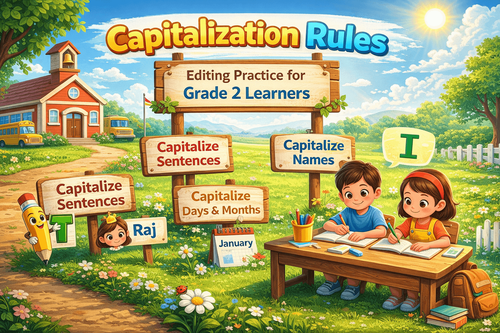

Capitalization Rules Editing Practice for Grade 2 Learners
Learning how to use capital letters correctly can make your writing neat, clear, and easy to read. In this English grammar worksheet for Grade 2, students get to practice capitalization rules through engaging and fun exercises. From fixing sentences to rewriting paragraphs, this worksheet helps young learners build confidence while improving their grammar skills.
What Is Capitalization Rules Editing Practice?
Capitalization rules help us know when to use capital (big) letters in writing. In this worksheet, students learn to:
• Use a capital letter at the beginning of a sentence
• Capitalize names of people, places, and titles
• Capitalize days of the week and months
• Use a capital letter for the word “I”
These rules make sentences look proper and help readers understand writing better.
What’s in This Worksheet?
1. Students rewrite words by correcting the first letter of sentences.
2. They identify correctly capitalized weekdays and months.
3. They separate and write names, places, and titles correctly.
4. They fix the lowercase “i” in sentences.
5. They rewrite a full paragraph using capitalization rules.
This English grammar worksheet helps Grade 2 students practice important rules step by step and prepares them for school assignments and exams.
Definitions, Examples, Techniques, and Tips
Definitions
Capitalization means writing the first letter of a word in uppercase (big letter) when needed.
Examples
the dog is running → The dog is running.
i love chocolate → I love chocolate.
Techniques
• Always check the first word of a sentence
• Look for names and special words
• Identify the word “i” and correct it
Quick learning tips
• Start every sentence with a capital letter
• Always write names with capital letters
• Days and months must begin with capital letters
• The word “I” is always capitalized
Why Is It Important to Learn This?
Learning capitalization rules helps students write correctly and clearly. It improves reading and writing skills. When sentences are written properly, they look neat and are easier to understand. It also helps students score better in exams and complete assignments correctly.
Where Will This Knowledge Help You?
Students will use capitalization rules in:
• School exams and worksheets
• Writing sentences and paragraphs
• Speaking and reading activities
• Class participation and homework
How to Use This Worksheet?
1. Attempt all questions on your own first
2. Read each sentence carefully
3. Apply capitalization rules step by step
4. Check your answers and correct mistakes
5. Practice regularly to improve
The solutions below follow the exact worksheet order. Students should compare their answers carefully.
Important Tips and Tricks
1. Do not forget to capitalize the first word of every sentence
2. Always check names like people, places, and titles
3. Remember that “I” is always written in capital form
4. Look carefully at weekdays and months
5. Read the sentence again after correcting it
6. Practice writing neatly and clearly
7. Pay attention to instructions like rewrite, find, or fix
Complete Answer Key
Exercise - 1
1. The
2. My
3. We
4. I
5. She
6. Raj
7. The
8. Tina
9. Ritu
10. Rohan
Exercise - 2
January
Tuesday
Friday
August
Exercise - 3
Name
Sara
Raj
Grandma
Alex
Ria
Place
London
Zoo
Delhi
Museum
Agra
Title
Mr.
Mrs.
Exercise - 4
1. I have a pet rabbit.
2. My brother and I like to play chess.
3. I saw a rainbow after the rain.
4. My friends and I are going to the park.
5. I love eating mangoes.
6. Yesterday, I helped my mother.
Exercise - 5
My name is Tina. I have a pet cat named Snowy. On Friday, we went to the park with my mom. Snowy ran after a butterfly. We saw our friend Arjun near the lake. It was a fun day at Greenwood Park.
This English grammar worksheet for Grade 2 on Capitalization Rules Editing Practice helps students learn and apply important grammar rules in a fun and structured way. With regular practice, students can become confident writers and improve their sentence formation skills.