
Caterpillar Poem Analysis Worksheet for Class 3 Students

Caterpillar Poem Analysis Worksheet for Class 3 Students
Tiny creatures often hide big lessons about growth and change, and this poem brings that idea to life beautifully. This English grammar worksheet for Grade 3 based on the topic “The Caterpillar (Rossetti)” helps students understand transformation in nature while improving their reading comprehension skills.
Download these English grammar worksheets and practice regularly to strengthen your language skills and build a strong foundation. You can also book a free trial to get expert guidance and improve your reading, writing, and comprehension abilities. The worksheets are designed in a simple and structured way to help K–8 students learn grammar concepts easily and use them confidently in everyday communication.
What Is the Topic?
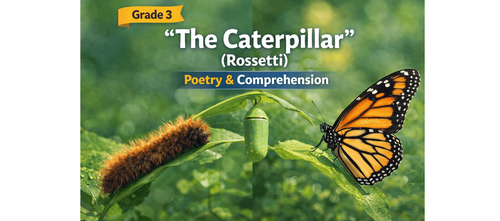
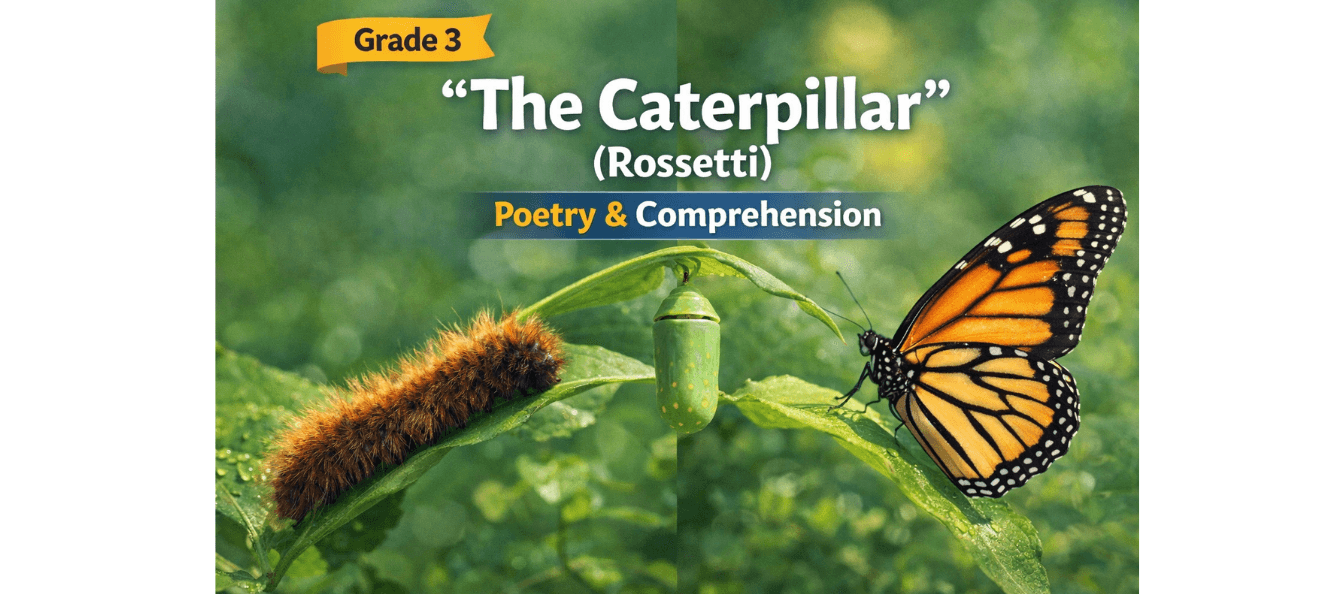
The topic of this English grammar worksheet is understanding a poem titled “The Caterpillar (Rossetti).” In this worksheet, students read a poem that describes a caterpillar’s journey and its transformation into a butterfly.
The focus is on understanding the poem and answering questions based on it. Students learn how to:
• Read and understand poetic lines
• Identify changes in nature
• Understand the message of transformation
This helps Grade 3 students improve comprehension and learn meaningful ideas.
What’s in This Worksheet?
This English grammar worksheet includes different types of questions based on the poem.
1. A poem describing nature and transformation
2. Multiple-choice questions to check understanding
3. Questions that require explanation and thinking
4. Questions that connect ideas from the poem
5. A structured format useful for exam preparation
This worksheet helps students understand change and growth in nature.
Definitions, Examples, Techniques, and Tips
Definitions:
Understanding a poem means reading carefully and finding the meaning behind the words and ideas.
Examples from the poem:
The poem describes a brown, furry caterpillar that walks on leaves and later transforms into a butterfly. It also shows the dangers it faces and wishes for its safety.
Techniques:
• Read each line slowly
• Focus on actions and changes
• Connect questions with the poem lines
Quick learning tips:
• Read the poem more than once
• Look for the idea of change
• Understand the message about growth
Why Is It Important to Learn This?
This English grammar worksheet is important because it teaches about change and growth.
It helps students:
• Improve reading and thinking skills
• Understand natural processes
• Learn important life lessons
These skills are useful in exams and daily learning.
Where Will This Knowledge Help You?
This knowledge helps students in many ways.
• In exams, they can answer poem-based questions easily
• In class, they can explain ideas clearly
• In writing, they can express thoughts better
It also helps students understand nature and its processes.
How to Use This Worksheet?
Follow these steps to use the worksheet effectively:
1. Read the poem carefully
2. Try answering all questions independently
3. Check your answers with the answer key
4. Correct mistakes and understand them
The solutions follow the exact worksheet order, so students should compare answers carefully.
Important Tips and Tricks
1. Read the poem slowly and understand each line
2. Do not guess answers—find them in the poem
3. Pay attention to changes and transformation
4. Think about the message of the poem
5. Write clear answers based on the text
6. Practice regularly to improve understanding
Complete Answer Key
Exercise No. 1
1. d) Brown
2. a) A butterfly
3. b) To be safe
Exercise No. 2
1. On leaves or stalks—“To the shady leaf, or stalk.”
2. It becomes a butterfly—“To live again a butterfly.”
3. Toads and birds could harm it—“May no toad spy you, May the little birds pass by you;”
Exercise No. 3
1. It illustrates nature’s life cycle—“Spin and die, To live again a butterfly.”
2. Patience and care lead to success—“May no toad spy you.”
3. Change brings new growth—“To live again a butterfly.”
4. Synonym: rush
This Grade 3 English grammar worksheet on “The Caterpillar (Rossetti)” helps students understand transformation and growth through poetry. With regular practice, students can improve comprehension and develop a deeper understanding of nature.