
Class 1 Diphthongs Practice Exercises with Examples
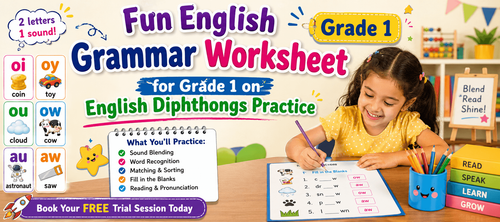

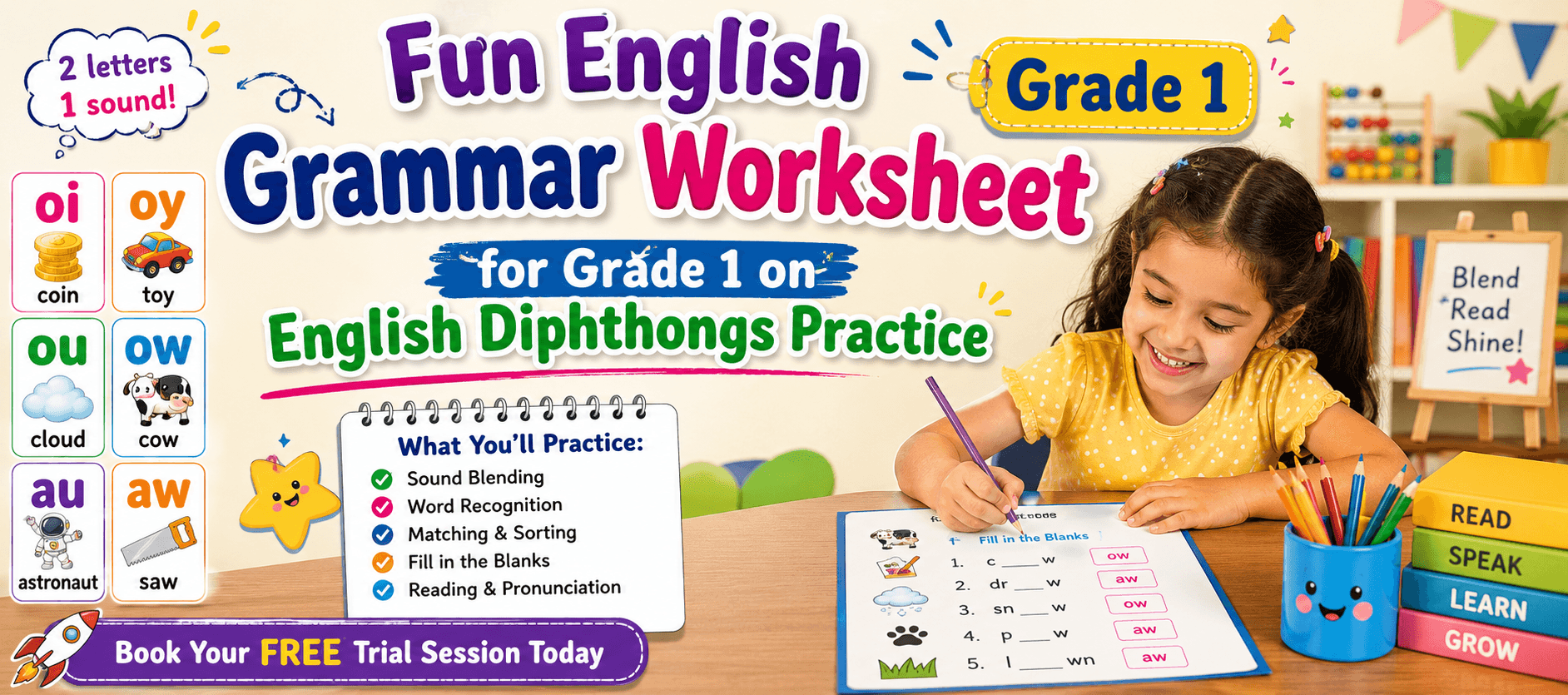
Fun English Grammar Worksheet for Grade 1 on English Diphthongs Practice
Learning English sounds becomes more exciting when students discover how two letters can work together to make a new sound. In Grade 1, children begin to explore diphthongs such as oi, oy, ou, ow, au, and aw through simple blending activities and engaging word practice. This English grammar worksheet helps young learners improve pronunciation, reading fluency, spelling, and vocabulary through fun phonics-based exercises. Students also learn how to identify diphthong sounds in words, blend sounds correctly, and recognize patterns while reading and writing. With matching activities, fill-in-the-blanks, sound blending, and word recognition tasks, this worksheet gives children enjoyable practice while strengthening their grammar and phonics skills.
Download these English grammar worksheets and practice regularly to strengthen your language skills and build a strong foundation. You can also book a free trial to get expert guidance and improve your reading, writing, and comprehension abilities. The worksheets are designed in a simple and structured way to help K–8 students learn grammar concepts easily and use them confidently in everyday communication.
What Is the Topic?
Diphthongs are special sounds made when two letters work together to create one blended sound. In this Grade 1 English grammar worksheet, students learn different diphthongs such as oi, oy, ou, ow, au, and aw. Each section explains how the letters sound when blended together and gives examples to help students understand pronunciation clearly.
Students practice reading words with diphthongs, blending sounds aloud, identifying correct words, and filling in missing diphthong patterns. The worksheet also teaches students how mouth movement changes while saying these sounds. Through repeated practice, learners become more confident in recognizing and using diphthong words in daily reading activities.
What’s in This Worksheet?
1. Introduction to different diphthongs including oi, oy, ou, ow, au, and aw.
2. Sound blending practice using simple letter combinations.
3. Examples of words containing diphthongs.
4. Tick-the-box activities for identifying words with the oi diphthong.
5. Matching activities based on diphthong words and pictures.
6. Word sorting and word recognition exercises.
7. Fill-in-the-blank activities using ow and aw diphthongs.
8. Reading and pronunciation practice using sound blending techniques.
9. Vocabulary-building exercises using common Grade 1 words.
10. Phonics-based grammar practice that supports reading fluency and spelling improvement.
Definitions, Examples, Techniques, and Tips
A diphthong is a sound made when two vowels or letters combine together in a word.
The worksheet teaches the following diphthongs:
OI
“o” and “i” work together to say “oy”.
Examples:
coin, soil, boil, spoil, foil
OY
“o” and “y” work together to say “oy”.
Examples:
toy, boy, joy, enjoy, soy
OU
“o” and “u” work together to say “ow”.
Examples:
out, shout, cloud, loud, found
OW
“o” and “w” work together to say “ow”.
Examples:
cow, now, how, town, down
AU
“a” and “u” work together to say “aw”.
Examples:
author, August, autumn, fault, haul
AW
“a” and “w” work together to say “aw”.
Examples:
saw, paw, claw, draw, straw
Students also learn sound blending techniques such as:
/c/ + /oi/ + /n/ → coin
/t/ + /oy/ → toy
/sh/ + /ou/ + /t/ → shout
/c/ + /ow/ → cow
/p/ + /au/ + /se/ → pause
/s/ + /aw/ → saw
Quick learning tips from the worksheet:
1. Say each sound slowly before blending the full word.
2. Practice reading aloud to improve pronunciation.
3. Notice how the mouth changes shape while saying the sounds.
4. Read example words carefully to remember spelling patterns.
5. Repeat sound blending several times for better fluency.
Why Is It Important to Learn This?
Learning diphthongs is important because it helps students read words correctly and improve pronunciation. Many common English words use diphthong sounds, so understanding them helps children become stronger readers and writers.
This topic also improves spelling skills because students learn common sound patterns found in English words. When students can recognize blended vowel sounds easily, they gain confidence while reading aloud in class and completing grammar activities independently.
Practicing diphthongs also supports vocabulary development and listening skills. Children begin to hear sound differences more clearly and can identify correct pronunciation while speaking and reading.
Where Will This Knowledge Help You?
Diphthong knowledge helps students in many daily learning activities.
1. Reading storybooks with better fluency.
2. Pronouncing English words correctly during speaking activities.
3. Completing grammar worksheets and phonics exercises accurately.
4. Improving spelling during class tests and exams.
5. Participating confidently in classroom reading activities.
6. Building strong phonics and vocabulary skills for future learning.
7. Understanding sound patterns while learning new English words.
How to Use This Worksheet?
1. Read each diphthong section carefully and say the sounds aloud.
2. Practice blending the sounds slowly before reading the complete word.
3. Attempt all exercises independently first.
4. Match words carefully and observe spelling patterns.
5. Fill in missing diphthongs correctly while saying the sounds aloud.
6. Review all answers carefully after completing the worksheet.
7. Compare your work with the solutions given in the exact worksheet order.
8. Correct mistakes neatly and practice difficult words again.
9. Repeat the activities regularly to improve fluency and pronunciation.
Important Tips and Tricks
1. Read every word carefully before choosing an answer.
2. Look for vowel combinations such as oi, oy, ou, ow, au, and aw inside words.
3. Practice saying the blended sounds aloud to improve pronunciation.
4. Do not confuse oi and oy because they may sound similar.
5. Remember that ou and ow can make the same “ow” sound.
6. Focus on spelling patterns while solving fill-in-the-blank exercises.
7. While matching words and pictures, read the word completely before selecting the picture.
8. In sound blending exercises, say each letter sound separately first and then blend them together.
9. Practice difficult words repeatedly for better memory and fluency.
10. Neat and careful work helps students avoid spelling mistakes in exams.
Complete Answer Key
Exercise 1
1. SPOIL – Diphthong ‘oi’
2. KITE – Not
3. HAM – Not
4. FOIL – Diphthong ‘oi’
5. JOIN – Diphthong ‘oi’
6. DRAG – Not
7. OIL – Diphthong ‘oi’
8. PEACH – Not
10. VOICE – Diphthong ‘oi’
11. POINT – Diphthong ‘oi’
Exercise 2
point
foil
join
coil
noise
coin
soil
toilet
boil
voice
Exercise 3
out
cloud
toy
mouth
cow
found
shout
soil
house
count
sound
boy
round
loud
now
Exercise 4
1. bow
2. low
3. snow
4. grow
5. blow
6. show
7. flow
8. crow
9. glow
10. slow
Exercise 5
PAUSE
AUNT
HAUL
FAULT
SAUCE
AUTHOR
AUTUMN
CAUSE
AUGUST
HAUNT
LAUNCH
Exercise 6
jaw
claw
straw
dawn
lawn
draw
paw
flaw
draw
Learning diphthongs becomes easier with regular reading and sound practice. This Grade 1 English grammar worksheet on English Diphthongs gives students a fun and simple way to improve pronunciation, spelling, blending, and reading confidence. By practicing these activities regularly, children can build stronger phonics skills and become more confident English learners. Keep practicing the diphthong sounds aloud and continue exploring new words to strengthen your grammar skills every day.