
Class 2 Printable Gender Practice Worksheet with Answers
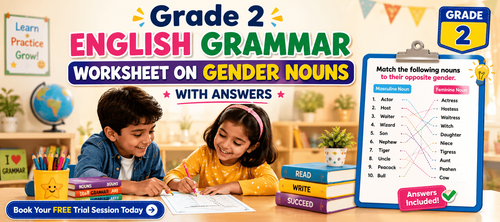

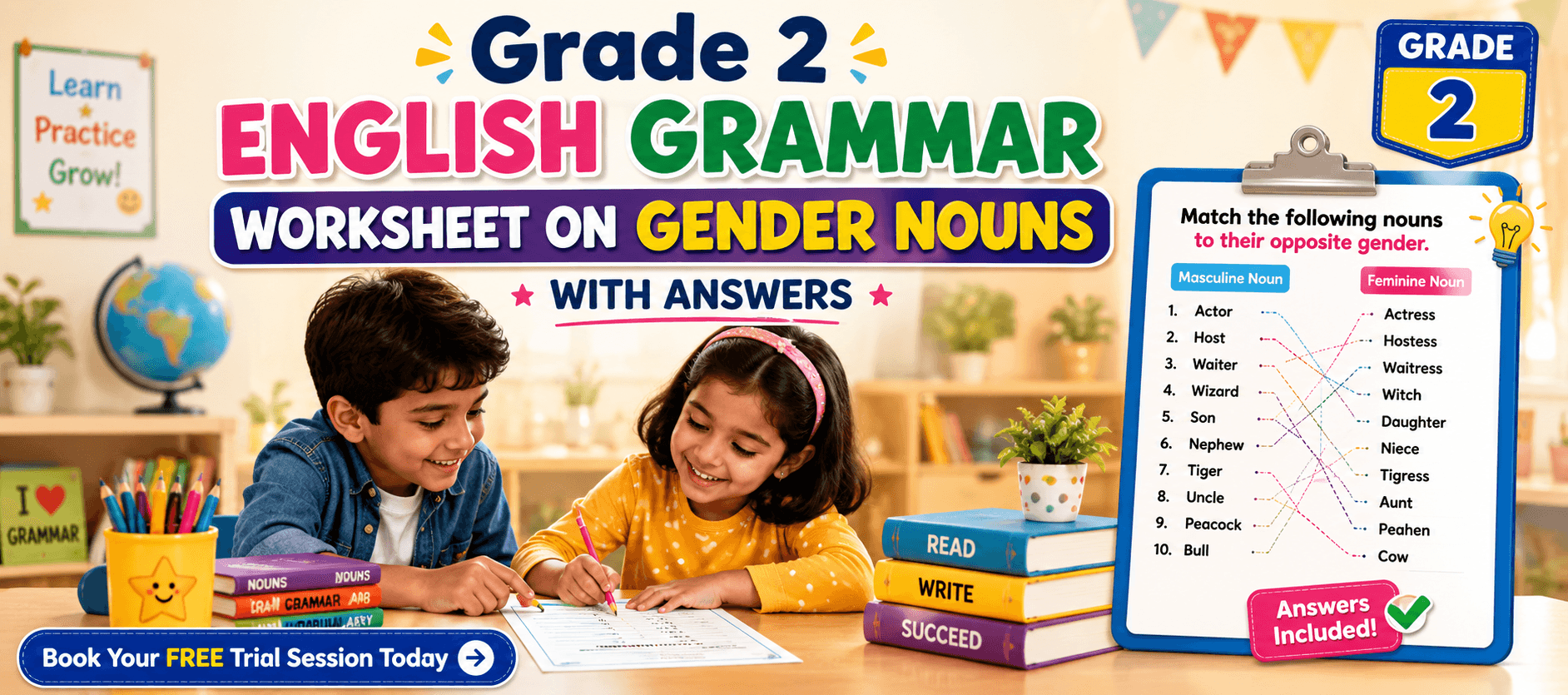
Grade 2 English Grammar Worksheet on Gender Nouns With Answers
Learning gender nouns becomes exciting when students begin identifying masculine and feminine forms of words used in daily life. This English grammar worksheet for Grade 2 on Gender helps children understand opposite genders of common nouns through simple matching activities. By practicing these noun pairs, students improve vocabulary, grammar understanding, and sentence-building skills in an enjoyable and structured way.
In Grade 2, students start recognizing how certain nouns change according to gender. This worksheet introduces learners to commonly used masculine and feminine nouns such as actor and actress, uncle and aunt, and tiger and tigress. With easy matching exercises, children develop better language recognition and improve their understanding of word relationships in English grammar.
Download these English grammar worksheets and practice regularly to strengthen your language skills and build a strong foundation. You can also book a free trial to get expert guidance and improve your reading, writing, and comprehension abilities. The worksheets are designed in a simple and structured way to help K–8 students learn grammar concepts easily and use them confidently in everyday communication.
What Is the Topic?
Gender nouns are naming words that show whether a person or animal is male or female. In this Grade 2 English grammar worksheet, students learn how masculine nouns and feminine nouns are connected as opposite genders.
This worksheet helps children:
• Identify masculine and feminine nouns
• Understand opposite gender word pairs
• Improve vocabulary and word recognition
• Practice matching related nouns correctly
Students are expected to read each noun carefully and match it with its opposite gender noun from the given list.
What’s in This Worksheet?
1. Matching Activity
Students match masculine nouns with their feminine forms using opposite gender pairs.
2. Common Gender Nouns
The worksheet includes simple and familiar nouns such as actor, waiter, uncle, tiger, and peacock.
3. Vocabulary Practice
Children improve vocabulary recognition through repeated exposure to masculine and feminine noun forms.
4. Grammar Skill Development
The activity strengthens understanding of noun genders in English grammar.
5. Structured Learning
The worksheet follows a simple matching format that makes learning easy and engaging for Grade 2 students.
6. Exam Preparation Support
Practicing gender nouns helps students answer grammar questions accurately in school assessments and classroom activities.
Definitions, Examples, Techniques, and Tips
Definition of Gender Nouns
Gender nouns are naming words that show male or female persons or animals.
Examples From the Worksheet
• Actor – Actress
• Waiter – Waitress
• Host – Hostess
• Son – Daughter
• Uncle – Aunt
• Nephew – Niece
• Tiger – Tigress
• Peacock – Peahen
• Bull – Cow
• Wizard – Witch
Techniques to Learn Gender Nouns
• Read both words together several times
• Practice matching opposite genders daily
• Observe spelling changes carefully
• Learn noun pairs through repetition
Quick Learning Tips
• Some feminine nouns end with “ess”
• Animal genders can have completely different names
• Read each noun slowly before matching
• Practice speaking the noun pairs aloud
Why Is It Important to Learn This?
Learning gender nouns is important because it improves grammar accuracy and vocabulary development. Students use gender nouns while speaking, reading, and writing sentences in English.
Understanding opposite genders helps children:
• Build correct sentences
• Improve communication skills
• Recognize noun relationships easily
• Develop confidence in grammar activities
This topic also supports better reading comprehension because students understand the meaning of nouns more clearly.
Where Will This Knowledge Help You?
Students use gender nouns in many classroom and daily activities.
• School grammar tests
• Sentence writing exercises
• Reading activities
• Vocabulary practice
• Speaking activities
• English assignments
• Classroom participation
Understanding masculine and feminine nouns also helps students communicate correctly in both written and spoken English.
How to Use This Worksheet?
1. Read Every Noun Carefully
Go through each noun slowly and understand whether it is masculine or feminine.
2. Match the Opposite Gender
Find the correct opposite gender noun from the given list.
3. Check Spelling Properly
Observe spelling changes carefully while matching noun pairs.
4. Compare Answers Carefully
The solutions follow the exact worksheet order, so students should compare answers carefully.
5. Practice Regularly
Repeat gender noun exercises often to improve grammar confidence and vocabulary skills.
Important Tips and Tricks
1. Read Both Lists Completely
Before matching, read all nouns from both columns carefully.
2. Identify Familiar Pairs First
Start with easy noun pairs such as son and daughter or uncle and aunt.
3. Watch for Word Endings
Many feminine nouns change spelling by adding different endings.
4. Avoid Guessing Quickly
Think carefully before matching animal gender nouns.
5. Practice Vocabulary Daily
Regular grammar practice improves memory and accuracy.
6. Write Neatly in Exams
Clear and correct matching helps students score better marks.
7. Revise Common Gender Pairs
Repeated revision helps children remember masculine and feminine nouns easily.
Complete Answer Key
Match the following nouns to their opposite gender.
1. Actor – Actress
2. Host – Hostess
3. Waiter – Waitress
4. Wizard – Witch
5. Son – Daughter
6. Nephew – Niece
7. Tiger – Tigress
8. Uncle – Aunt
9. Peacock – Peahen
10. Bull – Cow
Practicing this Grade 2 English grammar worksheet on Gender helps students improve grammar skills, vocabulary understanding, and sentence-building confidence. By learning opposite gender nouns regularly, children become more comfortable using correct words in reading, writing, and speaking activities. Continued practice will help students master gender nouns easily and perform better in grammar exercises and school assessments.