
Class 3 Will and Shall Grammar Exercises for Kids
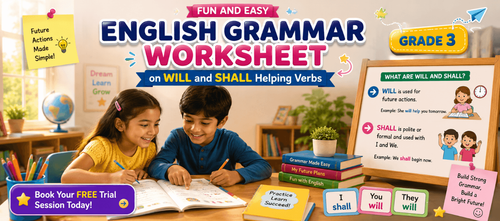

Fun and Easy English Grammar Worksheet for Grade 3 on Will and Shall Helping Verbs
Learning helping verbs can be exciting when students practice them through fun grammar activities and sentence exercises. This English grammar worksheet for Grade 3 on Will and Shall helping verbs helps children understand how to talk about future actions in a simple and clear way. Through underlining activities, fill in the blanks, MCQs, sentence rewriting, and sentence formation tasks, students get step-by-step practice using will and shall correctly in sentences.
This worksheet is specially designed for Grade 3 students to improve grammar confidence and sentence-building skills. By practicing these helping verbs regularly, children can learn how to speak and write about future events correctly. The exercises are easy to follow and help students become more comfortable with English grammar usage in daily communication and classroom learning.
Download these English grammar worksheets and practice regularly to strengthen your language skills and build a strong foundation. You can also book a free trial to get expert guidance and improve your reading, writing, and comprehension abilities. The worksheets are designed in a simple and structured way to help K–8 students learn grammar concepts easily and use them confidently in everyday communication.
What Is the Topic?
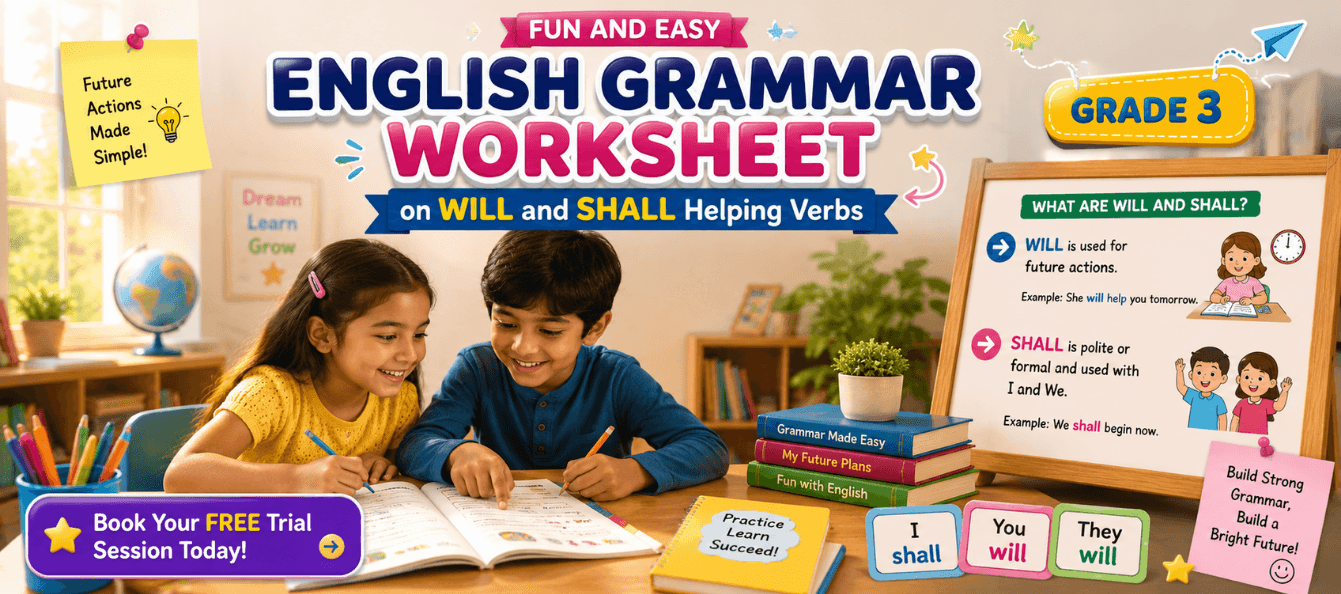
This worksheet focuses on helping verbs will and shall. These helping verbs are used to talk about actions that will happen in the future.
The worksheet explains:
• Use will when talking about something that will happen later.
• Shall is a more polite or formal way and is mostly used with I and We.
Examples from the worksheet:
• I will do my homework tonight.
• We shall begin now.
Students are expected to:
• Identify helping verbs in sentences
• Use will and shall correctly
• Rewrite sentences using proper helping verbs
• Form their own future tense sentences
What’s in This Worksheet?
1. Underline the helping verbs in sentences.
2. Fill in the blanks using will or shall.
3. Multiple-choice questions with helping verbs.
4. Rewrite the sentences using correct helping verbs.
5. Sentence formation activity using a picture.
6. Practice with future tense sentence structure.
7. Grammar exercises arranged from simple identification to sentence writing.
8. Exercises that support school grammar practice and exam preparation.
Definitions, Examples, Techniques, and Tips
Definition:
Helping verbs support the main verb in a sentence and help show time or action.
This worksheet explains:
• Will is used for future actions.
• Shall is a polite or formal helping verb mostly used with I and We.
Examples:
• I will call you later.
• She will help you tomorrow.
• They shall reach on time.
• We shall leave at 5 p.m.
Techniques:
• Read the subject carefully before choosing will or shall.
• Use shall mostly with I and We.
• Use will for other subjects like He, She, They, and You.
• Read the complete sentence to understand future action.
Quick Learning Tips:
• Future actions usually use will or shall.
• Helping verbs come before the main verb.
• Practice sentence writing daily.
• Read sentences aloud to understand grammar better.
Why Is It Important to Learn This?
Learning will and shall helps students talk about future plans and actions clearly. These helping verbs improve sentence formation and grammar accuracy. Students become more confident while speaking and writing English sentences.
This topic is important because:
• It improves future tense sentence writing.
• It helps students communicate clearly.
• It strengthens grammar basics.
• It improves classroom participation.
• It supports better writing skills.
Where Will This Knowledge Help You?
Students can use this grammar knowledge in many places such as:
• School grammar tests
• Writing activities
• Homework assignments
• Daily conversations
• English speaking practice
• Story writing
• Classroom participation
• Sentence formation exercises
Understanding helping verbs also helps students write grammatically correct future tense sentences in exams and activities.
How to Use This Worksheet?
1. Read each sentence carefully before answering.
2. Attempt all exercises independently first.
3. Underline or choose the helping verbs correctly.
4. Fill in the blanks using will or shall carefully.
5. Rewrite the sentences in the exact order given in the worksheet.
6. Compare your answers carefully with the solutions.
7. Practice sentence writing regularly to improve grammar confidence.
8. Remember that the solutions follow the exact worksheet order.
Important Tips and Tricks
1. Use will for future actions with most subjects.
2. Use shall mostly with I and We.
3. Do not skip any word while rewriting sentences.
4. Underline the helping verb carefully in each sentence.
5. Read all options properly in MCQs before choosing the answer.
6. In sentence formation activities, write complete and meaningful sentences.
7. Keep sentence order correct while answering.
8. Use capital letters and punctuation correctly.
9. Practice grammar exercises regularly to score full marks.
10. Check spelling while writing helping verbs.
Complete Answer Key
Exercise 1
Underline the helping verbs in each sentence.
1. I __will__ call you later.
2. She __will__ help you tomorrow.
3. They __shall__ reach on time.
4. He __will__ bring snacks.
5. We __shall__ leave at 5 p.m.
6. You __shall__ get a new pen.
7. They __will__ go for a walk.
8. He __will__ wear his uniform.
9. I __shall__ draw a cat.
10. She __shall__ make tea.
Exercise 2
Fill in the blanks with the correct helping verb: will or shall.
1. I SHALL write a poem.
2. We SHALL meet in the evening.
3. He WILL go to school.
4. She WILL cook dinner.
5. They WILL draw a picture.
6. You WILL play after lunch.
7. She WILL wear a dress.
8. They WILL sing a song.
9. I SHALL take a nap.
10. He WILL tell a story.
Exercise 3
Choose the correct helping verb from the options given below and fill in the blanks.
1. I SHALL eat lunch at noon.
a) Will
b) Shall
2. We SHALL clean the room soon.
a) Will
b) Shall
3. She WILL read a funny story.
a) Will
b) Shall
4. They WILL play in the evening.
a) Will
b) Shall
5. You WILL get a prize.
a) Will
b) Shall
6. He WILL draw a tiger.
a) Will
b) Shall
7. I SHALL help my brother.
a) Will
b) Shall
8. They WILL water the plants.
a) Will
b) Shall
Exercise 4
Rewrite each sentence by changing the helping verb to will or shall. Underline the helping verb.
1. I __will__ call you later.
2. We __shall__ leave at 5 p.m.
3. He __will__ bring snacks.
4. They __shall__ reach on time.
5. She __will__ help you tomorrow.
6. You __shall__ get a new pen.
7. I __shall__ draw a cat.
8. He __will__ wear his uniform.
9. They __will__ go for a walk.
10. She __shall__ make tea.
Exercise 5
Write 5 sentences using helping verbs will, shall on the picture given below.
1. We shall go for a picnic.
2. The boy will carry the bag.
3. The girl will bring food.
4. They will play with the dog.
5. We shall enjoy together.
Practicing this English grammar worksheet for Grade 3 on Will and Shall helping verbs will help students become more confident in sentence writing and future tense usage. Regular grammar practice improves speaking, writing, and understanding skills. By completing activities like underlining helping verbs, filling blanks, rewriting sentences, and sentence formation, children can build a strong grammar foundation and perform better in school activities and exams.