
Comparative Writing Worksheet for Class 7 [With Answers]
![Comparative Writing Worksheet for Class 7 [With Answers]](https://cdn5.planetspark.in/media/small_20_ab38936ae7.png)

Comparative Writing Worksheet for Class 7 [With Answers]
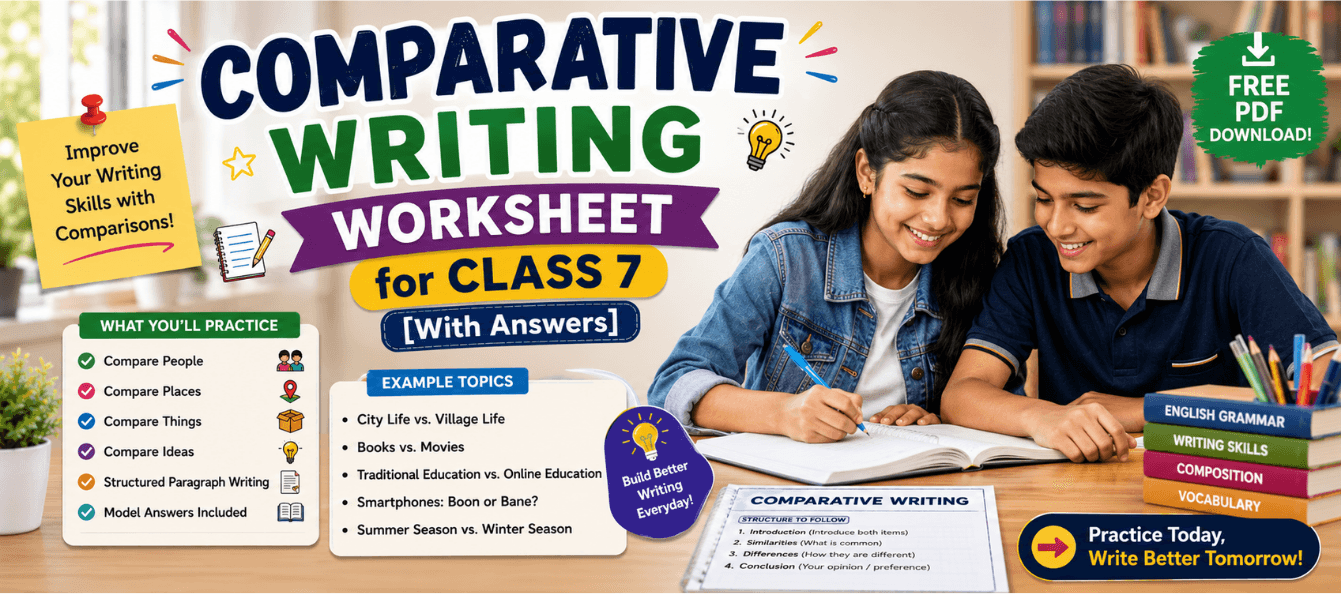
Comparative writing is one of the most important skills students develop in middle school. In Grade 7, learners are introduced to comparative analysis paragraph writing, where they explore similarities and differences between texts. This English grammar worksheet focuses on comparing two different writing styles—imagery and suspense—through a classroom writing competition. By practicing these exercises, students learn how to analyze texts, identify techniques, and explain their effects clearly.
Download these English grammar worksheets and practice regularly to strengthen your language skills and build a strong foundation. You can also book a free trial to get expert guidance and improve your reading, writing, and comprehension abilities. The worksheets are designed in a simple and structured way to help K–8 students learn grammar concepts easily and use them confidently in everyday communication.
What Is the Topic?
The topic of this worksheet is ‘‘comparative analysis paragraph writing’’. Students learn how to compare two texts based on style, technique, and effect. The worksheet highlights how Aarohi uses imagery to create vivid pictures in the reader’s mind, while Kabir uses suspense to build tension and curiosity. The goal is to help students understand that even when the theme is the same, the writer’s choice of style can completely change the reader’s experience.
What’s in This Worksheet?
1. Multiple choice questions to test understanding of imagery and suspense.
2. Fill in the blanks exercises using key terms like theme, style, and effect.
3. True and false questions to check comprehension of comparative writing.
4. Short written comparisons to identify differences and similarities.
5. A paragraph completion activity using context clues.
Definitions, Examples, Techniques, and Tips
- ‘‘Imagery’’: Writing that appeals to the senses and creates clear pictures. Example: Aarohi describing rain as “shining drops” and the sky as a “dark blanket.”
- ‘‘Suspense’’: Writing that builds tension and curiosity. Example: Kabir describing “the silence before the storm” and “sudden thunder.”
- ‘‘Comparison’’: Identifying similarities and differences between texts.
- ‘‘Technique’’: The method used by the writer, such as imagery or suspense.
- ‘‘Quick tip’’: Always look for what the writer wants the reader to feel—calmness, excitement, curiosity, or imagination.
Why Is It Important to Learn This?
Comparative writing is important because it teaches students how to analyze texts critically. It strengthens reading comprehension, improves writing skills, and helps students explain how different techniques affect the reader. This skill is also essential for exams, where students are often asked to compare passages or literary styles.
Where Will This Knowledge Help You?
- In exams, where comparative questions test analysis skills.
- In writing tasks, where students must explain differences in style.
- In class discussions, where comparing texts helps build stronger arguments.
How to Use This Worksheet?
1. Attempt each question independently first.
2. Review the answers carefully in the exact worksheet order.
3. Compare your answers with the key provided.
4. Correct mistakes and practice regularly to improve.
Important Tips and Tricks
1. Do not confuse imagery with suspense—imagery appeals to senses, suspense appeals to emotions.
2. Always identify the theme before comparing techniques.
3. Examiners expect clear answers that show both similarities and differences.
4. For writing tasks, remember: “Answers may vary.” Students should use their own words but stay focused on the techniques.
Complete Answer Key
Exercise No. 1
1. b) imagery
2. b) suspense
3. a) same theme
4. c) description versus tension
5. c) visual detail
6. b) building tension
7. a) imagery
8. a) suspense
9. a) text analysis
10. c) compare texts
Exercise No. 2
1. paragraph
2. similarity
3. difference
4. comparison
5. imagery
6. suspense
7. theme
8. style
9. effect
10. analysis
Exercise No. 3
1. True
2. True
3. False
4. False
5. False
6. True
7. False
8. True
9. True
10. False
Exercise No. 4
1. Aarohi describes rain with vivid details: imagery
2. Kabir builds tension through events: suspense
3. Both paragraphs focus on rain: same theme
4. Aarohi creates images in mind: visual detail
5. Kabir creates suspense in reader: curiosity
6. Both use different techniques: imagery vs. suspense
7. The styles are clearly different: descriptive vs. dramatic
8. Readers experience different effects: calm vs. thrilling
9. The comparison highlights differences: style and effect
10. The writing shows comparative analysis: structured comparison
Exercise No. 5
In a school in ‘‘Delhi’’, a writing competition was announced where students had to describe a ‘‘rainy’’ day. The announcement created ‘‘excitement’’ across the classrooms, as many students loved the idea of capturing the mood of rain in ‘‘words’’. Aarohi wrote a descriptive ‘‘paragraph’’ focusing on imagery. She described the rain as ‘‘shining’’ drops and the sky as a dark ‘‘blanket’’. Meanwhile, Kabir wrote a paragraph focusing on ‘‘suspense’’. He described the silence before the storm and the sudden ‘‘thunder’’ that followed. His writing created tension and ‘‘curiosity’’, making readers wonder what might happen next. Both students used different ‘‘styles’’ to present the same theme of rain.
Answers may vary for any open-ended writing tasks.
This Grade 7 English grammar worksheet on comparative writing helps students build confidence in analyzing texts. By practicing imagery and suspense, learners understand how style changes the reader’s experience. Keep practicing regularly to strengthen your comparative writing skills and prepare for exams.