
Class 7 Clarity & Precision in Writing Worksheet: With Examples
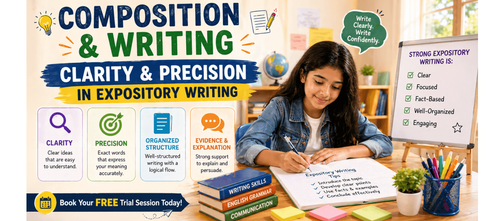

Master Clear Writing Skills with This English Grammar Worksheet for Grade 7 on Clarity & Precision in Expository Writing
Have you ever read something and felt confused because the ideas were not clear? Writing clearly and precisely is an important skill, especially for Grade 7 students who are learning how to explain ideas in a structured way. This English grammar worksheet for Grade 7 on Clarity & Precision in Expository Writing helps students understand how to present information step by step using simple and clear language. Through the story of rainwater harvesting, students learn how to organize their thoughts, avoid unnecessary details, and explain processes effectively. This makes writing easier to understand and more meaningful for readers.
Download these English grammar worksheets and practice regularly to strengthen your language skills and build a strong foundation. You can also book a free trial to get expert guidance and improve your reading, writing, and comprehension abilities. The worksheets are designed in a simple and structured way to help K–8 students learn grammar concepts easily and use them confidently in everyday communication.
What Is the Topic?
Clarity and precision in expository writing means explaining ideas in a simple, clear, and well-organized way. In this worksheet, students learn how to describe a process step by step without adding unnecessary or confusing details. The story explains rainwater harvesting by defining it, explaining each step, and showing its importance. Students are expected to understand how clear sentences, proper order, and relevant examples make writing easy to understand.
What’s in This Worksheet?
1. A story about rainwater harvesting that demonstrates clear and precise writing.
2. Multiple Choice Questions to test understanding of the story and key ideas.
3. Fill in the blanks activity to recall important words from the text.
4. True or False statements to check comprehension.
5. Underline the words activity to identify clear and unclear expressions.
6. A paragraph writing task to apply learning and explain ideas in their own words.
7. A structured approach that supports comprehension, grammar accuracy, and writing skills.
Definitions, Examples, Techniques, and Tips
Definition:
Rainwater harvesting is the process of collecting and storing rainwater.
Examples from the worksheet:
Rooftops act as the main surface to collect rainwater.
Pipes carry the water from the roof to a storage tank.
Filters are used to remove dirt and leaves from the water.
Techniques shown in the worksheet:
Using simple and clear sentences.
Explaining steps in order using words like first, then, next.
Avoiding unnecessary details and repeated ideas.
Adding examples to explain importance.
Quick learning tips:
Always define your topic clearly.
Explain each step in order.
Use simple words so readers can understand easily.
Avoid vague words and unnecessary information.
Why Is It Important to Learn This?
Learning clarity and precision helps students express ideas in a simple and understandable way. It improves writing skills and helps in explaining processes clearly. This skill is important in school assignments, exams, and everyday communication. It also helps readers understand the message without confusion.
Where Will This Knowledge Help You?
This knowledge helps in writing clear answers in exams.
It improves paragraph writing and essay writing skills.
It supports better communication in class discussions.
It helps in explaining processes in subjects like science and social studies.
How to Use This Worksheet?
1. Read the story carefully and understand each step explained.
2. Attempt all questions independently without looking at answers.
3. Review your answers and compare them carefully with the answer key.
4. Correct your mistakes and understand where you went wrong.
5. Practice regularly to improve clarity and precision in writing.
Important Tips and Tricks
1. Avoid using vague words like “somewhere” or “stuff.”
2. Use simple and clear sentences instead of long and confusing ones.
3. Follow the correct order when explaining a process.
4. Do not repeat the same idea again and again.
4. Always include examples to make your explanation better.
5. Read your writing again to remove unnecessary details.
Complete Answer Key
Exercise No. 1
1. A. An expository essay about rainwater harvesting
2. B. Storing rainwater for later use
3. C. Rooftops
4. A. To a storage tank
5. A. To remove dirt and leaves
6. A. For gardening and cleaning
7. C. Unnecessary details
8. C. To make the process easy to understand
9. B. It reduces water shortages
10. A. Clear and precise writing is important
Exercise No. 2
1. expository
2. rainwater
3. surface
4. storage
5. dirt
6. gardening
7. details
8. sentences
9. shortages
10. understand
Exercise No. 3
1. False
2. True
3. True
4. True
5. False
6. True
7. False
8. False
9. True
10. False
Exercise No. 4 (Sample Answers)
1. not very easy to understand
2. clearly
3. described the steps / rooftops / pipes
4. cool way
5. somewhere
6. beneficial method for conserving water resources
7. stores the rainwater
8. making water better
9. good work
10. some stuff
Exercise No. 5 (Sample Answer)
Clear and precise writing is important because it helps readers understand information easily. In the story, Riya explained rainwater harvesting step by step using simple and clear sentences. She avoided unnecessary details and used examples to show why saving rainwater is important. This made her writing easy to follow and understand. When we write clearly and precisely, we can communicate our ideas effectively and avoid confusion.
Practicing clarity and precision in writing helps Grade 7 students become confident communicators. This English grammar worksheet on Clarity & Precision in Expository Writing gives students the right tools to organize their thoughts and present ideas effectively. With regular practice, students can improve their writing skills and make their communication clear and meaningful.