
Class 7 Descriptive Writing Worksheet: With Sensory Details Exercises
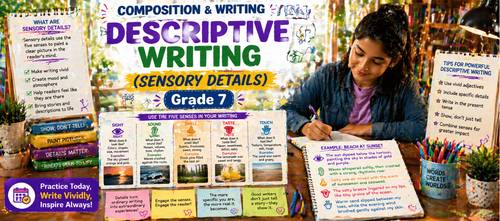

English grammar worksheet on descriptive writing (sensory details)
Writing descriptive paragraphs can be an exciting way for students to express their creativity while also improving their grammar. In Grade 7, students are introduced to sensory details, which bring writing to life by appealing to the five senses. The ability to write descriptive sentences and paragraphs is an essential skill, not only for English language exams but also for creative writing tasks, essays, and even everyday communication. This worksheet focuses on using sensory details effectively to describe a scene and develop a stronger writing style.
Download these English grammar worksheets and practice regularly to strengthen your language skills and build a strong foundation. You can also book a free trial to get expert guidance and improve your reading, writing, and comprehension abilities. The worksheets are designed in a simple and structured way to help K–8 students learn grammar concepts easily and use them confidently in everyday communication.
What is the topic?
The topic of this worksheet is *Descriptive Writing (Sensory Details)*. Sensory details are words or phrases that appeal to the five senses: sight, sound, touch, taste, and smell. These details make descriptions more vivid and help readers imagine scenes and emotions more clearly. By focusing on sensory details, students can create more engaging and immersive writing. In this worksheet, students will practice identifying sensory details and using them in their writing, focusing on how to describe a rainy day in the city.
What’s in this worksheet?
This worksheet consists of several activities designed to help students practice descriptive writing using sensory details:
1. **Multiple-choice questions** that test students' ability to identify sensory details in a story.
2. **Fill-in-the-blank exercises** where students will complete sentences by adding the correct sensory details.
3. **True or false statements** to assess understanding of the story and sensory descriptions.
4. **Underline the words** activity to reinforce the identification of key descriptive words and phrases.
5. **Writing task** where students describe a scene using sensory details, reinforcing their skills in crafting vivid descriptions.
This structure helps students become more confident in their writing and better prepares them for both academic and creative writing tasks.
Definitions, examples, techniques, and tips
**Definitions:**
- *Sensory details* refer to words or phrases that describe how something looks, sounds, smells, feels, or tastes. They engage the reader's senses and create a stronger emotional connection to the scene being described.
- *Descriptive writing* is writing that gives detailed information about a subject using sensory details. It aims to paint a vivid picture in the reader's mind.
**Examples:**
- *Sight*: "The gray clouds hung low, as if they were weighed down by the downpour."
- *Sound*: "Thunder rumbled in the distance, adding tension to the calm atmosphere."
- *Smell*: "The scent of wet earth mixed with the faint aroma of coffee from nearby cafés."
**Techniques:**
- Use strong adjectives and vivid verbs to describe sensory experiences.
- Don't just mention the sense; explain the experience in detail (e.g., “The streets were reflective, catching the soft glow of city lights”).
- Incorporate all five senses in your descriptions to create a full and immersive picture for the reader.
**Quick learning tips:**
- When writing descriptive paragraphs, think about how you would experience the scene if you were there. What would you see, hear, smell, and feel?
- Practice using different sensory words for each of the five senses. This will add variety and depth to your writing.
Why is it important to learn this?
Learning to use sensory details in descriptive writing is important because it strengthens your ability to communicate clearly and effectively. By using sensory details, you can create vivid images in the reader’s mind, making your writing more engaging. This skill is essential for a wide range of writing tasks, including creative writing, essays, and even professional communication. Sensory writing also improves reading comprehension because it helps students identify key details in stories and other texts.
Where will this knowledge help you?
This knowledge will help you in:
- **Exams**: Many exams require descriptive writing tasks, where students are asked to describe a scene or situation. Using sensory details will help you earn higher marks for creating a vivid and engaging picture in the reader's mind.
- **Writing tasks**: Whether you're writing an essay, a story, or a report, sensory details can improve the quality of your writing and make your ideas more compelling.
- **Class participation**: When describing things in class discussions or during presentations, using sensory details will make your points clearer and more impactful.
How to use this worksheet?
1. **Attempt independently first**: Try to complete the exercises on your own before reviewing the answers.
2. **Review answers carefully**: Check your answers against the answer key provided in the worksheet.
3. **Correct mistakes**: Look at the questions you answered incorrectly and figure out why you made those mistakes. Try the questions again if needed.
4. **Practice regularly**: The more you practice using sensory details, the better your descriptive writing will become.
Important tips and tricks
1. **Common mistakes**: One common mistake is using too many sensory details in one sentence. Avoid overloading the reader; choose the most relevant sensory details.
2. **What examiners expect**: Examiners expect descriptive writing to be clear, vivid, and engaging. They want to see a strong use of sensory language to create a mental image for the reader.
3. **How to score full marks**: Focus on using a variety of sensory details, make sure each sentence is clear, and pay attention to the flow of your writing. Also, be sure to follow the instructions closely.
4. **How to approach activity-based or writing-based tasks**: For writing tasks, start by brainstorming sensory details related to the topic. Break your description into parts (sight, sound, smell, etc.) and use a variety of vocabulary to describe each part.
Complete answer key
Exercise 1 – Multiple Choice Questions
1. b) Peace and calm
2. b) The gray clouds above
3. b) Tension-building
4. c) Calm
5. b) They hurry along the sidewalks
6. a) The city lights
7. c) Wet earth
8. a) The scent of fresh rain-soaked leaves
9. c) The city becomes quiet and calm
10.a) Peaceful and fresh
Exercise 2 – Fill in the Blanks
1. Gray
2. Umbrellas
3. Thunder
4. Scent
5. Sound
6. Clear
7. Breeze
8. Peaceful
9. Wet
10. Brighten
Exercise 3 – True or False
1. False
2. False
3. True
4. False
5. True
6. False
7. False
8. True
9. True
10. False
Exercise 4 – Underline the Words (Examples)
1. Gray clouds
2. Rushed along the sidewalks
3. Sound of distant thunder
4. Scent of wet earth
5. Glistened with reflection of city lights
6. Everything felt calm and fresh
7. Cool breeze carried fresh rain-soaked leaves
8. Peaceful atmosphere
9. People emerged from shelters
10. Sky brightened as raindrops fell
Exercise 5 – Writing Sample
The rain had a calming effect on the city. As the drops fell softly, the streets reflected the city lights, and the scent of wet earth filled the air. People hurried along, their umbrellas shielding them from the cold. The distant rumble of thunder added a sense of tension, but as the rain eased, the city began to feel peaceful. The cool breeze carried the fresh scent of rain-soaked leaves, and everything seemed to slow down. When the rain stopped, the city felt fresh and calm, as if it had been cleansed by the storm.