
Class 7 Using Dialogue in Writing Worksheet: Printable PDF
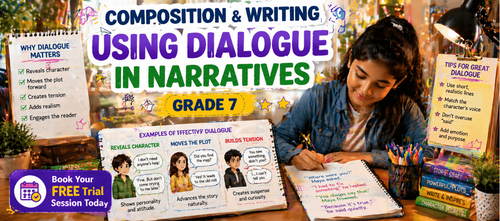

English Grammar Worksheet on Using Dialogue in Narratives
Understanding how to use dialogue in
narratives is an essential skill in writing. In Grade 7, students are introduced to the concept of incorporating dialogue into their compositions, making their stories more engaging and realistic. This worksheet helps students master this skill through various exercises that focus on the appropriate use of dialogue to enhance storytelling. By practicing with this worksheet, students can refine their narrative writing skills, ensuring they are well-prepared for future writing assignments.
Download these English grammar worksheets and practice regularly to strengthen your language skills and build a strong foundation. You can also book a free trial to get expert guidance and improve your reading, writing, and comprehension abilities. The worksheets are designed in a simple and structured way to help K–8 students learn grammar concepts easily and use them confidently in everyday communication.
What is the topic?
This worksheet focuses on the importance of using dialogue in narratives. Dialogue in stories not only adds realism but also reveals characters' emotions, thoughts, and interactions, making the story more vivid and engaging for readers. By mastering the use of dialogue, students will learn how to make their characters come to life, help develop the plot, and improve the overall flow of their writing.
In this worksheet, students will:
- Learn how to punctuate dialogue correctly.
- Practice incorporating dialogue into a narrative to build tension or character development.
- Understand how dialogue can be used to reveal the speaker’s personality or emotions.
By the end of the worksheet, students should be able to write simple narratives that include meaningful dialogue to enhance the storytelling experience.
What’s in this worksheet?
This worksheet includes a variety of exercises designed to strengthen students' understanding and application of dialogue in writing. The exercises are structured to guide students through different aspects of writing dialogue:
1. Multiple Choice Questions (MCQs): These questions test students' understanding of key concepts such as punctuation and the use of dialogue tags.
2. Fill in the Blanks: Students will complete sentences by filling in the blanks with suitable dialogue, practicing how dialogue interacts with the rest of the narrative.
3. True and False: Statements based on the story provided in the worksheet, where students will mark the accuracy of each.
4. Underline the Words: Students will underline words or phrases in a sentence that best reflect the theme or message of the dialogue.
5. Paragraph Writing: A writing exercise where students summarize the main events of the story while incorporating dialogue.
These exercises work together to support students' writing and help prepare them for exams, where understanding dialogue in writing is often tested.
Definitions, examples, techniques, and tips
Definitions:
- Dialogue: A conversation between two or more characters in a story, usually enclosed in quotation marks.
- Dialogue tags: Phrases like "he said," "she asked," or "Tom shouted" that attribute speech to a particular character.
- Punctuation in dialogue: Correct use of commas, question marks, and quotation marks to punctuate dialogue.
Examples:
- "I can’t wait to go surfing!" Mark said, smiling.
- "Maybe it fell out of the jewelry box," Mark suggested.
Techniques:
- Use dialogue tags to make it clear who is speaking.
- Place punctuation inside the quotation marks to indicate how the character is speaking.
- Use dialogue to reveal emotions or motivations, such as frustration, excitement, or surprise.
Quick Learning Tips:
- Read the dialogue aloud to ensure it sounds natural.
- Use dialogue to move the plot forward or reveal a character's intentions.
- Avoid overusing dialogue tags like "he said" or "she said"—vary them with actions or expressions.
Why is it important to learn this?
Learning how to use dialogue effectively is crucial in narrative writing. Dialogue not only brings the story to life but also:
- Helps develop the characters by showing how they interact with each other.
- Advances the plot through conversations that reveal critical information or change the direction of the story.
- Builds a connection with the reader, making the story more engaging and relatable.
Being able to write compelling dialogue is a valuable skill that will support students in their writing assignments and beyond, from creative writing to essays and exams.
Where will this knowledge help you?
This knowledge will be applicable in various contexts:
- Exams: Understanding how to incorporate dialogue effectively can help students score higher on writing tasks.
- Writing Tasks: Whether writing short stories or essays, students will use dialogue to demonstrate character development and conflict resolution.
- Class Participation: Students will use dialogue to communicate their ideas more clearly in classroom discussions, group projects, and presentations.
How to use this worksheet?
Follow these steps to get the most out of this worksheet:
1. Attempt independently first: Try to complete the exercises on your own without looking at the answers.
2. Review answers carefully: After completing the exercises, check your answers to see where you can improve.
3. Correct mistakes: If you make any errors, review the relevant rules on dialogue and punctuation.
4. Practice regularly: Repetition is key to mastering the use of dialogue in narratives.
Remember, the solutions follow the exact order of the worksheet. Be sure to compare your answers carefully and note areas for improvement.
Important tips and tricks
1. Common mistakes:
- Incorrect punctuation within dialogue.
- Failing to use dialogue tags to attribute speech.
- Overusing the same dialogue tag in every sentence.
2. What examiners expect:
- Proper punctuation and structure in dialogue.
- Dialogue that contributes to character development and plot progression.
3. How to score full marks:
- Ensure your dialogue is relevant to the story and contributes meaningfully to the narrative.
- Use varied dialogue tags and punctuation correctly.
4. How to approach writing tasks:
- Focus on character development through their dialogue.
- Be concise but clear—make sure each piece of dialogue serves a purpose.
Complete Answer Key
**Exercise No. 1:**
1. c) Their plans for the beach
2. b) In the jewelry box
3. a) A necklace
4. b) In the jewelry box
5. a) Mark
6. b) Under the rose bush
7. a) a shiny rock
8. a) Relieved
9. b) “That was a tough mystery to solve.”
10.b) “We’re going to the beach now!”
**Exercise No. 2:**
1. beach
2. necklace
3. jewelry box
4. under
5. shiny
6. back
7. look
8. relieved
9. found
10. Tom
**Exercise No. 3:**
1. True
2. False
3. True
4. False
5. False
6. True
7. True
8. False
9. False
10. True
**Exercise No. 4:**
1. excited
2. worried
3. shiny rock
4. relieved
5. back
6. rose bush
7. last place
8. solved simply
9. happy
10. grandmother's gift
**Exercise No. 5:**
Students may write a paragraph such as:
Lily and Mark were excited to go to the beach, but they had to help Lily's mom find a missing necklace. After looking around, Tom found the necklace under the rose bush. Mrs. Thompson was relieved, and the family solved the mystery together.
Keep Practicing and Improving!
With regular practice, you’ll continue to improve your ability to use dialogue in narratives. This skill will serve you well not only in your Grade 7 assignments but also in future writing tasks. Remember, practice is the key to success, so keep working on your writing skills!