
Class 7 Writing Strong Beginnings Worksheet: Grammar Practice for Kids
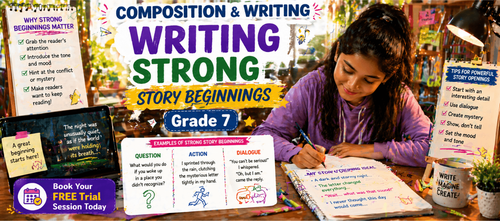

Writing Strong Story Beginnings: Grade 7 English Grammar Worksheet on Composition & Writing
Crafting a captivating story beginning is one of the most important skills for a writer to master. As a Grade 7 student, learning how to create strong story openings will not only improve your writing but also make your stories more engaging. Story beginnings are crucial as they set the tone, introduce characters, and grab the reader’s attention. With exercises that include multiple-choice questions, fill-in-the-blanks, and paragraph writing, this English grammar worksheet will help you practice and perfect the art of writing strong story beginnings.
Download these English grammar worksheets and practice regularly to strengthen your language skills and build a strong foundation. You can also book a free trial to get expert guidance and improve your reading, writing, and comprehension abilities. The worksheets are designed in a simple and structured way to help K–8 students learn grammar concepts easily and use them confidently in everyday communication.
What is the topic?
This worksheet focuses on developing strong story beginnings, an essential element of composition and writing. Students will learn how to create captivating story openings that set the stage for the rest of their narratives. A strong beginning hooks the reader’s attention, introduces key elements of the story, and establishes the tone. By practicing writing techniques such as description, suspense, and character introduction, students will improve their ability to start stories with impact.
What’s in this worksheet?
This worksheet includes the following exercises to help you develop your writing skills:
1. **Multiple Choice Questions (MCQs)**: These questions ask students to read the story "The Mysterious Key" and choose the best answers that reflect the theme and elements of a strong beginning.
2. **Fill in the Blanks**: This section tests your ability to understand the vocabulary and context of story openings by filling in missing words that enhance the story’s atmosphere.
3. **True or False**: This exercise helps assess your understanding of the details in the story and its central theme.
4. **Underline the Words**: In this task, students underline words or phrases that best reflect the story’s theme, helping to identify key details that contribute to a strong opening.
5. **Paragraph Writing**: You’ll summarize the story "The Mysterious Key" by describing Sophie finding the key, entering the forest, and her excitement to uncover its secret. This allows students to practice conveying mystery and adventure in writing.
These exercises aim to strengthen students' abilities in writing, reading comprehension, and critical thinking while preparing them for future exams.
Definitions, examples, techniques, and tips
- **Definitions**:
- A **strong story beginning** is one that hooks the reader’s attention by providing intriguing details, setting up the story’s tone, and introducing the main conflict or mystery. A strong opening makes the reader want to continue reading.
- **Contextual clues**: Words and phrases that set the scene, describe emotions, or hint at what’s coming in the story are key to creating a compelling opening.
- **Examples**:
- “Sophie stood at the edge of the old forest, clutching the strange, rusted key she had found in her grandmother's attic.”
- The weather is described as “misty and mysterious,” establishing an eerie, suspenseful mood.
- The forest is described as “quiet and watchful,” creating an atmosphere of mystery and tension.
- **Techniques**:
- **Descriptive language**: Use sensory details to set the scene, such as describing how the air feels or how the setting looks.
- **Character development**: Introduce a character’s emotions and motivations right away, like Sophie’s excitement to uncover the key’s secret.
- **Quick learning tips**:
- Start with a hook: the opening sentence should raise curiosity.
- Build suspense by hinting at what will happen next without revealing too much.
- Establish the setting and tone early on so the reader knows the environment in which the story takes place.
Why is it important to learn this?
Mastering the art of writing strong story beginnings is crucial for engaging readers from the first sentence. As a Grade 7 student, developing this skill will enhance your writing assignments, essays, and creative works. A strong opening grabs the reader’s attention, builds curiosity, and sets up the rest of the story. This topic is important not only for academic success but also for creating impactful narratives in future writing tasks.
Where will this knowledge help you?
This knowledge will be helpful in various areas:
- **Exams**: Understanding how to write a strong story beginning can significantly improve your narrative writing section in exams.
- **Writing tasks**: Whether you are asked to write a short story, a personal essay, or even a creative piece for school, knowing how to craft a compelling introduction will strengthen your overall composition.
- **Class participation**: This skill will help you participate more effectively in classroom writing exercises and projects.
How to use this worksheet?
1. **Attempt independently first**: Read each exercise carefully and try to answer or complete them on your own.
2. **Review answers carefully**: After completing the worksheet, go back to check your answers and ensure they align with the story’s details.
3. **Correct mistakes**: If any answers are wrong, review the story again to understand the correct details and revise accordingly.
4. **Practice regularly**: Use this worksheet as a guide to practice writing strong beginnings for your own stories. Keep honing your skills until you feel confident in writing captivating openings.
Remember that the answer key follows the exact order of the exercises, so compare your answers carefully to check your understanding.
Important tips and tricks
1. **Common mistakes**:
- Not setting the tone early in the story. Ensure your opening establishes the atmosphere right from the first sentence.
- Overloading the opening with too much detail. Start with the essentials and leave room for the story to unfold.
2. **What examiners expect**:
- A clear and engaging opening. Examiners expect you to capture the reader’s attention with vivid descriptions and a strong hook.
3. **How to score full marks**:
- Make sure your opening sets the scene, introduces the character’s emotions or conflict, and gives a hint of what’s to come without giving everything away.
4. **How to approach activity-based or writing-based tasks**:
- Follow the instructions carefully. When asked to summarize the story, focus on key moments like Sophie’s discovery of the key and her feelings about it.
**Complete answer key**
**Exercise No. 1 – Read the story and choose the best answer to show theme meaning**
1. b. In her grandmother’s attic
2. c. Misty and mysterious
3. c. Both a and b
4. b. Quiet and watchful
5. b. Excited and curious
6. b. Whispers
7. a. She had never spoken about it
8. b. She turned it in her hand
9. c. It grew quieter, as if waiting for her
10. b. The mystery and adventure of the unknown
**Exercise No. 2 – Fill in the blanks**
1. attic
2. misty
3. hidden treasure
4. quiet
5. excited
6. whispers
7. never
8. turned
9. quieter
10. adventure
**Exercise No. 3 – True or False**
1. False
2. True
3. True
4. True
5. False
6. False
7. False
8. False
9. False
10. True
**Exercise No. 4 – Underline the words**
1. attic
2. mysterious
3. secret
4. quiet and watchful
5. excited
6. whispers
7. never
8. turned
9. quieter
10. adventure
**Exercise No. 5 – Write a short paragraph summarizing the story "The Mysterious Key"**
Answers may vary.
Sophie found an old, rusted key in her grandmother’s attic. She believed it might unlock a hidden secret. Feeling excited, Sophie walked into the mysterious forest, determined to uncover what the key would open. As she ventured deeper, the forest grew quieter, making her feel both curious and adventurous. Sophie’s heart raced as she stepped forward, ready to discover the hidden truth behind the key.
Practicing writing strong story beginnings is an important skill that will help you craft more interesting and engaging stories. By focusing on your opening, you will be able to capture your reader's attention and make your story memorable. Keep practicing, and you’ll become a better writer every day.