
Class 7 English Worksheet: Multiple Evidence Claims Practice
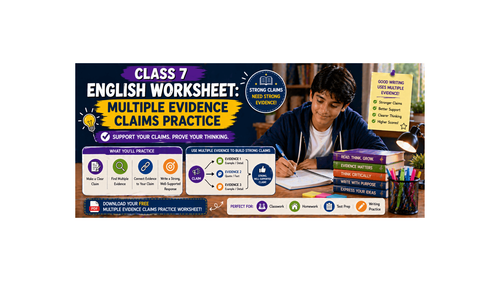

Mastering Evidence-Based Thinking: English Grammar Worksheet Grade 7 on Multiple Evidence for One Claim
Understanding how to support ideas with strong and clear evidence is an essential skill for students. In Grade 7, this becomes even more important as students begin to analyze texts more deeply and express their thoughts more clearly. This English grammar worksheet on “Multiple Evidence for One Claim” helps students learn how one idea can be supported by several meaningful actions or details.
Through the story of Arjun and the lost wallet, students explore how honesty is not shown by just one action but by multiple actions working together. From finding the wallet to returning it and refusing a reward, each step strengthens the main idea. This worksheet helps students connect actions with ideas, making learning both practical and engaging.
Download these English grammar worksheets and practice regularly to strengthen your language skills and build a strong foundation. You can also book a free trial to get expert guidance and improve your reading, writing, and comprehension abilities. The worksheets are designed in a simple and structured way to help K–8 students learn grammar concepts easily and use them confidently in everyday communication.
What Is the Topic?
The topic “Multiple Evidence for One Claim” teaches students how a single idea or claim can be supported using several pieces of evidence. In the worksheet, Arjun’s honesty is the main claim, and it is supported by actions such as returning the wallet, finding the owner, and refusing the reward.
Students learn that:
• A claim is an idea or statement
• Evidence includes actions or details that prove the claim
• Strong understanding comes from identifying multiple supporting details
This concept helps students think logically and understand how ideas are built clearly.
What’s in This Worksheet?
1. A story titled “The Lost Wallet Incident” to introduce the concept
2. Multiple choice questions to test understanding of the theme
3. Fill in the blanks based on key ideas from the story
4. True and False statements for comprehension checking
5. Underline the correct word activity to identify the theme
6. A paragraph writing task to apply learning
7. Structured questions that move from basic to advanced thinking
8. Focus on identifying claims and supporting evidence
Definitions, Examples, Techniques, and Tips
Definitions:
• Claim: A statement or idea that needs support
• Evidence: Actions or details that prove the claim
Examples:
• Arjun returned the wallet
• He made an effort to find the owner
• He refused the reward
These examples together support the claim that Arjun is honest.
Techniques:
• Read the story carefully
• Identify important actions
• Link actions to the main idea
• Look for more than one supporting detail
Quick learning tips:
• Always find multiple examples
• Do not depend on a single action
• Focus on the theme
• Observe how actions show character
Why Is It Important to Learn This?
This concept is important because it helps students:
• Understand stories better
• Write clear and strong answers
• Develop logical thinking
• Support ideas with proper reasoning
It builds a strong base for academic success and effective communication.
Where Will This Knowledge Help You?
Students can use this knowledge in:
• School exams and comprehension passages
• Writing detailed answers
• Classroom discussions
• Understanding themes and messages
It also helps in building confidence while expressing ideas.
How to Use This Worksheet?
1. Read the story carefully before answering
2. Try to answer all questions on your own
3. Focus on identifying the main idea and supporting actions
4. Review your answers after completing
5. Compare your answers with the correct answer key
6. Practice regularly to improve accuracy
The solutions follow the exact worksheet order, so students should compare answers carefully.
Important Tips and Tricks
1. Read the story fully before attempting questions
2. Focus on actions that support the claim
3. Avoid guessing answers without evidence
4. Identify more than one supporting detail
5. Carefully choose the correct word in options
6. Understand the theme clearly before answering
7. Use examples while writing paragraphs
8. Practice identifying strong and weak evidence
Complete Answer Key
Exercise 1 – Multiple Choice Answers
1. b
2. a
3. c
4. b
5. b
6. c
7. b
8. a
9. c
10. b
Exercise 2 – Fill in the Blanks
1. honesty
2. effort
3. refusal
4. proof
5. lesson
6. decision
7. character
8. trust
9. pieces of evidence
10. example
Exercise 3 – True or False
1. True
2. False
3. True
4. True
5. False
6. True
7. False
8. True
9. True
10. False
Exercise 4 – Underline the Correct Word
1. honesty
2. responsible
3. positive
4. trust
5. important
6. integrity
7. right
8. proud
9. ethical
10. values
Exercise No. 5
Read the story and write a short paragraph.
Write a short paragraph explaining how multiple pieces of evidence support one claim in the passage. Focus on the theme, Arjun’s actions, examples of strong evidence, and examples of weak evidence.
Sample Answer:
The story shows that honesty is the main theme, and Arjun’s actions clearly support this claim. He returned the wallet, made an effort to find the owner, and refused the reward, which are strong pieces of evidence of his honesty. Each of these actions adds proof and shows his true character. Strong evidence includes returning the wallet and refusing money, while weak evidence would be actions that do not clearly prove honesty. The story teaches that one claim becomes stronger when supported by multiple clear and meaningful actions.
Practicing this English grammar worksheet for Grade 7 on “Multiple Evidence for One Claim” helps students improve their understanding of how ideas are supported. With regular practice, students can build confidence in reading, writing, and expressing their thoughts clearly and effectively.