
Literary Devices Worksheet for Grade 7: Practice & Examples
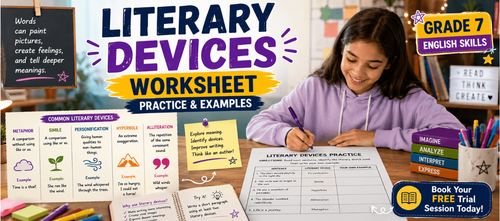

English grammar worksheet for Grade 7 – Comparing Use of Literary Devices
Literary devices are the tools writers use to make their stories, poems, and essays more powerful. For Grade 7 students, learning to compare the use of literary devices across texts is an important skill that builds comprehension and analytical thinking. This English grammar worksheet on Comparing Use of Literary Devices helps learners explore how imagery, simile, foreshadowing, and suspense can be compared to understand differences in storytelling.
Download these English grammar worksheets and practice regularly to strengthen your language skills and build a strong foundation. You can also book a free trial to get expert guidance and improve your reading, writing, and comprehension abilities. The worksheets are designed in a simple and structured way to help K–8 students learn grammar concepts easily and use them confidently in everyday communication.
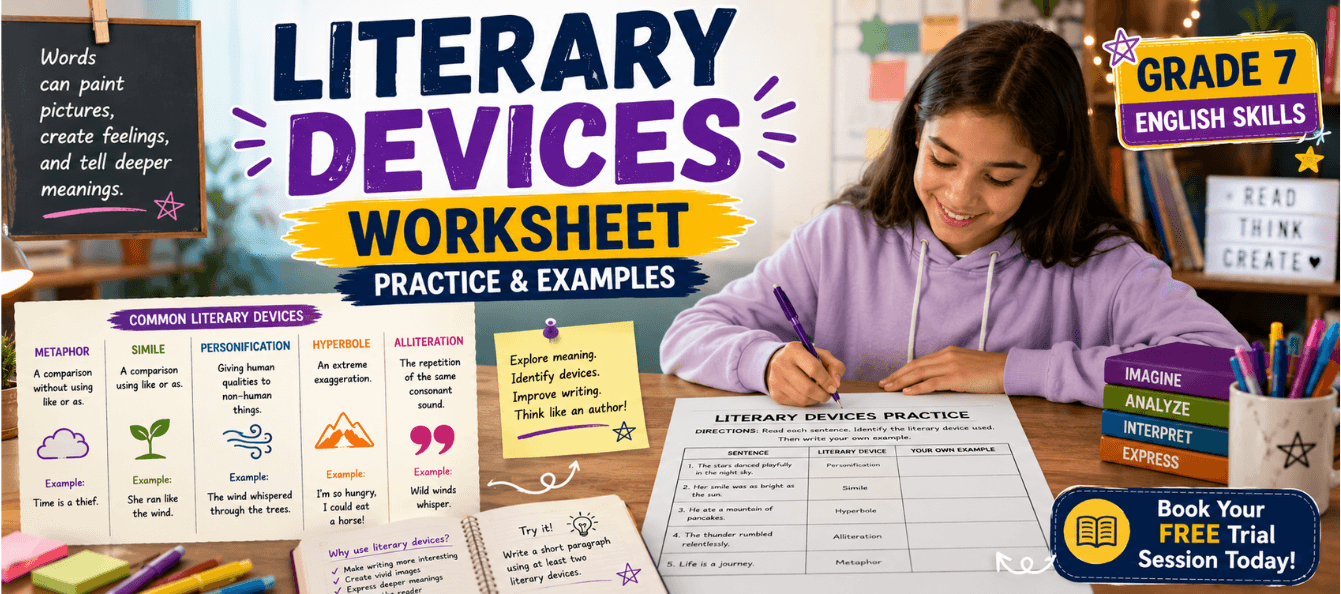
What Is the Topic?
Comparing use of literary devices across texts means analyzing how different writers use techniques to shape meaning. Students learn to identify devices such as imagery, simile, foreshadowing, and suspense, and understand how they affect the reader’s experience. This worksheet focuses on Rohan’s poem and Kavya’s short story, both about the monsoon in Mumbai.
What’s in This Worksheet?
1. Multiple choice questions to identify literary devices.
2. Fill in the blanks to match terms with story details.
3. True and false questions to check understanding.
4. Identification tasks to label devices in sentences.
5. Paragraph-based exercises to apply terms in context.
Definitions, Examples, Techniques, and Tips
- Imagery: Words that create vivid pictures. Example: “dancing silver threads.”
- Simile: Comparing two things using “like” or “as.” Example: “thunder as a roaring lion.”
- Foreshadowing: Hints about future events. Example: “dark clouds gathering.”
- Suspense: Building tension and curiosity. Example: “sudden silence before the storm.”
- Contrast: Showing differences in style. Example: Rohan’s descriptive imagery versus Kavya’s suspenseful storytelling.
Why Is It Important to Learn This?
Understanding literary devices helps students see how writers shape meaning and emotion. It strengthens comprehension, builds analytical skills, and prepares students for exams where device analysis is often tested.
Where Will This Knowledge Help You?
- In exams, where comparing literary devices is a common question.
- In writing tasks, where students must use devices effectively.
- In class discussions, where comparing techniques builds deeper understanding.
How to Use This Worksheet?
1. Read both texts carefully.
2. Attempt each question independently.
3. Review the answer key in the exact worksheet order.
4. Correct mistakes and practice regularly.
Important Tips and Tricks
1. Always identify the main device used in a passage.
2. Look for differences in how devices affect meaning.
3. Remember that imagery appeals to senses, while suspense builds tension.
4. Examiners expect clear identification of devices.
5. For paragraph tasks, use the exact terms provided in the word bank.
Complete Answer Key
Exercise No. 1
1. a) imagery
2. c) foreshadowing
3. a) create effect
4. b) description versus suspense
5. b) simile
6. a) foreshadowing
7. c) imagery
8. b) suspense
9. c) same event
10. a) reader experience
Exercise No. 2
1. imagery
2. simile
3. suspense
4. foreshadowing
5. device
6. description
7. tension
8. contrast
9. effect
10. metaphor
Exercise No. 3
1. False
2. False
3. False
4. True
5. True
6. True
7. False
8. True
9. True
10. False
Exercise No. 4
1. simile
2. foreshadowing
3. simile
4. suspense
5. imagery
6. foreshadowing
7. description
8. suspense
9. different techniques
10. simile
Exercise No. 5
Rohan wrote a poem about the monsoon in Mumbai. He described the rain as dancing silver threads and the thunder as a roaring lion. His use of imagery and simile made the scene vivid and lively. The poem celebrated the beauty of nature, turning ordinary rainfall into something magical. Meanwhile, Kavya wrote a short story about the same monsoon but chose a different approach. She used foreshadowing and suspense to create tension. Her descriptions of dark clouds gathering and sudden silence before the storm made readers curious. Rohan's purpose was to make readers imagine the charm of rain through descriptive language. Kavya's purpose was to build tension and create emotional engagement.
Together, their works show how literary devices shape the meaning of texts.
By comparing Rohan and Kavya’s texts, students learn how imagery and suspense differ but both make writing powerful. This Grade 7 English grammar worksheet on Comparing Use of Literary Devices builds confidence in analyzing literature and prepares students for higher-level reading and writing tasks. Keep practicing, and remember that every device adds depth to storytelling.
Book a free trial!