
Descriptive Writing Worksheet for Kids (Grade 2 PDF)
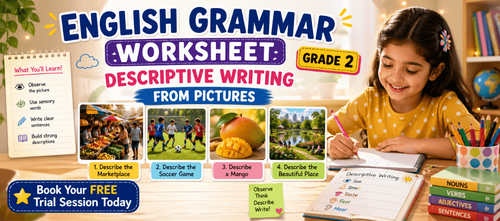

English grammar worksheet Grade 2 Descriptive Writing from Pictures
In Grade 2, learning descriptive writing skills helps students express themselves clearly and vividly. This worksheet encourages students to describe images in detail, improving their ability to observe and communicate what they see. By practicing these exercises, students will enhance their vocabulary, build sentence structure, and develop a strong foundation for descriptive writing.
Download these English grammar worksheets and practice regularly to strengthen your language skills and build a strong foundation. You can also book a free trial to get expert guidance and improve your reading, writing, and comprehension abilities. The worksheets are designed in a simple and structured way to help K–8 students learn grammar concepts easily and use them confidently in everyday communication.

What is the topic?
This worksheet focuses on developing descriptive writing skills by looking at pictures. Students will practice writing about what they see, focusing on details such as colors, actions, and settings. The goal is to help students write vivid, interesting descriptions that bring the pictures to life, improving their ability to observe and describe the world around them.
What's in this worksheet?
This worksheet includes the following types of exercises:
1. Writing sentences to describe a picture of a busy marketplace.
2. Writing sentences to describe a picture with many people playing soccer.
3. Writing a short paragraph describing a mango using sensory words.
4. Writing sentences to describe a beautiful place like a park or a garden.
Definitions, examples, techniques, and tips
Definitions:
1. Descriptive writing: Writing that paints a picture with words, helping the reader visualize what the writer is describing.
2. Sensory words: Words that describe how something looks, smells, tastes, feels, or sounds, which help make writing more vivid.
3. Observation: The act of noticing and describing details in a picture, scene, or object.
Examples:
1. "The marketplace is colorful with many fruits and vegetables. People are walking around and shopping, and the sun is shining brightly."
2. "Children are playing soccer in the field. Some are running, while others are kicking the ball. Everyone is having fun and enjoying the game."
3. "The mango is bright yellow and smooth to the touch. It smells sweet, and its juicy flesh tastes delicious."
Tips:
1. Use sensory details when writing about pictures to make your descriptions more engaging.
2. Start with the main elements of the picture, such as the setting, people, or objects, and then add details to describe them.
3. Focus on what stands out in the picture, whether it's the colors, actions, or any special features.
Why is it important to learn this?
Descriptive writing is an important skill because it helps students convey their thoughts and observations clearly. By learning to describe what they see, students also improve their ability to write about other topics in a detailed and engaging way. Descriptive writing also strengthens vocabulary and sentence structure, which are essential for both academic and creative writing.
Where will this knowledge help you?
This knowledge will help you in:
1. Writing descriptive essays and stories for school assignments.
2. Creating more engaging and vivid writing in various subjects, from science to social studies.
3. Becoming more confident in expressing your ideas clearly in both spoken and written communication.
How to use this worksheet?
To make the most of this worksheet, follow these steps:
1. Look carefully at the picture and think about what you see. Observe the details, colors, and actions.
2. Start writing by describing the main features of the picture.
3. Add sensory words to make your writing more vivid. For example, instead of just saying "the tree," you can say "the tall, green tree with thick branches."
4. After completing each description, read over your writing to check for clarity and accuracy.
Important tips and tricks
1. Use adjectives to describe the colors, shapes, and sizes of objects in the picture.
2. Focus on action verbs when describing what people or animals are doing.
3. Break your description into clear, easy-to-read sentences that follow a logical order.
Complete Answer Key
Exercise No. 1: Look at the picture given. Write a few sentences describing what you see in the picture.
Example Answer:
"In the picture, there are many stalls with fresh fruits and vegetables. People are walking around the market, looking at the different goods. The sun is shining, and there are trees along the street."
Exercise No. 2: Look at the picture with many people. Write a few sentences about what the children or people are doing.
Example Answer:
"Children are playing soccer in the park. Some are running after the ball, while others are cheering. They all seem to be enjoying the game on a bright sunny day."
Exercise No. 3: Write a short paragraph describing a mango.
Example Answer:
"The mango is a golden yellow color with smooth skin. When you peel it, it smells sweet and fresh. The fruit is juicy and tastes deliciously sweet. It feels soft and tender when you bite into it."
Exercise No. 4: Look at the picture of the place. Write a few sentences describing the place.
Example Answer:
"The park is very beautiful, with tall trees and a big pond in the middle. People are walking around, enjoying the sunny day. Children are playing by the water, and some are sitting on the grass. The city buildings can be seen in the background."
By practicing these descriptive writing exercises, you will improve your ability to express your observations clearly and creatively. Keep practicing regularly, and you'll be able to describe the world around you in more detail.