
Dialogue with Teacher Reading Worksheet for Class 2 Kids
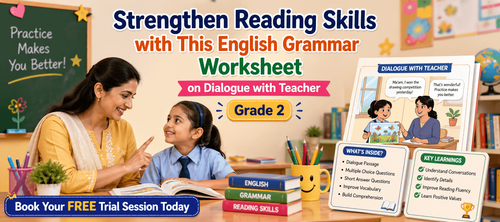

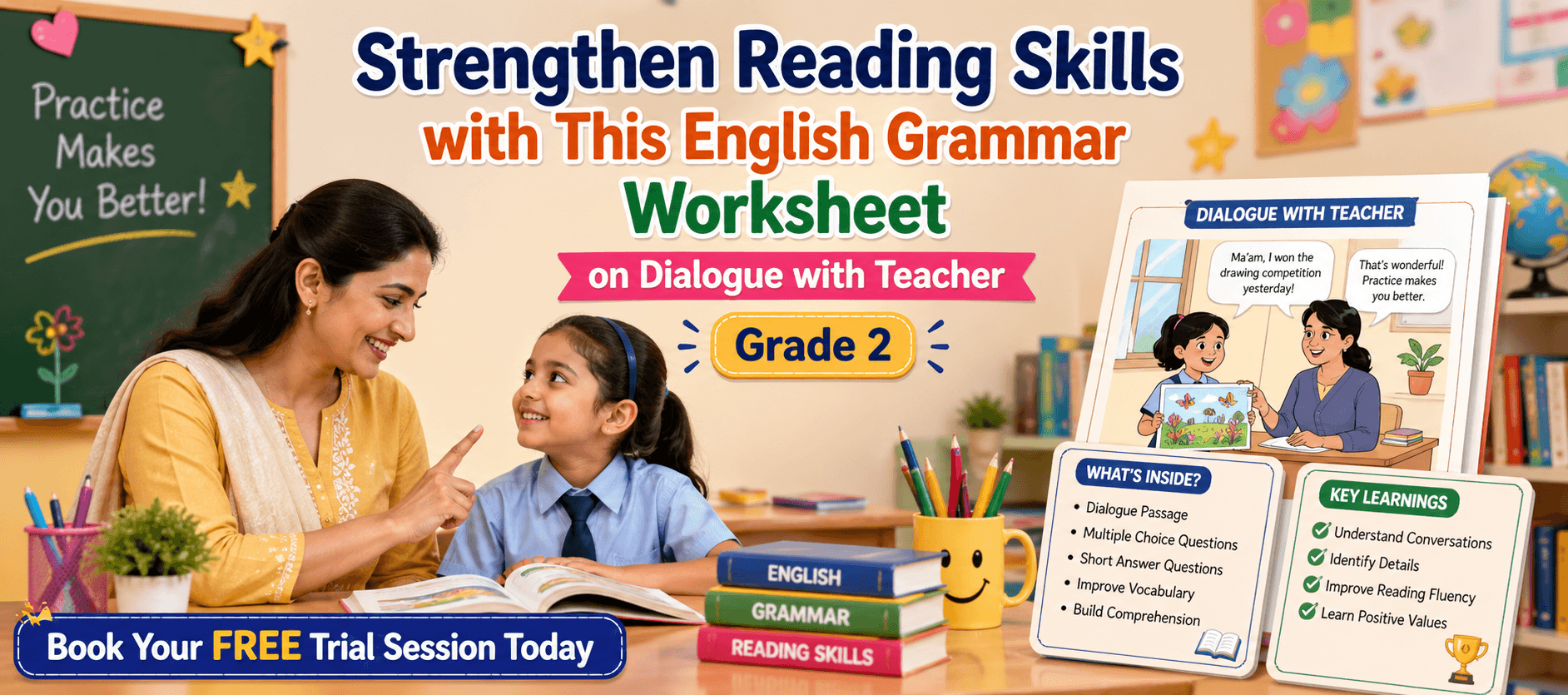
Strengthen Reading Skills with This English Grammar Worksheet for Grade 2 on Dialogue with Teacher
Reading comprehension activities help students improve understanding, vocabulary, and communication skills in a simple and engaging way. This English grammar worksheet for Grade 2 on Dialogue with Teacher introduces children to a short and meaningful classroom conversation between a teacher and a student. Through this passage, students learn how to understand dialogues, identify important details, and answer comprehension questions correctly.
The worksheet is designed to help Grade 2 learners practice reading fluency and comprehension in an enjoyable format. The dialogue-based passage keeps students interested while helping them understand emotions, actions, and conversations. Through objective-type and subjective-type questions, students improve their ability to read carefully and respond accurately.
This reading comprehension worksheet also teaches positive values such as practice, encouragement, confidence, and appreciation. By practicing passages regularly, children can strengthen their reading abilities, vocabulary, and understanding skills while becoming more confident readers.
Download these English grammar worksheets and practice regularly to strengthen your language skills and build a strong foundation. You can also book a free trial to get expert guidance and improve your reading, writing, and comprehension abilities. The worksheets are designed in a simple and structured way to help K–8 students learn grammar concepts easily and use them confidently in everyday communication.
What Is the Topic?
The topic of this worksheet is Reading Passage: Dialogue with Teacher. It is a reading comprehension activity designed for Grade 2 students. The passage presents a simple classroom conversation where Riya talks to her teacher after winning a drawing competition.
Students are expected to read the dialogue carefully and answer questions based on the information given in the passage. The worksheet helps learners understand conversations, identify important details, and improve comprehension accuracy.
The activities also encourage students to understand emotions, actions, and lessons shared through the dialogue. By practicing these comprehension exercises, children improve both reading and thinking skills.
What’s in This Worksheet?
1. A short and simple dialogue-based reading passage.
2. Multiple choice questions to check understanding of facts from the passage.
3. Subjective-type questions to test deeper understanding.
4. Reading comprehension activities focused on classroom conversations.
5. Questions related to characters, actions, emotions, and lessons from the dialogue.
6. Structured exercises that help students improve reading confidence.
7. Activities that strengthen vocabulary and understanding skills.
8. Reading practice suitable for Grade 2 classroom learning and exams.
Definitions, Examples, Techniques, and Tips
Reading comprehension means understanding the meaning of a passage and answering questions correctly using details from the text.
In this worksheet, students read a conversation between Riya and her teacher after Riya wins a drawing competition. The dialogue helps students understand classroom communication and positive encouragement.
Examples from the worksheet include:
• Riya won a drawing competition.
• She drew a garden with butterflies and flowers.
• The teacher said, “Practice makes you better.”
• The class clapped for Riya.
One useful technique is to read the dialogue carefully and understand who is speaking. Students should pay attention to names, actions, and feelings mentioned in the conversation.
Another important tip is to read each question carefully and locate the answer directly from the passage. This improves comprehension accuracy and confidence.
Students should also focus on understanding the message or lesson given in the dialogue because some questions check deeper understanding.
Why Is It Important to Learn This?
Reading comprehension is important because it helps students understand written English clearly and answer questions correctly. It improves vocabulary, sentence understanding, and communication skills.
This worksheet helps students:
• Improve reading fluency
• Understand dialogues and conversations
• Build stronger vocabulary
• Develop answering skills
• Improve concentration and comprehension
The passage also teaches students the value of practice and encouragement. Children learn how teachers motivate students and how regular practice helps improve skills.
Good comprehension skills are useful in all school subjects because students need to understand instructions, passages, and classroom conversations properly.
Where Will This Knowledge Help You?
Reading comprehension skills are useful in many academic and daily activities.
1. School reading tests and exams
2. Classroom conversations and discussions
3. English comprehension activities
4. Story and dialogue understanding
5. Homework and assignments
6. Vocabulary and sentence-building practice
7. Answering objective and subjective questions correctly
8. Improving confidence in reading English
Students who practice comprehension worksheets regularly become more confident readers and better communicators.
How to Use This Worksheet?
1. Read the full passage carefully before answering questions.
2. Pay attention to who is speaking in the dialogue.
3. Focus on important details such as actions, emotions, and events.
4. Attempt all multiple choice questions independently.
5. Read each subjective question carefully before writing answers.
6. Compare your answers carefully with the provided solutions.
7. Follow the exact worksheet order while checking answers.
8. Correct mistakes and reread difficult parts if necessary.
9. Practice reading dialogues aloud to improve fluency and pronunciation.
Important Tips and Tricks
1. Read the dialogue slowly and carefully.
2. Focus on speaker names and conversations.
3. Underline important details while reading.
4. Avoid guessing answers without checking the passage.
5. Read all options carefully before selecting the correct answer.
6. Use only the information given in the passage while answering.
7. Examiners expect students to answer according to passage details.
8. Practice dialogue reading regularly to improve comprehension skills.
9. Check spellings and sentence formation carefully while writing answers.
10. Reread difficult questions before finalizing answers.
Complete Answer Key
Dialogue with Teacher
Narrator: One morning, Riya walked into her classroom with a bright smile.
Teacher (Ms. Anita): Why are you so happy today, Riya?
Riya: Ma’am, I won the drawing competition yesterday!
Teacher: That’s wonderful, Riya. What did you draw?
Riya: I drew a garden with butterflies and flowers.
Teacher: I’m proud of you. Remember, practice makes you better.
Narrator: Riya nodded and promised to draw more every weekend. The class also clapped for her and she felt even happier.
Exercise;
Choose the correct answer.
1. What made Riya happy?
b) She won a drawing competition
2. What did she draw in her picture?
c) Garden with butterflies and flowers
3. Who was her teacher?
a) Ms. Anita
4. What did the teacher say to Riya?
d) Practice makes you better
5. When did Riya say she would draw?
b) Every weekend
6. How did Riya feel at the end?
c) Happy
Answer the following questions.
7. Why was Riya happy?
She won a drawing competition.
8. What do you learn from the teacher’s words?
Practice helps us improve our skills.
9. What did Riya draw?
She drew a garden with butterflies.
10. What activity makes you happy?
Reading and painting make me happy.
This English grammar worksheet for Grade 2 on Dialogue with Teacher is an excellent way to improve reading comprehension and understanding skills. By practicing dialogue-based passages regularly, students can become more confident in reading, understanding conversations, and answering questions correctly. The worksheet also teaches important lessons about practice, encouragement, and confidence while helping children strengthen their language skills every day.