
Easy English Reading Passage on The Fisherman’s Net for Kids
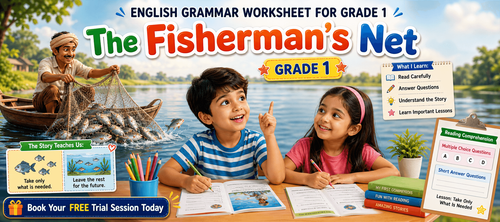

Helpful English Grammar Worksheet for Grade 1 on The Fisherman’s Net
Reading stories helps children improve their understanding, vocabulary, and thinking skills in a fun and meaningful way. This English grammar worksheet for Grade 1 on The Fisherman’s Net is designed to help students practice reading comprehension through a simple and engaging story. The passage teaches children an important lesson about taking only what is needed and thinking about the future.
This worksheet includes objective and subjective questions that encourage Grade 1 students to read carefully and understand the story deeply. Students learn how to identify important details, answer questions correctly, and understand the lesson taught in the passage. Regular practice with reading comprehension worksheets helps children become confident readers and better learners.
Download these English grammar worksheets and practice regularly to strengthen your language skills and build a strong foundation. You can also book a free trial to get expert guidance and improve your reading, writing, and comprehension abilities. The worksheets are designed in a simple and structured way to help K–8 students learn grammar concepts easily and use them confidently in everyday communication.
What Is the Topic?
This worksheet focuses on reading comprehension through the story The Fisherman’s Net. Reading comprehension means understanding the meaning of a passage after reading it carefully.
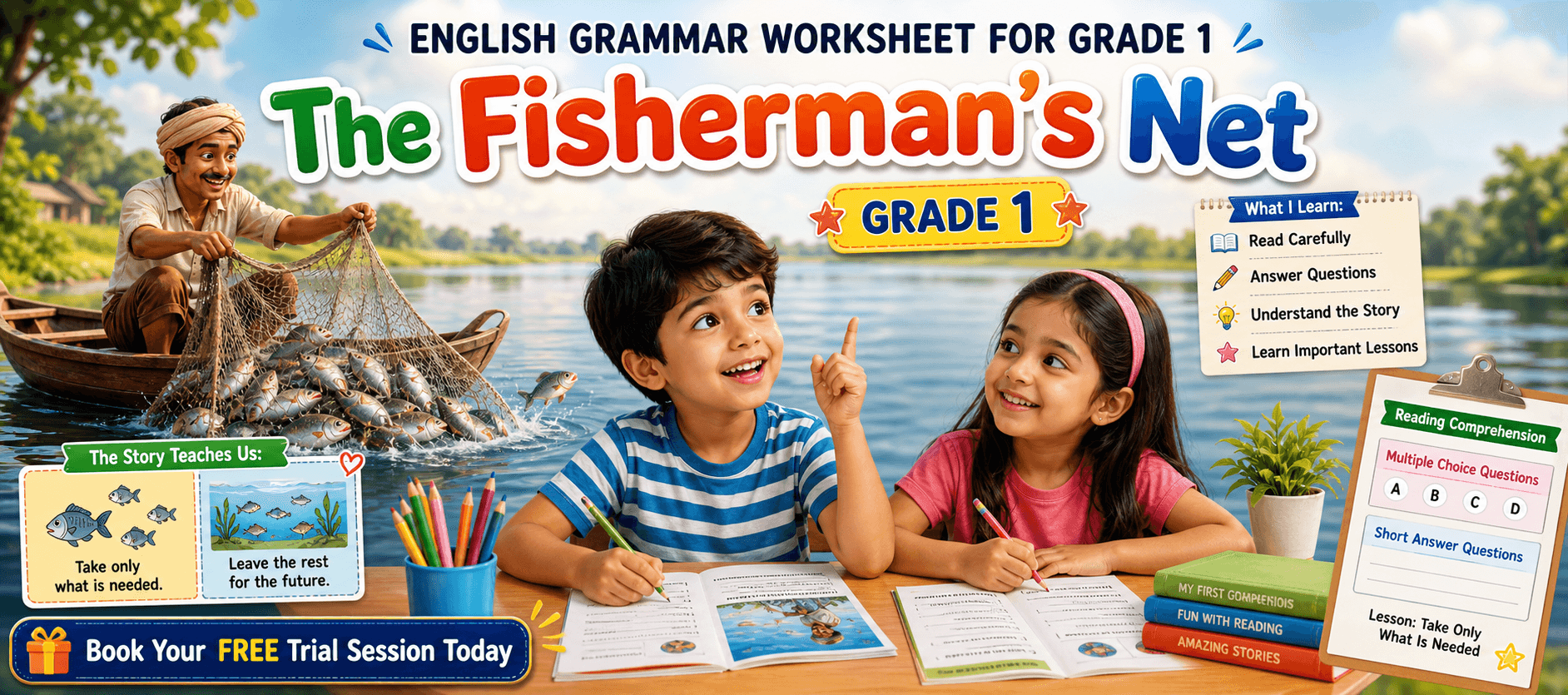
In this Grade 1 worksheet, students read about a fisherman who catches many fish but understands that taking too many fish can be harmful for the future. He keeps only enough fish for his family and releases the rest. The story teaches children an important lesson about responsibility and taking only what is needed.
Students are expected to read the passage carefully, understand the events, and answer all questions correctly.
What’s in This Worksheet?
1. A short reading passage titled The Fisherman’s Net.
2. Multiple-choice questions based on important details from the story.
3. Short-answer questions to check deeper understanding.
4. Questions related to characters, actions, and the lesson of the story.
5. Reading comprehension exercises suitable for Grade 1 students.
6. Student-friendly question patterns for easy learning.
7. Activities that improve reading and understanding skills.
8. A complete answer section to help students review their work carefully.
Definitions, Examples, Techniques, and Tips
Reading comprehension means reading a passage carefully and understanding its meaning correctly.
In this worksheet, students read about a fisherman who learns to take only what is needed and save resources for the future.
Example from the worksheet:
Where did the fisherman go?
The correct answer is:
River
Another example:
What lesson did he learn?
The correct answer is:
Take only needed
Students should read every sentence carefully and focus on the important actions in the story.
Important details from the passage include:
He caught many fish, more than he could carry.
He released some fish and kept only enough for his family.
He learned to take only what is needed and leave the rest for the future.
A useful technique is reading the passage twice and underlining important words. Students should also read every option carefully before choosing the correct answer.
Why Is It Important to Learn This?
Reading comprehension is important because it helps students understand stories, lessons, and instructions clearly. It improves concentration, reading ability, and thinking skills.
This topic also teaches children an important life lesson about responsibility and caring for the future. Students learn why it is important to use things wisely and avoid taking more than needed.
Regular practice with comprehension worksheets helps students answer questions confidently and improves their overall English language skills.
Where Will This Knowledge Help You?
Reading comprehension skills are useful in school and daily life.
Students use these skills while reading textbooks, worksheets, stories, and classroom instructions.
Good comprehension skills help children answer questions correctly in exams and classroom activities.
This knowledge also improves writing and speaking skills because students learn how ideas are connected in a story.
Children become more confident readers and active participants in classroom discussions.
How to Use This Worksheet?
1. Read the passage carefully from beginning to end.
2. Understand the main idea and lesson of the story.
3. Attempt the multiple-choice questions independently.
4. Read every answer option carefully before choosing the correct one.
5. Write complete answers for the subjective questions.
6. Compare your answers carefully with the solutions provided.
7. Correct mistakes after reviewing the answers.
8. Follow the exact worksheet order while checking answers.
9. Practice reading similar stories regularly to improve comprehension skills.
10. Stay focused and write neat and clear answers.
Important Tips and Tricks
1. Read the story slowly and carefully.
2. Focus on the important events and lesson in the story.
3. Look for key details while reading the passage.
4. Read all options carefully before selecting an answer.
5. Write short and clear answers in complete sentences.
6. Check spellings and punctuation while writing answers.
7. Understand the message of the story to answer correctly.
8. Practice reading passages daily to improve confidence and speed.
9. Do not rush while solving comprehension questions.
10. Examiners expect accurate answers that match the passage details.
Complete Answer Key
The Fisherman’s Net
Choose the correct answer.
1. Where did the fisherman go?
b) River
2. What did he use to catch fish?
b) Net
3. What happened after he caught many fish?
a) He released some
4. Why did he release some fish?
c) To save them for future
5. How many fish did he keep?
a) Only enough for family
6. What lesson did he learn?
d) Take only needed
Answer the following questions.
7. What did the fisherman use to catch fish?
He used a net.
8. Why is it good to take only what is needed?
So that fish can grow and help future use.
9. Why did he release some fish?
He released some fish to save smaller ones.
10. What would you do if you caught too many fish?
I would keep only what my family needs and release the rest.
This English grammar worksheet for Grade 1 on The Fisherman’s Net is a simple and meaningful way for children to improve their reading comprehension skills. The story teaches an important lesson about responsibility and caring for the future while helping students practice careful reading and question answering. Regular practice with such worksheets helps children become confident readers and stronger learners.