
English Grammar Noun Exercises Worksheet for Class 2 Kids
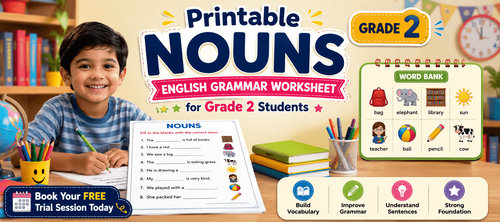

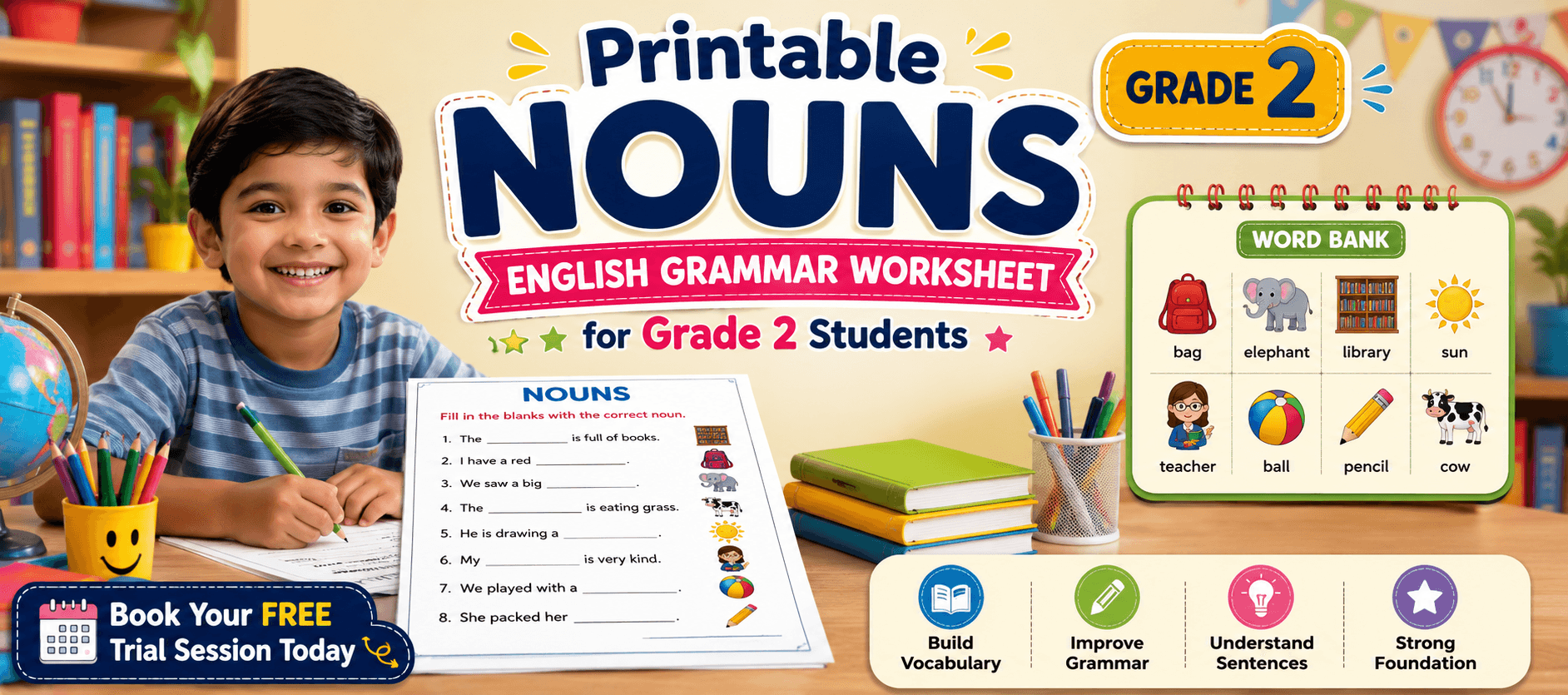
Printable Nouns English Grammar Worksheet for Grade 2 Students
Learning nouns is one of the first and most important steps in understanding English grammar. This English grammar worksheet for Grade 2 on Nouns helps children identify naming words used for people, places, animals, and things. Through simple fill in the blanks activities and easy sentence-based exercises, students improve grammar understanding, vocabulary, and sentence-building skills in an enjoyable and structured way.
In Grade 2, students begin learning how nouns are used in everyday communication. This worksheet gives young learners the opportunity to practice choosing the correct noun for each sentence while understanding the meaning of the sentence carefully. The activities are designed in a simple format to make grammar learning easy, interactive, and effective.
Download these English grammar worksheets and practice regularly to strengthen your language skills and build a strong foundation. You can also book a free trial to get expert guidance and improve your reading, writing, and comprehension abilities. The worksheets are designed in a simple and structured way to help K–8 students learn grammar concepts easily and use them confidently in everyday communication.
What Is the Topic?
Nouns are naming words used for people, places, animals, and things. In this English grammar worksheet for Grade 2, students learn how to identify and use nouns correctly in sentences.
The worksheet helps students understand how nouns complete sentence meanings and help us talk clearly about objects, places, people, and animals around us. Students practice reading sentences carefully and selecting suitable nouns from the given word box.
By practicing nouns regularly, students improve vocabulary, sentence understanding, and grammar confidence in a simple and enjoyable way.
What’s in This Worksheet?
1. Fill in the blanks questions based on nouns.
2. A word bank containing different nouns.
3. Simple Grade 2 level sentence-completion activities.
4. Vocabulary-building exercises using common naming words.
5. Reading and understanding practice through sentence clues.
6. Grammar exercises that support writing and speaking improvement.
7. Easy worksheet structure designed for young learners.
8. Practice useful for school exams and classroom grammar activities.
Definitions, Examples, Techniques, and Tips
Nouns are naming words used for people, places, animals, and things.
The worksheet includes nouns such as:
bag
elephant
library
sun
teacher
ball
pencil
cow
Examples from the worksheet include:
The library is full of books.
We saw a big elephant.
The cow is eating grass.
Students learn to:
1. Read each sentence carefully before choosing a noun.
2. Understand the clue words in the sentence.
3. Match the noun correctly with the sentence meaning.
4. Use naming words that make sentences complete and meaningful.
Quick learning tips:
1. Look for words that name a person, place, animal, or thing.
2. Read the full sentence before selecting an answer.
3. Use sentence clues to identify the correct noun.
4. Practice naming objects around you every day.
Why Is It Important to Learn This?
Learning nouns is important because nouns are used in almost every sentence. Naming words help students communicate clearly while speaking, reading, and writing. They allow students to describe people, places, animals, and things correctly.
Understanding nouns also improves sentence-building abilities and vocabulary development. It helps students write meaningful sentences and understand grammar concepts more easily.
For Grade 2 students, learning nouns creates a strong grammar foundation that supports future language and writing skills.
Where Will This Knowledge Help You?
Students use nouns in many academic and daily communication activities.
1. School grammar worksheets and exams.
2. Sentence-writing and paragraph-writing activities.
3. Reading comprehension exercises.
4. Story writing and creative writing tasks.
5. Classroom discussions and speaking activities.
6. Daily English conversations.
7. Vocabulary and language-building exercises.
8. Understanding books, stories, and written instructions.
How to Use This Worksheet?
1. Read every sentence carefully before filling in the blank.
2. Look at the noun word bank and understand the meaning of each word.
3. Use sentence clues to identify the correct noun.
4. Attempt all questions independently first.
5. Compare your answers carefully with the complete answer key.
6. Correct mistakes and revise the nouns again.
7. Practice similar noun exercises regularly to improve grammar skills.
8. Follow the exact worksheet order while checking solutions.
9. Revise naming words frequently to strengthen vocabulary and sentence understanding.
Important Tips and Tricks
1. Always read the complete sentence before choosing a noun.
2. Identify whether the sentence needs a person, place, animal, or thing.
3. Use sentence meaning to select the correct noun.
4. Avoid choosing words randomly from the word bank.
5. Practice identifying nouns in books and conversations.
6. Examiners expect meaningful and grammatically correct sentence completion.
7. Careful reading helps avoid common grammar mistakes.
8. Neat handwriting and correct spelling improve overall performance.
9. Revise common nouns regularly for better understanding.
10. Recheck all answers before completing the worksheet.
Complete Answer Key
Fill in the blanks with the correct noun.
1. The library is full of books.
2. I have a red bag.
3. We saw a big elephant.
4. The cow is eating grass.
5. He is drawing a sun.
6. My teacher is very kind.
7. We played with a ball.
8. She packed her pencil.
Regular practice with nouns helps Grade 2 students improve grammar understanding, vocabulary, and sentence-writing confidence. This English grammar worksheet on Nouns provides simple and meaningful activities that make grammar learning easy and enjoyable for young learners. With regular practice and careful reading, students can confidently identify and use nouns correctly in daily speaking and writing activities.