
Figurative Language & Theme Connection: Class 7 Literary Analysis (PDF)
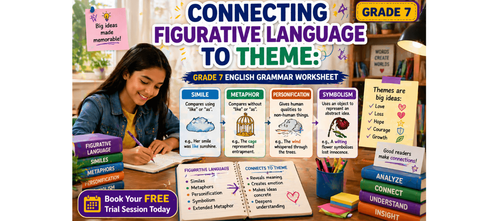

Title: Connecting Figurative Language to Theme: Grade 7 English Grammar Worksheet
Have you ever read a sentence like “Time was a thief” and felt a deep truth about loss, even though no one said the word “loss” directly? That is the connection between figurative language and theme. In Grade 7, learning about figurative language and theme connection helps you see how writers use similes, metaphors, and personification to express big, abstract ideas in concrete, unforgettable ways. Figurative language helps express abstract themes in concrete terms. The flame of hope flickered uses fire as a metaphor for hope. A metaphor about a cage can represent the theme of entrapment. Personification of death can develop the theme of life's fragility. Figurative language is not just decoration. It helps express the theme of a story. This Grade 7 English grammar worksheet on figurative language and theme connection will teach you how to spot these connections, analyze how language reveals meaning, and become a stronger, more thoughtful reader.
Download these English grammar worksheets and practice regularly to strengthen your language skills and build a strong foundation. You can also book a free trial to get expert guidance and improve your reading, writing, and comprehension abilities. The worksheets are designed in a simple and structured way to help K–8 students learn grammar concepts easily and use them confidently in everyday communication.
Book a free trial!
What Is the Topic?
The topic of this worksheet is Figurative Language and Theme Connection. Figurative language is not just decoration. It helps express the theme of a story. A theme is the central message or lesson of a story. A theme is an abstract idea like love, loss, or courage. Figurative language makes abstract themes more concrete and memorable. Figurative language helps express abstract themes in concrete terms. Figurative language includes similes, metaphors, and personification. A metaphor compares two things without using “like” or “as”. Personification gives human qualities to non-human things. Symbolism uses an object to represent an abstract idea. A wilting flower is a concrete object that can represent lost youth. Love, hope, and fear are abstract ideas. An extended metaphor runs through an entire story to develop a theme. An extended metaphor continues across several paragraphs or pages. An extended metaphor about a journey can develop the theme of self-discovery across many chapters. The image of a wilted flower can symbolise the theme of lost innocence. Comparing a journey to life develops the theme of growth and discovery. A story about a storm can use lightning as a symbol for sudden realization. The connection between figurative language and theme requires careful analysis. Writers use figurative language to develop and enrich the theme. Figurative language helps readers to connect to the theme emotionally. Careful readers notice how figurative language reinforces the theme.
Book a free trial!
What’s in This Worksheet?
This worksheet contains five different exercises that help students master the connection between figurative language and theme. Here is what is included:
1. Exercise No. 1 – Multiple Choice Questions – Students choose the correct word to complete each sentence about figurative language and theme. This exercise tests basic definitions and how figurative language expresses abstract ideas.
2. Exercise No. 2 – Fill in the Blanks – Students complete sentences by filling in missing words related to figurative language and theme. Students must use their understanding of the concepts including similes, metaphors, personification, symbolism, theme, and extended metaphor.
3. Exercise No. 3 – True and False – Students read ten statements about figurative language and theme and decide whether each one is true or false. This helps correct common misunderstandings about how figurative language connects to meaning.
4. Exercise No. 4 – Underline the Words – Students read ten sentences that each contain a metaphor or personification. For each sentence, students must underline the figurative language and then identify what abstract theme or idea it expresses.
5. Exercise No. 5 – Paragraph Writing – Students read a paragraph about figurative language and theme that has blanks. They must fill in each blank using a word from the word bank provided at the end of the paragraph. This combines reading comprehension with vocabulary application.
This worksheet supports exam preparation by covering how authors use figurative language to develop themes, how to analyze the connection between a metaphor and a theme, and why figurative language makes abstract ideas more concrete.
Book a free trial!
Definitions, Examples, Techniques, and Tips
Based only on the content of this worksheet, here are the exact definitions and examples students will learn:
Definitions:
- Theme: A theme is the central message or lesson of a story. A theme is an abstract idea like love, loss, or courage. Love, hope, and fear are abstract ideas.
- Figurative language: Figurative language includes similes, metaphors, and personification. Figurative language helps express abstract themes in concrete terms. Figurative language makes abstract themes more concrete and memorable. Writers use figurative language to develop and enrich the theme. Figurative language helps readers to connect to the theme emotionally.
- Metaphor: A metaphor compares two things without using “like” or “as”. A metaphor about a cage can represent the theme of entrapment. A metaphor about a prison can represent more than actual jail – it can represent feeling trapped in a situation.
- Personification: Personification gives human qualities to non-human things. Personification of death can develop the theme of life's fragility. Personification can help readers feel sympathy for nature.
- Symbolism: Symbolism uses an object to represent an abstract idea. A wilting flower is a concrete object that can represent lost youth. The image of a wilted flower can symbolise the theme of lost innocence.
- Extended metaphor: An extended metaphor runs through an entire story to develop a theme. An extended metaphor continues across several paragraphs or pages. An extended metaphor about a journey can develop the theme of self-discovery across many chapters. An extended metaphor can develop a theme across an entire novel.
Examples taken directly from the worksheet (Exercise No. 4):
1. The old man's memories were dusty books on a forgotten shelf.
– Figurative language: metaphor (memories were dusty books)
– Abstract theme or idea: forgotten past, lost time, neglect
2. Riya's dreams were birds that had flown away forever.
– Figurative language: metaphor (dreams were birds)
– Abstract theme or idea: lost hope, missed opportunities
3. Friendship was an umbrella that protected them from every storm.
– Figurative language: metaphor (friendship was an umbrella)
– Abstract theme or idea: protection, safety in relationships
4. Forgiveness was a key that finally unlocked the heavy door.
– Figurative language: metaphor (forgiveness was a key)
– Abstract theme or idea: freedom, release from burden
5. The truth was a heavy stone that Raj could not put down.
– Figurative language: metaphor (truth was a heavy stone)
– Abstract theme or idea: burden of truth, guilt
6. Fear wrapped its cold fingers around her heart and squeezed.
– Figurative language: personification (fear wrapped its fingers, squeezed)
– Abstract theme or idea: anxiety, being controlled by fear
7. Meera's hope was a tiny candle in a vast, dark cave.
– Figurative language: metaphor (hope was a tiny candle)
– Abstract theme or idea: small hope in despair, perseverance
8. The lie grew like a weed, choking every honest word around it.
– Figurative language: simile (grew like a weed)
– Abstract theme or idea: destructive power of lies
9. Anger burned like a fire that consumed everything in its path.
– Figurative language: simile (burned like a fire)
– Abstract theme or idea: destructive anger, loss of control
10. Time was a thief who stole everything Ravi loved.
– Figurative language: metaphor (time was a thief) and personification (who stole)
– Abstract theme or idea: loss, the passing of time
Key facts from True and False section:
- Figurative language makes abstract themes easier to understand. (True)
- A metaphor about a prison can only be about actual jail. (False)
- Personification can help readers feel sympathy for nature. (True)
- The theme of a story is always stated directly using literal language. (False)
- An extended metaphor can develop a theme across an entire novel. (True)
- Symbolism is a type of figurative language that connects to theme. (True)
- Readers do not need to analyse figurative language to understand theme. (False)
- Comparing life to a roller coaster expresses themes of ups and downs. (True)
- Figurative language is only decorative and has no connection to meaning. (False)
- Careful readers notice how figurative language reinforces the theme. (True)
Key terms from Fill in the Blanks:
- Figurative language includes similes, metaphors, and personification.
- Personification gives human qualities to non-human things.
- A metaphor compares two things without using “like” or “as”.
- A wilting flower is a concrete object that can represent lost youth.
- Love, hope, and fear are abstract ideas.
- Symbolism uses an object to represent an abstract idea.
- A theme is the central message or lesson of a story.
- An extended metaphor continues across several paragraphs or pages.
- Writers use figurative language to develop and enrich the theme.
- Figurative language helps readers to connect to the theme emotionally.
Quick learning tip: When you see figurative language (a metaphor, simile, or personification), ask yourself: What abstract idea is the author making concrete? That abstract idea is likely connected to the theme. Figurative language makes abstract themes more concrete and memorable.
Book a free trial!
Why Is It Important to Learn This?
Learning about the connection between figurative language and theme is important for several reasons. First, figurative language makes abstract themes more concrete and memorable. A theme like “loss” is hard to picture. But a metaphor like “Riya's dreams were birds that had flown away forever” makes loss feel real and visible. Second, writers use figurative language to develop and enrich the theme. An extended metaphor about a journey can develop the theme of self-discovery across many chapters. Without figurative language, themes can feel flat and boring. Third, figurative language helps readers to connect to the theme emotionally. When you read “Fear wrapped its cold fingers around her heart,” you feel the fear. You do not just understand it – you experience it. Fourth, this skill is tested in literature exams where you may be asked to explain how a metaphor or simile reveals the theme. Finally, the connection between figurative language and theme requires careful analysis. The flame of hope flickered uses fire as a metaphor for hope. A story about a storm can use lightning as a symbol for sudden realization. Learning to notice these connections makes you a stronger, more thoughtful reader.
Book a free trial!
Where Will This Knowledge Help You?
Knowledge of figurative language and theme connection will help you in many academic and real-life situations:
1. Literature exams and reading comprehension tests – Many questions ask you to explain how a metaphor or simile develops the theme. This worksheet directly prepares you for those questions. You will be able to say, “This metaphor shows the theme of loss by comparing dreams to birds that flew away.”
2. Writing literary analysis essays – When you write about a story, you can discuss how the author uses figurative language to express the theme. A metaphor about a cage can represent the theme of entrapment. Personification of death can develop the theme of life's fragility.
3. Class discussions – When your teacher asks, “How does this simile connect to the theme?” you will be able to answer. You can point to specific words and explain the abstract idea they make concrete.
4. Reading novels and poems – Once you learn to see the connection between figurative language and theme, reading becomes deeper and more exciting. You will notice that every metaphor and simile is there for a reason – to help you understand the theme.
5. Writing your own stories – When you write, you can use figurative language to express your own themes. Instead of saying “the theme is loss,” you can write “her dreams were birds that had flown away.” Your readers will feel the theme instead of just reading it.
6. Becoming a careful reader – Careful readers notice how figurative language reinforces the theme. Figurative language is not just decoration. It helps express the theme of a story. The connection between figurative language and theme requires careful analysis. You will become that careful reader.
Book a free trial!
How to Use This Worksheet?
Follow these steps to get the most out of this Grade 7 English grammar worksheet on figurative language and theme connection:
1. Attempt independently first – Without looking at any answers, complete all five exercises in order. Start with Exercise No. 1 (Multiple Choice Questions), then move to Exercise No. 2 (Fill in the Blanks), then Exercise No. 3 (True and False), then Exercise No. 4 (Underline the Words), and finally Exercise No. 5 (Paragraph Writing with word bank).
2. Review answers carefully – After you finish all exercises, go to the Complete Answer Key section below. Compare your answers one by one. Pay special attention to Exercise No. 4 – make sure you correctly identified the figurative language and the abstract theme it expresses.
3. Correct mistakes – For any answer that is different from the answer key, write the correct answer next to your attempt. Try to understand why you made the mistake. Did you think a metaphor about a prison can only be about actual jail? That is false – it can represent feeling trapped.
4. Practice regularly – Connecting figurative language to theme can be challenging. Repeat the worksheet after a few days. For the paragraph writing task (Exercise No. 5), try to fill in the blanks without looking at the word bank first.
The solutions follow the exact worksheet order. Students should compare their answers carefully.
Book a free trial!
Important Tips and Tricks
Here are important tips and tricks based directly on this worksheet to help you master figurative language and theme connection and score full marks:
1. Figurative language makes abstract ideas concrete – A theme is an abstract idea like love, loss, or courage. You cannot touch love. You cannot see loss. But a metaphor like “Time was a thief” makes loss feel concrete and real. Figurative language helps express abstract themes in concrete terms. Whenever you see a metaphor or simile, ask: What abstract idea is being made concrete?
2. Metaphors about cages and prisons are about entrapment – A metaphor about a cage can represent the theme of entrapment. A metaphor about a prison is not only about actual jail. It can represent feeling trapped in a job, a relationship, or a situation. Do not read metaphors literally. Read them for their abstract meaning.
3. Personification connects to theme through emotion – Personification of death can develop the theme of life's fragility. Personification can help readers feel sympathy for nature. When an author gives human qualities to something non-human, they are trying to make you feel something. That feeling connects to the theme.
4. Extended metaphors develop themes across whole stories – An extended metaphor runs through an entire story to develop a theme. An extended metaphor about a journey can develop the theme of self-discovery across many chapters. An extended metaphor can develop a theme across an entire novel. When you notice the same comparison coming back again and again, pay attention – that is the author developing the theme.
5. Figurative language is not just decoration – A common mistake is thinking figurative language is only decorative and has no connection to meaning. This is false. Figurative language is not just decoration. It helps express the theme of a story. Every simile, metaphor, and personification is there for a reason.
6. Themes are not always stated directly – A common mistake is thinking the theme of a story is always stated directly using literal language. This is false. Often, the theme is expressed through figurative language. “The flame of hope flickered” expresses a theme about fragile hope without directly saying “hope is fragile.”
7. What examiners expect – Examiners expect you to identify figurative language and explain how it connects to the theme. They want you to say: “This metaphor compares X to Y, which shows the theme of Z.” The flame of hope flickered uses fire as a metaphor for hope and expresses the theme of hope's fragility. The image of a wilted flower can symbolise the theme of lost innocence.
8. How to score full marks – When answering multiple-choice questions, look for keywords like “express,” “concrete,” “abstract,” “metaphor,” “personification,” “symbol,” “theme,” “extended metaphor,” “careful analysis.” For true and false, remember that metaphors about prisons are not only about actual jail, themes are not always stated directly, and figurative language is not just decoration.
9. For underlining tasks (Exercise No. 4) – Read each sentence. Identify the figurative language (metaphor, simile, or personification). Underline the specific words that create the comparison or human quality. Then write what abstract theme or idea it expresses. For “The old man's memories were dusty books on a forgotten shelf,” underline “were dusty books on a forgotten shelf” and write “forgotten past” or “neglect.” For “Fear wrapped its cold fingers around her heart and squeezed,” underline the whole phrase and write “anxiety” or “being controlled by fear.”
10. For paragraph writing tasks (Exercise No. 5) – Read the entire paragraph first. Then read the word bank. Then fill in each blank one at a time. The word bank includes: theme, concrete, decay, imagery, metaphor, figurative, abstract, theme, ignore. Read each sentence with your chosen word to make sure it makes sense. “Theme” fits the first blank. “Concrete” fits the second blank. “Decay” fits the third blank. “Imagery” or “metaphor” fits the fourth blank. “Figurative” fits the fifth blank. “Abstract” fits the sixth blank. “Theme” fits the seventh blank. “Ignore” is in the word bank but is not used in the paragraph as written.
Book a free trial!
Complete Answer Key
Below is the complete answer key for the Grade 7 English grammar worksheet on Figurative Language and Theme Connection.
Exercise No. 1
Choose the correct word to complete each sentence.
1. Figurative language helps ______ abstract themes in concrete terms.
Answer: b) express
2. “The flame of hope flickered” uses fire as a metaphor for ______.
Answer: c) hope
3. A metaphor about a cage can represent the theme of ______.
Answer: a) entrapment
4. Personification of death can develop the theme of life's ______.
Answer: b) fragility
5. An extended metaphor runs through an entire story to develop a ______.
Answer: a) theme
6. Comparing a journey to life develops the theme of ______ and discovery.
Answer: c) growth
7. The image of a wilted flower can symbolise the theme of lost ______.
Answer: a) innocence
8. Figurative language makes abstract themes more ______ and memorable.
Answer: b) concrete
9. A story about a storm can use lightning as a symbol for sudden ______.
Answer: a) realization
10. The connection between figurative language and theme requires ______ analysis.
Answer: b) careful
Exercise No. 2
Fill in the blanks.
1. Figurative language includes similes, metaphors, and personification.
2. Personification gives human qualities to non-human things.
3. A metaphor compares two things without using “like” or “as”.
4. A wilting flower is a concrete object that can represent lost youth.
5. Love, hope, and fear are abstract ideas.
6. Symbolism uses an object to represent an abstract idea.
7. A theme is the central message or lesson of a story.
8. An extended metaphor continues across several paragraphs or pages.
9. Writers use figurative language to develop and enrich the theme.
10. Figurative language helps readers to connect to the theme emotionally.
Exercise No. 3
True and False. Write True or False for each statement.
1. Figurative language makes abstract themes easier to understand.
Answer: True
2. A metaphor about a prison can only be about actual jail.
Answer: False
3. Personification can help readers feel sympathy for nature.
Answer: True
4. The theme of a story is always stated directly using literal language.
Answer: False
5. An extended metaphor can develop a theme across an entire novel.
Answer: True
6. Symbolism is a type of figurative language that connects to theme.
Answer: True
7. Readers do not need to analyse figurative language to understand theme.
Answer: False
8. Comparing life to a roller coaster expresses themes of ups and downs.
Answer: True
9. Figurative language is only decorative and has no connection to meaning.
Answer: False
10. Careful readers notice how figurative language reinforces the theme.
Answer: True
Exercise No. 4
Underline the figurative language and identify the abstract theme or idea it expresses.
1. The old man's memories were dusty books on a forgotten shelf.
Underline: were dusty books on a forgotten shelf
Abstract theme/idea: forgotten past, neglect, lost time
2. Riya's dreams were birds that had flown away forever.
Underline: were birds that had flown away forever
Abstract theme/idea: lost hope, missed opportunities
3. Friendship was an umbrella that protected them from every storm.
Underline: was an umbrella that protected them from every storm
Abstract theme/idea: protection, safety in relationships
4. Forgiveness was a key that finally unlocked the heavy door.
Underline: was a key that finally unlocked the heavy door
Abstract theme/idea: freedom, release from burden
5. The truth was a heavy stone that Raj could not put down.
Underline: was a heavy stone that Raj could not put down
Abstract theme/idea: burden of truth, guilt
6. Fear wrapped its cold fingers around her heart and squeezed.
Underline: wrapped its cold fingers around her heart and squeezed
Abstract theme/idea: anxiety, being controlled by fear
7. Meera's hope was a tiny candle in a vast, dark cave.
Underline: was a tiny candle in a vast, dark cave
Abstract theme/idea: small hope in despair, perseverance
8. The lie grew like a weed, choking every honest word around it.
Underline: grew like a weed, choking every honest word around it
Abstract theme/idea: destructive power of lies
9. Anger burned like a fire that consumed everything in its path.
Underline: burned like a fire that consumed everything in its path
Abstract theme/idea: destructive anger, loss of control
10. Time was a thief who stole everything Ravi loved.
Underline: was a thief who stole everything Ravi loved
Abstract theme/idea: loss, the passing of time
Exercise No. 5
Read the paragraph. Fill in each blank with a word from your understanding. Word bank: (theme, concrete, decay, imagery, metaphor, figurative, abstract, theme, ignore)
Figurative language is not just decoration. It helps express the theme of a story. A theme is an abstract idea like love, loss, or courage. Figurative language makes abstract themes more concrete and memorable. For example, a story about lost love might use a metaphor: “Their love was a dying flower.” The dying flower represents the theme of loss and decay. A story about hope might use a symbol: “A single green shoot grew from the burnt earth.” This connects to the theme of renewal. An extended metaphor about a journey can develop the theme of self-discovery across many chapters. When you read figurative language, ask: What abstract idea does it make concrete? How does this language help me understand the theme? Answering these questions makes you a stronger reader. (Note: “Ignore” is in the word bank but is not used. The word “imagery” and “metaphor” could both fit the fourth blank, but “metaphor” aligns with the extended metaphor example that follows. “Concrete” fits the second blank. “Decay” fits the third blank. “Abstract” fits the sixth blank. “Theme” fits the seventh blank.)
Book a free trial!
You have now completed the entire worksheet on figurative language and theme connection. Figurative language is not just decoration. It helps express the theme of a story. A theme is an abstract idea like love, loss, or courage. Figurative language makes abstract themes more concrete and memorable. A metaphor about a cage can represent entrapment. Personification of death can develop the theme of life's fragility. An extended metaphor about a journey can develop the theme of self-discovery. The image of a wilted flower can symbolise lost innocence. Every time you read a metaphor, simile, or personification, ask yourself: What abstract idea is being made concrete? How does this help me understand the theme? Answering these questions makes you a stronger reader. Keep practicing, and soon you will see the connection between figurative language and theme in every story you read. You are building skills that will make you a thoughtful, analytical, and confident reader in Grade 7 and beyond.
Book a free trial!