
Free Adjectives Worksheet for Class 1 Practice
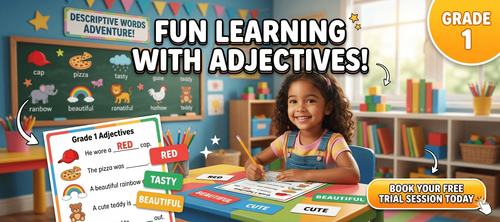

Fun Learning with This English Grammar Worksheet for Grade 1 Adjectives
Adjectives make sentences more colorful, interesting, and meaningful. This English grammar worksheet for Grade 1 helps young learners understand how describing words are used in everyday English. Through simple fill-in-the-blank sentences, students learn how adjectives describe people, animals, objects, food, and feelings in a fun and engaging way.
This worksheet is specially designed for Grade 1 students to strengthen grammar skills through easy sentence practice. Children learn to choose suitable describing words that complete each sentence correctly. By practicing adjectives regularly, students improve vocabulary, sentence formation, reading skills, and communication confidence step by step.
Download these English grammar worksheets and practice regularly to strengthen your language skills and build a strong foundation. You can also book a free trial to get expert guidance and improve your reading, writing, and comprehension abilities. The worksheets are designed in a simple and structured way to help K–8 students learn grammar concepts easily and use them confidently in everyday communication.
What Is the Topic?
Adjectives are describing words. They tell us more about a person, place, animal, object, or thing. Adjectives help make sentences clearer and more interesting.
In this English grammar worksheet for Grade 1, students practice filling in suitable adjectives to complete sentences correctly. The worksheet includes simple examples related to daily life so that children can understand the meaning of describing words easily.
Students are expected to:
• Read each sentence carefully
• Think about the noun being described
• Choose a suitable adjective
• Improve vocabulary and grammar skills
This topic helps children build stronger sentence-writing and communication abilities while learning basic English grammar.
What’s in This Worksheet?
1. The worksheet includes fill in the blanks questions based on adjectives.
2. Students practice using suitable describing words in sentences.
3. The exercises include familiar examples related to school, food, animals, toys, and daily activities.
4. Learners improve vocabulary and sentence understanding.
5. The worksheet helps children identify how adjectives describe nouns.
6. The activities support grammar learning and exam preparation.
7. Students strengthen reading, writing, and speaking skills through regular adjective practice.
Definitions, Examples, Techniques, and Tips
Adjectives are words that describe nouns.
Examples based on the worksheet include:
• red cap
• tasty pizza
• beautiful rainbow
• cute teddy
• clean water
Techniques students can use while solving:
• Read the sentence completely.
• Identify the person, object, or animal being described.
• Think about words that describe color, size, shape, feeling, or quality.
• Choose an adjective that fits the sentence naturally.
Quick learning tips:
• Use describing words to make sentences interesting.
• Think about how something looks, feels, tastes, or behaves.
• Read the sentence aloud to check if the adjective sounds correct.
• Practice using adjectives while speaking daily.
These simple techniques help Grade 1 students understand adjectives better and use them correctly in everyday English.
Why Is It Important to Learn This?
Adjectives are important because they make communication more meaningful and expressive. Without adjectives, sentences may sound plain and incomplete.
Learning adjectives helps students:
• Improve vocabulary skills
• Build stronger sentences
• Describe people and objects clearly
• Speak and write more confidently
For Grade 1 learners, adjectives are an important part of English grammar because they help children express ideas more effectively.
Where Will This Knowledge Help You?
Adjectives are useful in both school activities and daily conversations.
Students will use this knowledge in:
• Grammar tests and exams
• Sentence writing activities
• Reading comprehension exercises
• Story writing
• Classroom discussions
• Everyday communication
Understanding adjectives also helps children describe objects, animals, food, and experiences more confidently in speaking and writing.
How to Use This Worksheet?
1. Read each sentence carefully before filling in the blank.
2. Identify the noun that needs a describing word.
3. Think about what adjective fits the sentence naturally.
4. Write the suitable adjective in the blank.
5. Review all answers carefully after completing the worksheet.
6. Compare your answers with the complete answer key below.
7. Practice writing simple adjective sentences daily.
8. The solutions below follow the exact worksheet order, so students should compare answers carefully.
Important Tips and Tricks
1. Use adjectives that match the noun correctly.
2. Think carefully about the meaning of the sentence before answering.
3. Use describing words related to color, size, taste, feeling, or quality.
4. Read the completed sentence aloud to check if it sounds correct.
5. In exams, avoid writing unrelated describing words.
6. Practice using adjectives while talking about everyday objects.
7. Build vocabulary by learning new describing words regularly.
8. Careful reading can help avoid grammar mistakes.
Complete Answer Key
ADJECTIVES
Fill in the blanks with the correct adjective.
1. He wore a red cap to school.
2. The pizza was very tasty.
3. We saw a beautiful rainbow today.
4. Maya has a new pencil box.
5. The tiger is a dangerous animal.
6. His writing is very neat.
7. That story was really interesting.
8. This pillow feels fluffy and soft.
9. My teddy is very cute.
10. The water is clear and clean.
This English grammar worksheet for Grade 1 on adjectives is a simple and effective way to help young learners improve vocabulary and sentence-building skills. Regular practice with describing words helps students speak and write more clearly while making sentences more interesting and meaningful. By solving these exercises carefully and practicing daily, children can continue building strong English grammar skills with confidence.