
Friendly Letter Writing Practice Worksheet for KG Kids
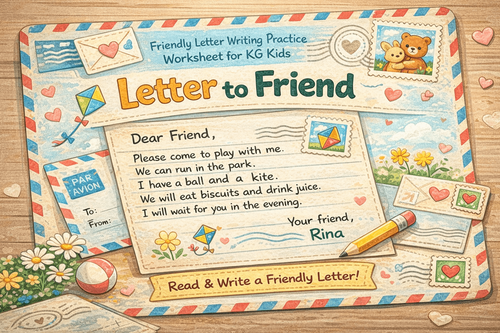

Friendly Letter Writing Practice Worksheet for KG Kids
Learning to read and understand simple messages is one of the most exciting parts of early language learning. For young learners in Grade KG, short letters and everyday conversations help build strong reading comprehension skills. This English grammar worksheet titled “Letter to Friend” introduces children to a friendly and simple letter written by Rina to her friend. Through this passage and the questions that follow, students practice reading carefully and choosing the correct answers. Activities like this help children recognize key details from a short passage and develop confidence in understanding written English.
What Is Letter to Friend?
The topic “Letter to Friend” introduces young learners to a simple letter written in a friendly tone. In this English grammar worksheet for Grade KG, students read a short letter written by Rina to her friend. The letter talks about playing together, running in the park, and enjoying snacks like biscuits and juice.
A letter to a friend is usually friendly, simple, and full of everyday activities. It often includes:
• A greeting such as “Dear Friend”
• A short message
• A closing line like “Your friend”
• The name of the person who wrote the letter
In this worksheet, students learn how to read a short letter and understand the information given in it. The questions help them identify who the letter is written to, what activities are mentioned, and how the letter ends. By reading the passage carefully, children practice finding the correct information and selecting the right answers.
What’s in This Worksheet?
This English grammar worksheet for Grade KG focuses on reading comprehension through a short and simple letter. The worksheet contains different parts that help children practice understanding written text.
1. A short passage from everyday life
Students read a friendly letter written by Rina to her friend about playing together in the park.
2. Objective-type questions
The worksheet includes multiple-choice questions where students read each question and choose the correct answer from four options.
3. Practice in identifying key details
Students look for specific information in the letter such as the activities mentioned, the place they will go, and what they will eat or drink.
4. Structured comprehension practice
The questions follow the passage and help children answer step-by-step based on the information given in the letter.
5. Clear answer section
The worksheet provides answers for the questions so students can check their responses and understand whether they selected the correct option.
Definitions, Examples, Techniques, and Tips
Definitions
Letter
A letter is a written message sent from one person to another.
Friend
A friend is someone we like, trust, and enjoy spending time with.
Reading comprehension
Reading comprehension means understanding what we read and being able to answer questions about it.
Example from the worksheet
Dear Friend,
Please come to play with me. We can run in the park. I have a ball and a kite. We will eat biscuits and drink juice. I will wait for you in the evening.
Your friend,
Rina.
This example shows how a simple letter shares plans and activities with a friend.
Techniques students use in this worksheet
Reading the passage carefully
Students read the short letter slowly and carefully to understand what Rina is saying.
Looking for important words
Words like park, ball, kite, biscuits, and juice help students answer the questions correctly.
Matching questions with information in the letter
Each question asks about something mentioned in the letter. Students look back at the passage to find the correct detail.
Choosing the correct option
Students read the four options and select the one that matches the information in the letter.
Quick learning tips
• Read the letter two times before answering questions.
• Look for words in the passage that match the question.
• Do not guess quickly. Read each option carefully.
• Check your answers again after completing the worksheet.
Why Is It Important to Learn This?
Reading comprehension is an important skill for students in Grade KG. When children learn to read short passages and understand them, they begin to develop stronger language abilities.
This English grammar worksheet helps children:
• Understand simple sentences
• Recognize everyday activities
• Identify information from a passage
• Improve attention while reading
When students practice reading letters like “Letter to Friend,” they also learn how written communication works. They notice greetings, messages, and closing lines in a letter. These small lessons prepare them for reading longer stories and writing their own messages in the future.
Learning through simple passages also makes reading enjoyable for young learners. They can easily relate to activities like playing in the park, flying a kite, and eating biscuits with a friend.
Where Will This Knowledge Help You?
Understanding passages like the one in this English grammar worksheet helps students in many situations.
Exams and assessments
Reading comprehension questions are commonly included in school assessments. Practicing worksheets like this helps students answer such questions confidently.
Writing simple messages
After reading letters, students begin to understand how to write simple messages to friends or family members.
Class participation
Students who understand passages clearly can answer questions during classroom discussions and reading activities.
Daily reading skills
When children practice reading comprehension early, they become better readers and can understand stories, instructions, and messages more easily.
How to Use This Worksheet?
Students can follow these steps to complete the worksheet effectively.
1. Read the passage slowly
Start by reading the letter carefully. Try to understand what Rina is saying to her friend.
2. Read the questions one by one
Look at each question and think about what information it is asking from the passage.
3. Find the answer in the letter
Look back at the passage to find the correct detail mentioned by Rina.
4. Choose the correct option
Select the option that matches the information from the letter.
5. Check your answers carefully
Compare your responses with the answer key given in the worksheet.
The solutions below follow the exact worksheet order. Students should compare their answers carefully with the answer key to check their understanding.
Important Tips and Tricks
1. Always read the passage first
Do not jump directly to the questions. Reading the passage helps you understand the story.
2. Look for keywords
Words like park, ball, kite, biscuits, and juice help you identify the correct answers.
3. Read all options before choosing
Sometimes the first option may seem correct, but another option might match the passage better.
4. Use the information given in the passage
Every answer is based on the details mentioned in the letter.
5. Check your answers again
Before finishing, read the questions once more and make sure your answers match the passage.
Complete Answer Key
Read the questions and choose the right answer.
1. Who is the letter to?
✓ Friend
2. What did Rina ask the friend to do?
✓ Play
3. Where will they run?
✓ Park
4. What things does Rina have?
✓ Ball and kite
5. What will they eat?
✓ Biscuits
6. What will they drink?
✓ Juice
7. When will Rina wait?
✓ Evening
8. Who wrote the letter?
✓ Rina
9. What will they do with the kite?
✓ Fly
10. How did the letter end?
✓ Your friend
Reading a simple passage like “Letter to Friend” is a wonderful way for Grade KG students to begin their journey in reading comprehension. This English grammar worksheet helps children read carefully, understand everyday messages, and answer questions based on the text. With regular practice, young learners become more confident readers and develop strong language skills that will help them throughout their school learning journey.