
Fun Concrete vs Abstract Nouns Activities for Class 2
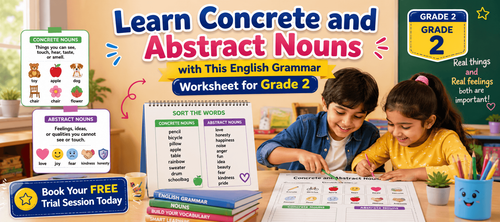

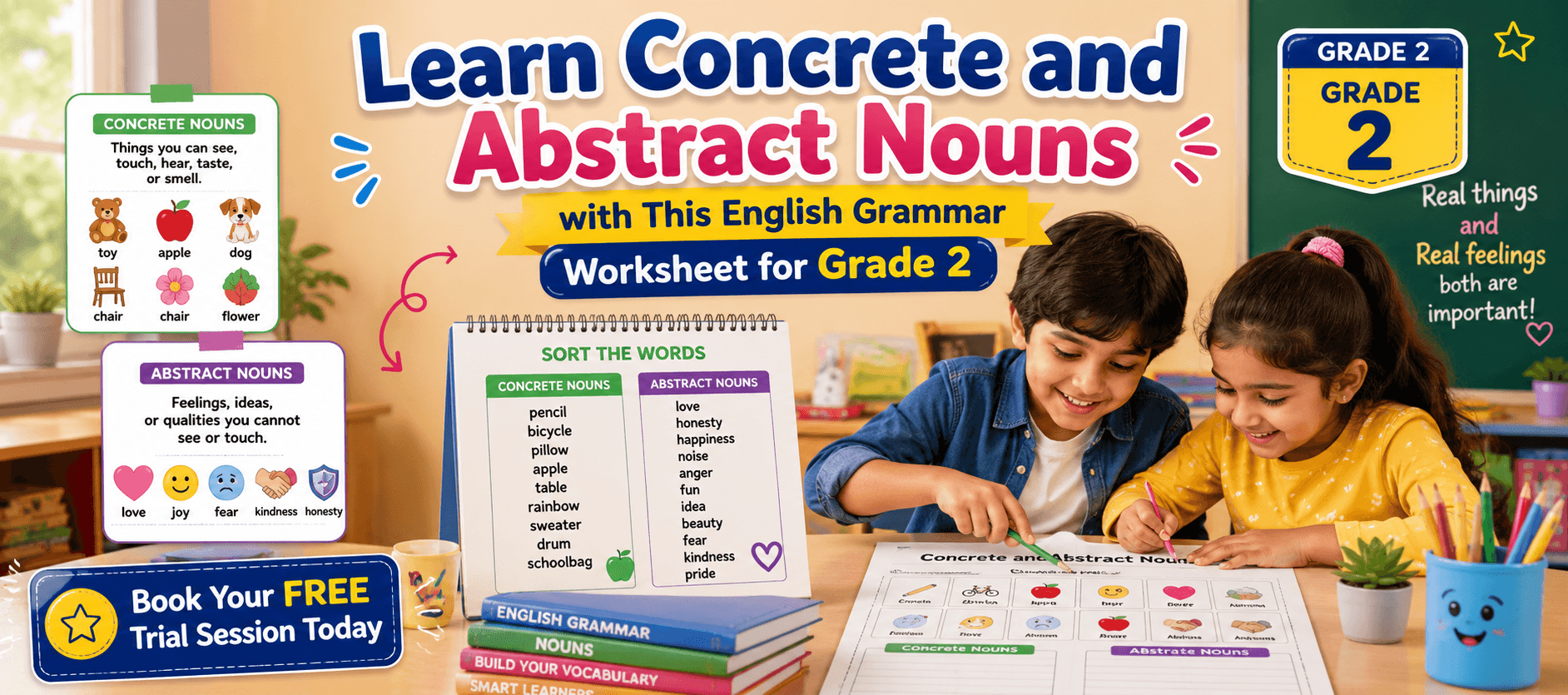
Learn Concrete and Abstract Nouns with This English Grammar Worksheet for Grade 2
Grammar learning becomes more meaningful when students understand the difference between things they can experience with their senses and feelings or ideas they cannot touch or see. This English grammar worksheet for Grade 2 on Concrete and Abstract Nouns helps students identify real objects and understand feelings, qualities, and ideas through simple explanations and sorting activities. The worksheet uses easy examples and student-friendly practice to make grammar learning enjoyable and effective.
In Grade 2, students begin building stronger vocabulary and sentence understanding. Learning concrete and abstract nouns helps children describe both physical things and emotions correctly in speaking and writing. Through examples such as toy, apple, love, and kindness, students learn how nouns can represent both real objects and invisible feelings or qualities. The worksheet also encourages students to think carefully while classifying words into the correct noun category.
Download these English grammar worksheets and practice regularly to strengthen your language skills and build a strong foundation. You can also book a free trial to get expert guidance and improve your reading, writing, and comprehension abilities. The worksheets are designed in a simple and structured way to help K–8 students learn grammar concepts easily and use them confidently in everyday communication.
What Is Concrete and Abstract Nouns?
A Concrete Noun is something you can see, touch, hear, taste, or smell. It’s real and you can point to it.
An Abstract Noun is something you cannot see or touch. It is a feeling, idea, or quality.
This worksheet helps students understand the difference between nouns connected to the senses and nouns connected to emotions or ideas. Students learn to recognize concrete nouns such as objects and things around them, while abstract nouns describe feelings, thoughts, and qualities.
The worksheet includes easy examples and sentence practice that help students identify both noun types correctly.
What’s in This Worksheet?
1. A simple explanation of concrete nouns
2. A simple explanation of abstract nouns
3. Examples of concrete nouns such as toy, apple, dog, chair, and flower
4. Examples of abstract nouns such as love, joy, fear, kindness, and honesty
5. Sentence examples showing how concrete and abstract nouns are used
6. A word box activity for sorting nouns into categories
7. Practice identifying real objects and feelings or qualities
8. Vocabulary-building grammar exercises for Grade 2 students
9. Classification practice that improves reading and thinking skills
10. Structured grammar activities useful for classroom learning and exam preparation
Definitions, Examples, Techniques, and Tips
A Concrete Noun is something you can see, touch, hear, taste, or smell.
It’s real and you can point to it.
Examples:
toy
apple
dog
chair
flower
Sentence examples:
I have a toy in my bag.
The dog is barking.
An Abstract Noun is something you cannot see or touch.
It is a feeling, idea, or quality.
Examples:
love
joy
fear
kindness
honesty
Sentence examples:
I feel happy today.
Her kindness made me smile.
Students can improve grammar understanding by carefully thinking about whether a word describes something real or a feeling, idea, or quality. If a noun can be seen or touched, it is a concrete noun. If it describes an emotion or idea, it is an abstract noun.
The sorting activity in the worksheet helps students organize words into the correct noun groups and improve vocabulary skills.
Why Is It Important to Learn This?
Learning concrete and abstract nouns helps students describe the world around them more clearly. Students learn how to talk about real objects as well as feelings, emotions, ideas, and qualities in sentences.
This grammar topic improves vocabulary development and sentence-building skills. Students become better at understanding different kinds of nouns while reading stories, passages, and classroom lessons.
Concrete and abstract nouns are important for Grade 2 students because they help improve speaking, writing, and comprehension abilities. Understanding noun types also prepares students for advanced grammar topics in higher classes.
Where Will This Knowledge Help You?
Concrete and abstract nouns are useful in many classroom and daily language activities.
This knowledge helps students during:
1. English grammar exams
2. Sentence writing practice
3. Reading comprehension exercises
4. Story writing activities
5. Vocabulary-building tasks
6. Classroom discussions
7. Speaking activities
8. Identifying noun types in passages
9. Describing objects, feelings, and ideas clearly
10. Improving grammar accuracy in school assignments
Students who understand concrete and abstract nouns can express thoughts more confidently in both spoken and written English.
How to Use This Worksheet?
1. Read the explanation of concrete and abstract nouns carefully before starting the activity.
2. Study the examples given in the worksheet to understand the difference between the two noun types.
3. Read every word in the word box carefully.
4. Think about whether the word describes something real or a feeling, idea, or quality.
5. Sort the words into the correct categories independently first.
6. Compare your answers carefully with the complete answer key provided below.
7. Correct mistakes and revise difficult words regularly.
8. Follow the exact worksheet order while checking answers.
9. Practice identifying noun types in daily reading activities.
10. Revise the examples regularly to improve grammar understanding and confidence.
Important Tips and Tricks
1. If you can see or touch something, it is usually a concrete noun.
2. If a word describes a feeling, idea, or quality, it is usually an abstract noun.
3. Read every word carefully before deciding the noun type.
4. Practice sorting words into categories regularly.
5. Use sentence clues to understand the meaning of the noun.
6. Avoid confusing objects with feelings or ideas.
7. Revise worksheet examples to improve vocabulary memory.
8. During exams, think about whether the noun is real or invisible.
9. Practice identifying noun types while reading stories and passages.
10. Regular grammar practice improves sentence-building and vocabulary skills.
Complete Answer Key
Concrete nouns
Examples : toy, apple, dog, chair, flower
I have a toy in my bag.
The dog is barking.
A Concrete Noun is something you can see, touch, hear, taste, or smell.
It’s real and you can point to it.
Abstract Nouns
Examples : love, joy, fear, kindness, honesty
I feel happy today.
Her kindness made me smile.
An Abstract Noun is something you cannot see or touch.
It is a feeling, idea, or quality.
Look at the words in the word box. Sort them into Concrete Nouns and Abstract Nouns
Concrete Nouns
pencil
bicycle
pillow
apple
table
rainbow
sweater
drum
schoolbag
Abstract Nouns
love
honesty
happiness
noise
anger
fun
idea
beauty
fear
kindness
pride
Practicing concrete and abstract nouns regularly helps Grade 2 students improve grammar understanding, vocabulary, and sentence-writing skills. This English grammar worksheet on Concrete and Abstract Nouns introduces simple explanations, useful examples, and engaging sorting activities that make learning easier for young students. With regular practice, students can confidently identify different noun types and use them correctly in everyday communication and classroom activities.