
Fun Descriptive Sentences Activities for Class 2 Students
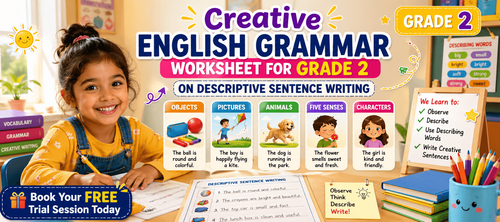

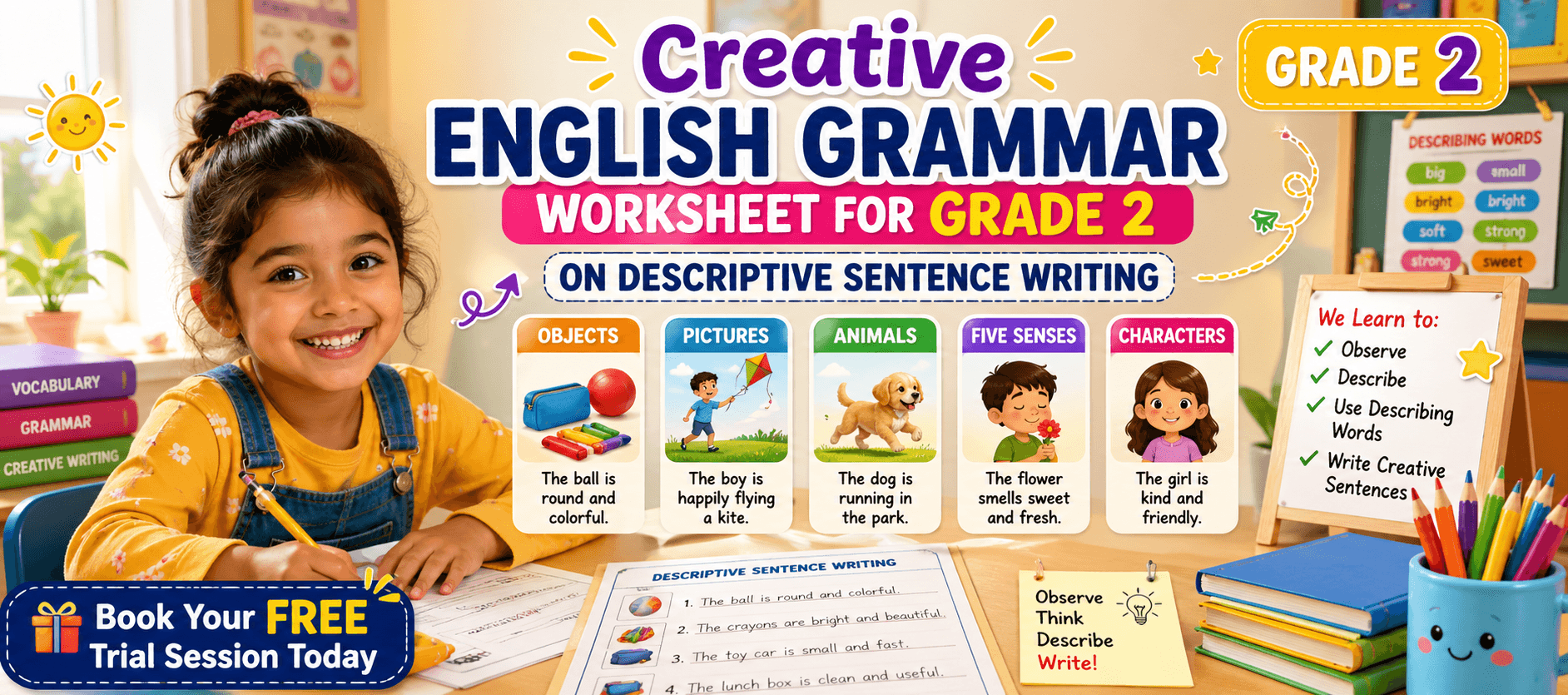
Creative English Grammar Worksheet for Grade 2 on Descriptive Sentence Writing
Learning how to describe objects, animals, pictures, and people helps children become better writers and communicators. In this English grammar worksheet for Grade 2, students practice descriptive sentence writing through fun and engaging activities. The worksheet encourages children to observe carefully and express their ideas using meaningful and detailed sentences.
Students get opportunities to describe everyday objects, animals, pictures, senses, and characters using simple language. These activities improve vocabulary, sentence formation, observation skills, and creativity. By practicing descriptive sentence writing regularly, Grade 2 students can become more confident in expressing their thoughts clearly and effectively.
Download these English grammar worksheets and practice regularly to strengthen your language skills and build a strong foundation. You can also book a free trial to get expert guidance and improve your reading, writing, and comprehension abilities. The worksheets are designed in a simple and structured way to help K–8 students learn grammar concepts easily and use them confidently in everyday communication.
What Is the Topic?
This worksheet focuses on descriptive sentence writing. Students learn how to write sentences that describe objects, animals, pictures, characters, and things connected to the five senses.
The activities help students:
- Write meaningful descriptive sentences
- Improve vocabulary
- Use describing words correctly
- Build observation skills
- Express ideas clearly
- Improve sentence structure and grammar
Through these exercises, students practice writing detailed and interesting sentences in a simple and organized way.
What’s in This Worksheet?
1. Students write one descriptive sentence for different objects.
2. Students observe pictures and write sentences describing what they see.
3. Students describe different animals using meaningful sentences.
4. Students write sentences using the five senses such as smell, taste, hear, see, and feel.
5. Students describe characters shown in pictures.
6. The worksheet includes observation-based and creative writing activities.
7. Students practice grammar, sentence structure, and vocabulary skills.
8. The exercises help improve imagination and communication abilities.
9. The worksheet supports preparation for school assignments and grammar practice.
Definitions, Examples, Techniques, and Tips
Definitions
- Descriptive writing means writing sentences that describe people, places, animals, objects, or experiences.
- A descriptive sentence gives more details about something.
- Senses are sight, smell, hearing, taste, and touch.
- Observation means looking carefully and noticing details.
Examples
- The red ball is bouncing high.
- The lion looks strong and brave.
- The flower smells sweet.
Techniques
- Use simple and clear describing words.
- Observe carefully before writing.
- Write complete and meaningful sentences.
- Keep sentences related to the topic.
Quick Learning Tips
- Think about color, size, shape, sound, smell, or feeling while describing something.
- Use proper punctuation.
- Start sentences with capital letters.
- Practice descriptive writing every day.
Why Is It Important to Learn This?
Learning descriptive sentence writing helps students express ideas clearly and creatively. These activities improve grammar, vocabulary, and communication skills while helping children become better writers.
This topic also helps students:
- Improve observation skills
- Learn new describing words
- Build confidence in writing
- Develop creativity
- Write more meaningful sentences
Descriptive writing also makes stories, conversations, and school assignments more interesting and detailed.
Where Will This Knowledge Help You?
Students can use descriptive writing skills in many situations, including:
- School grammar assignments
- Creative writing activities
- Story writing
- Picture description tasks
- Classroom participation
- Reading and speaking activities
- Daily communication
These skills help students communicate clearly and express ideas more confidently in both academic and everyday situations.
How to Use This Worksheet?
1. Read each instruction carefully before answering.
2. Observe the object, picture, animal, or character properly before writing.
3. Write complete and meaningful descriptive sentences.
4. Use simple and correct grammar.
5. Review your answers after completing the worksheet.
6. Compare your work carefully with the provided solutions.
7. Correct spelling and punctuation mistakes.
8. Practice descriptive writing regularly to improve confidence.
9. The solutions follow the exact worksheet order, so students should compare answers carefully.
Important Tips and Tricks
1. Use describing words to make sentences more interesting.
2. Write neat and meaningful sentences.
3. Focus on important details while describing something.
4. Use proper punctuation and capitalization.
5. Read the question carefully before answering.
6. Keep sentences simple and clear.
7. Use words related to senses when needed.
8. Examiners expect relevant and descriptive answers.
9. Avoid incomplete or unrelated sentences.
10. Practice observation and descriptive writing daily.
Complete Answer Key
Exercise No. 1
Write one sentence describing each object.
1. The ball is round and colorful.
2. The crayons are bright and beautiful.
3. The toy car is small and fast.
4. The lunch box is clean and useful.
5. The water bottle is full of cold water.
6. The chair is strong and comfortable.
7. The school bag is heavy with books.
8. The book has many interesting stories.
9. The eraser is soft and white.
10. The pencil is sharp and long.
Exercise No. 2
Look at each picture and write one sentence describing what you see.
1. The boy is happily flying a kite.
2. The girl is watering the plants.
3. The children are playing in the garden.
4. The dog is running in the park.
5. The baby is smiling sweetly.
6. The cat is sitting near the window.
7. The teacher is teaching the students.
8. The birds are flying in the sky.
9. The boy is riding a bicycle carefully.
10. The children are enjoying the rain.
Exercise No. 3
Write one sentence describing each animal.
1. The fish swims quickly in the water.
2. The horse runs very fast.
3. The rabbit has long ears.
4. The monkey likes climbing trees.
5. The tiger looks strong and fierce.
6. The cow gives us milk.
7. The cat is soft and playful.
8. The dog is loyal and friendly.
9. The elephant is large and powerful.
10. The lion is known as the king of the jungle.
Exercise No. 4
Write one sentence using any one sense (see, hear, smell, taste, or feel).
1. The fresh bread smells delicious.
2. The soap smells nice and clean.
3. I can hear soft music playing.
4. The hot tea feels warm.
5. The chocolate tastes sweet.
6. The mango tastes juicy and delicious.
7. The ice cream feels cold and creamy.
8. The flower smells sweet and fresh.
9. I can hear the rain falling outside.
10. The apple tastes crunchy and sweet.
Exercise No. 5
Look at each picture and write one sentence describing the character you see.
1. The boy looks cheerful and active.
2. The girl is kind and friendly.
3. The man looks strong and hardworking.
4. The woman is smiling happily.
5. The child looks excited and playful.
6. The teacher looks calm and helpful.
7. The boy appears brave and confident.
8. The girl looks smart and polite.
9. The man seems tired after work.
10. The child looks happy and energetic.
This English grammar worksheet for Grade 2 on descriptive sentence writing helps students improve their vocabulary, grammar, creativity, and communication skills through fun and meaningful activities. By practicing these exercises regularly, children can learn how to describe people, objects, animals, and experiences clearly and confidently. Consistent practice will help students become stronger writers and better communicators in school and everyday life.