
Fun Idioms and Proverbs Practice for Grade 6 English Learners


Idioms and Proverbs Practice for Grade 6 English Learners
Grade 6 English Grammar Worksheet on Idioms and Proverbs for Fun Learning
Idioms and proverbs make English more interesting, expressive, and enjoyable to learn. This Grade 6 English grammar worksheet helps students understand how common expressions are used in everyday communication. Through matching activities, fill in the blanks, underline and explain exercises, and story writing tasks, students get to practice using idioms and proverbs naturally and confidently.
This worksheet is designed in a simple and engaging format so that Grade 6 learners can understand meanings easily and apply them correctly in sentences and short situations. Students also learn how idioms are different from literal meanings and how proverbs share useful life lessons. By practicing these exercises regularly, learners can improve their vocabulary, speaking confidence, and writing skills.
Download these English grammar worksheets and practice regularly to strengthen your language skills and build a strong foundation. You can also book a free trial to get expert guidance and improve your reading, writing, and comprehension abilities. The worksheets are designed in a simple and structured way to help K–8 students learn grammar concepts easily and use them confidently in everyday communication.
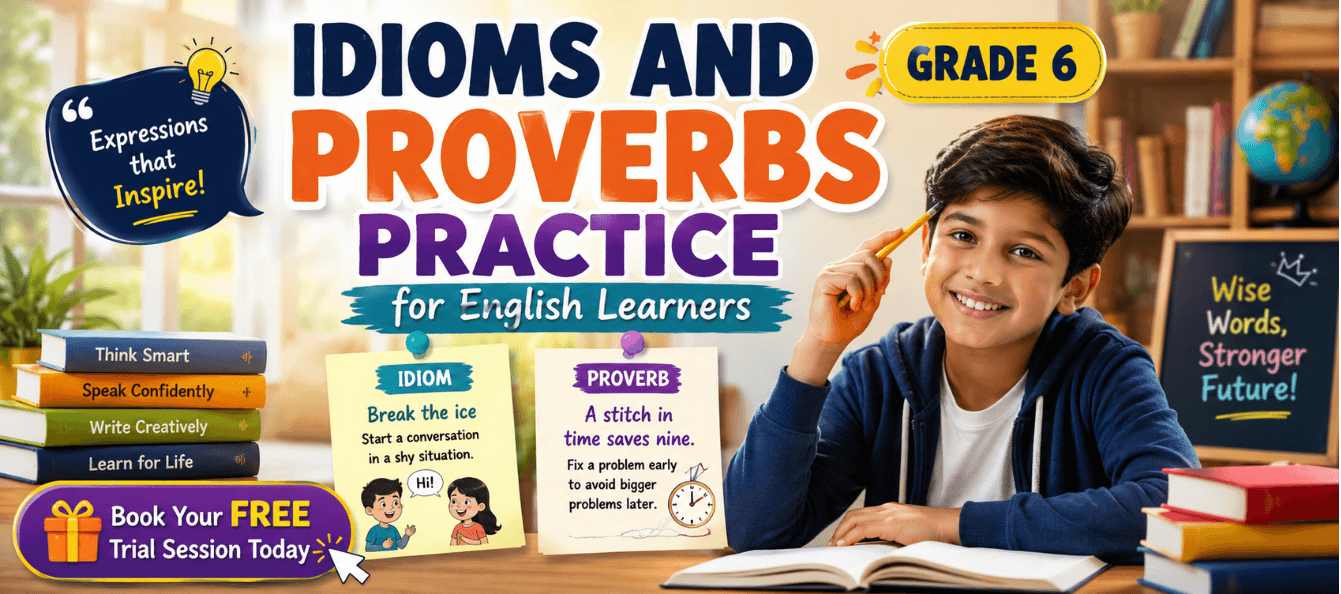
What Is the Topic?
This Grade 6 English grammar worksheet focuses on idioms and proverbs.
An idiom is a group of words with a meaning that is different from the literal meanings of the individual words. You cannot guess the meaning just by looking at the words.
Examples of idioms and their meanings:
1. Break the ice – Start a conversation in a shy situation
2. Under the weather – Feeling sick
A proverb is a short, wise saying that gives advice or shares a truth. These are usually traditional phrases passed down through generations.
Examples of proverbs and their meanings:
1. A stitch in time saves nine. – Fix a problem early to avoid bigger problems later.
2. Honesty is the best policy. – It’s always good to tell the truth.
In this worksheet, students learn how to identify idioms and proverbs, understand their meanings, and use them correctly in different situations.
What’s in This Worksheet?
1. Matching activity where students connect idioms and proverbs with their correct meanings.
2. Underline and explain exercises that help students identify idioms and proverbs in short passages.
3. Fill in the blanks activities based on real-life situations and short stories.
4. Story writing practice using idioms and proverbs naturally in paragraphs.
5. Vocabulary-building exercises that improve understanding of figurative language.
6. Reading comprehension and interpretation practice through short passages.
7. Grammar and communication activities designed especially for Grade 6 learners.
8. Exercises that help students prepare for school grammar tests and classroom activities.
Definitions, Examples, Techniques, and Tips
Definitions
An idiom is a group of words with a meaning that is different from the literal meanings of the individual words.
A proverb is a short, wise saying that gives advice or shares a truth.
Examples
Break the ice – Start a conversation in a shy situation
Under the weather – Feeling sick
A stitch in time saves nine. – Fix a problem early to avoid bigger problems later.
Honesty is the best policy. – It’s always good to tell the truth.
Techniques
1. Read the complete sentence carefully before choosing the meaning.
2. Understand the situation or context in which the idiom or proverb is used.
3. Match the expression with the meaning that best fits the passage.
4. Practice using idioms naturally while writing short paragraphs or stories.
Quick Learning Tips
1. Remember that idioms do not mean exactly what the words say literally.
2. Proverbs usually teach an important lesson or advice.
3. Practice reading English conversations and stories to identify idioms easily.
4. Use idioms and proverbs while speaking and writing to improve communication skills.
Why Is It Important to Learn This?
Learning idioms and proverbs is important because they make communication more expressive and meaningful. They help students understand English conversations, stories, and everyday expressions better.
This topic also improves speaking and writing skills by helping students use creative and natural language. Proverbs teach useful life lessons and improve understanding of traditional sayings.
For Grade 6 students, learning idioms and proverbs builds confidence and improves grammar, vocabulary, and comprehension skills.
Where Will This Knowledge Help You?
1. In school grammar exams and English tests.
2. During classroom discussions and speaking activities.
3. While writing essays, stories, and paragraphs.
4. In reading comprehension exercises.
5. During conversations with teachers, classmates, and family members.
6. In improving communication and vocabulary skills.
7. While understanding storybooks, movies, and English conversations.
How to Use This Worksheet?
1. Read every question carefully before answering.
2. Attempt the matching and fill in the blanks exercises independently first.
3. Underline the idioms and proverbs correctly in the given passages.
4. Compare your responses carefully with the complete answer key.
5. Follow the exact worksheet order while checking answers.
6. Correct mistakes and understand why the correct idiom or proverb fits the sentence.
7. Practice using these idioms and proverbs regularly in speaking and writing.
8. Revise difficult expressions again to remember their meanings easily.
Important Tips and Tricks
1. Do not guess meanings only from individual words because idioms have special meanings.
2. Read the full situation carefully before selecting an answer.
3. Proverbs usually give advice or teach an important lesson.
4. Use proper punctuation while writing idioms and proverbs in sentences.
5. In fill in the blanks exercises, choose expressions that match the situation correctly.
6. In story writing activities, use idioms naturally instead of forcing them into sentences.
7. Practice common idioms regularly to improve fluency and confidence.
8. Examiners expect correct understanding and proper usage of expressions in context.
Complete Answer Key
Exercise 1
a. Break the ice – Start a conversation
b. A piece of cake – Something very easy
c. Let the cat out of the bag – Reveal a secret
d. Kill two birds with one stone – Solve two problems at once
e. Better late than never – It's okay to be late
f. Don’t cry over spilled milk – Don’t worry about past mistakes
g. Hit the sack – Sleep
h. Once in a blue moon – Rarely
Exercise 2
1.
Underline: break the ice
Explanation: Start a conversation in a shy situation.
2.
Underline: A stitch in time saves nine.
Explanation: Fix a problem early to avoid bigger problems later.
Exercise 3
1. An Unexpected Result
“Better late than never.”
2. First Day Fears
break the ice
3. No Time to Waste
“kill two birds with one stone”
4. Too Late Now
“spilled milk”
Exercise 4
Last weekend, my cousins visited my house once in a blue moon, so I was very excited to spend time with them. At first, everyone was quiet, but my brother told a funny joke to break the ice. After that, we laughed, played games, and helped our grandmother decorate the garden. We were able to kill two birds with one stone because we had fun and finished the work together.
This Grade 6 English grammar worksheet on idioms and proverbs is a fun and useful way to improve English communication skills. By practicing these expressions regularly, students can become more confident speakers and writers. Learning idioms and proverbs also helps students understand conversations, stories, and grammar activities more easily. Keep practicing these Grade 6 grammar exercises to strengthen your vocabulary and use English naturally every day.