
Fun Picture Story Writing Worksheet for Grade 2 Kids


Turn Pictures into Stories: Creative Writing Practice for Kids
In Grade 2, learning how to write stories from pictures is an exciting way to improve your grammar and storytelling skills. This worksheet helps students practice creating short stories based on visual cues, organizing their thoughts logically, and using sequence words to describe the order of events. By completing these exercises, students will develop both their creative writing skills and their ability to construct well-structured stories.
Download these English grammar worksheets and practice regularly to strengthen your language skills and build a strong foundation. You can also book a free trial to get expert guidance and improve your reading, writing, and comprehension abilities. The worksheets are designed in a simple and structured way to help K–8 students learn grammar concepts easily and use them confidently in everyday communication.
What is the topic?
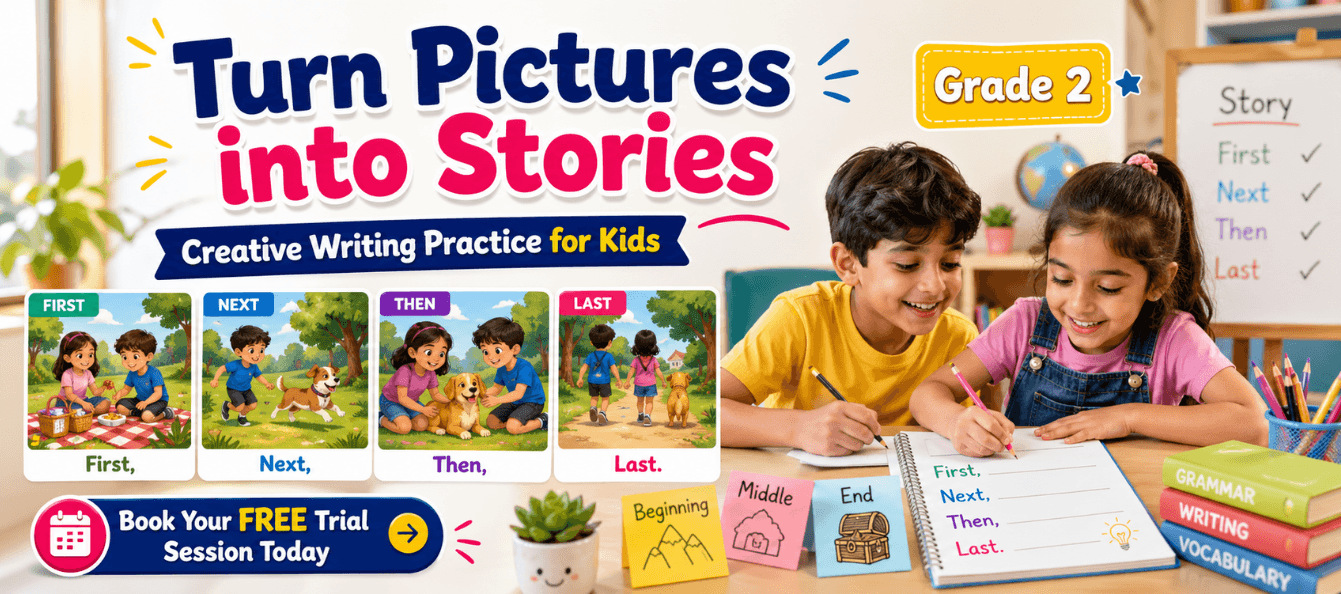
This worksheet focuses on writing stories based on pictures. Students will look at images and use sequence words like "First," "Next," "Then," and "Last" to create a story that shows the order of events. This exercise helps improve their understanding of story structure, allowing them to create a coherent beginning, middle, and end for their stories.
What's in this worksheet?
This worksheet includes the following types of exercises:
1. Writing a story based on three pictures using the words First, Next, and Last to show the order of events.
2. Writing a story based on four pictures, using First, Next, Then, and Last to describe what happens.
3. Writing a short paragraph with a clear beginning, middle, and end, based on a simple prompt.
4. Completing a story by continuing a sentence provided at the beginning.
Definitions, examples, techniques, and tips
Definitions:
1. Sequence: The order in which events happen in a story. Words like "First," "Next," "Then," and "Last" help show this sequence.
2. Story structure: The way a story is organized, typically with a beginning, middle, and end.
3. Picture story: A story created by looking at a series of pictures and writing sentences based on them.
Examples:
1. "First, the children are playing outside. Next, they find a puppy in the park. Then, they pet the puppy. Last, they take the puppy home."
2. "First, they see a treasure map. Next, they follow the map to the treasure spot. Then, they dig up the treasure. Last, they open the chest and find gold coins."
Tips:
1. Use the sequence words correctly to keep the story in order.
2. Pay attention to the details in the pictures to help you describe what is happening.
3. When writing about the middle part of the story, focus on the key events that happen after the beginning but before the end.
4. Practice writing both short and long stories to improve your fluency.
Why is it important to learn this?
Learning to write stories from pictures is a fun and creative way to enhance writing skills. It helps students organize their thoughts and understand the importance of sequencing events. This exercise also improves vocabulary, as students must think about how to describe actions and objects in their stories. Writing stories in this way strengthens both creative thinking and structured writing skills, which are important for academic success.
Where will this knowledge help you?
This knowledge will help you in:
1. Writing creative stories for school assignments.
2. Understanding how to organize a narrative in a clear and logical manner.
3. Developing your ability to describe events in sequence, which is useful in many types of writing and storytelling.
How to use this worksheet?
To make the most of this worksheet, follow these steps:
1. Look carefully at the pictures and think about what happens in each one.
2. Use the sequence words (First, Next, Then, Last) to order your sentences logically.
3. Write the sentences clearly, focusing on what happens in the story.
4. After finishing, read your story again to make sure the sequence of events makes sense.
Important tips and tricks
1. Pay attention to the actions and details in each picture to make your story more vivid.
2. Use descriptive words to make your story interesting, such as "exciting," "happy," or "surprising."
3. Always check that your story has a clear beginning, middle, and end. This helps your reader follow the events smoothly.
Complete Answer Key
Exercise No. 1: Write a short story using First, Next, and Last.
Example Answer:
"First, the children are sitting on the grass and having a picnic. Next, they see a dog running towards them. Then, they decide to play with the dog. Last, they all go back home happily with the dog."
Exercise No. 2: Write a story using First, Next, Then, and Last.
Example Answer:
"First, the kids are exploring the woods. Next, they find an old map hidden in the dirt. Then, they follow the map to a large tree. Last, they discover a treasure chest hidden under the tree roots."
Exercise No. 3: Write a short paragraph with a beginning, middle, and end.
Example Answer:
"Once upon a time, a little girl went to the park to play. She found a lost puppy and decided to take it home. They became best friends and played together every day."
Exercise No. 4: Complete the story with a few sentences.
Example Answer:
"Once upon a time there was a brave knight. He went on a journey to find a hidden treasure. Along the way, he met a dragon and defeated it. Finally, he reached the treasure and became a hero."
By practicing these exercises, you can improve your ability to write structured stories and express your creativity clearly. Keep practicing regularly, and you’ll become more confident in writing stories from pictures.