
Fun Short Vowel A Phonics Practice Sheet for Class 1


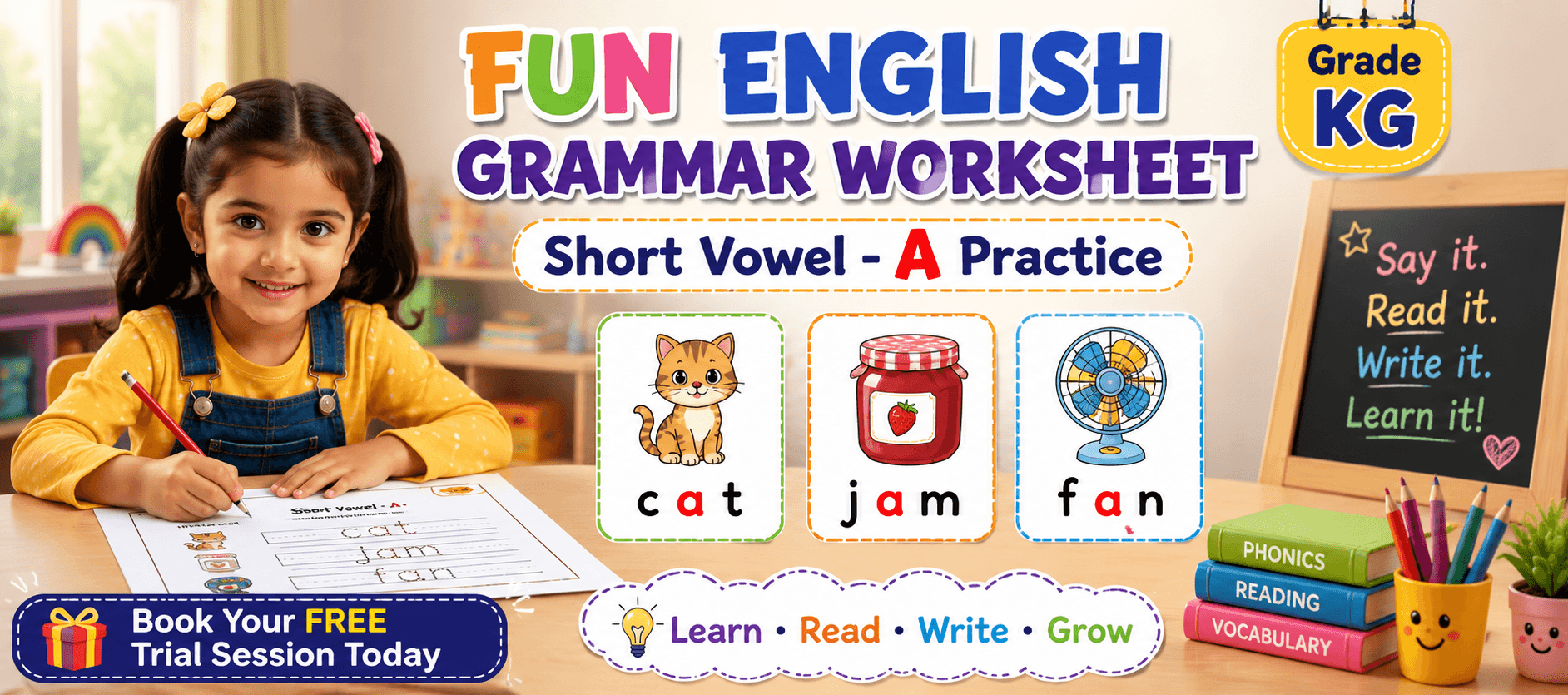
Fun English Grammar Worksheet for Grade KG on Short Vowel - A Practice
Learning vowel sounds is one of the first and most important steps in early English learning. In Grade KG, children begin to recognize simple vowel sounds that help them read and pronounce basic words correctly. This English grammar worksheet on Short Vowel - A introduces young learners to easy and familiar words that use the short vowel “a” sound. Through picture-based learning and word-writing practice, students improve phonics skills, pronunciation, spelling, and vocabulary in an enjoyable and simple way. The worksheet encourages children to observe pictures carefully, say words aloud, and practice writing correctly while building strong foundational language skills. With repeated reading and writing practice, students gain confidence in recognizing short vowel sounds during everyday learning activities.
Download these English grammar worksheets and practice regularly to strengthen your language skills and build a strong foundation. You can also book a free trial to get expert guidance and improve your reading, writing, and comprehension abilities. The worksheets are designed in a simple and structured way to help K–8 students learn grammar concepts easily and use them confidently in everyday communication.
What Is the Topic?
This worksheet focuses on the short vowel “a” sound. Short vowels are simple vowel sounds that appear in many beginner-level English words. In this Grade KG English grammar worksheet, students practice recognizing and writing words that contain the short vowel “a”.
The worksheet uses picture-based phonics learning to help children connect sounds with words. Students look at pictures, say the word aloud, and write the correct word in the given space. This activity improves pronunciation, spelling, and letter recognition while helping children understand vowel sounds more clearly.
The worksheet introduces easy short vowel “a” words that are simple for KG students to read and write independently.
What’s in This Worksheet?
1. Introduction to the short vowel “a” sound.
2. Picture-based phonics learning activities.
3. Word pronunciation practice using simple vocabulary.
4. Writing activities for short vowel “a” words.
5. Reading aloud practice to improve pronunciation.
6. Vocabulary-building activities using familiar words.
7. Sound recognition exercises for early phonics development.
8. Guided writing practice for beginner learners.
9. Simple and engaging activities suitable for Grade KG students.
10. Early grammar and phonics exercises that build strong reading foundations.
Definitions, Examples, Techniques, and Tips
The short vowel “a” sound appears in many simple English words. It makes the “a” sound heard in words like cat and bat.
The worksheet includes picture-based practice where students:
1. Look at the picture carefully.
2. Say the word aloud.
3. Identify the short vowel “a” sound.
4. Write the correct word in the space provided.
Examples of short vowel “a” word patterns from the worksheet:
c a t
j a m
f a n
Quick learning tips from the worksheet:
1. Say the word slowly and listen for the vowel sound.
2. Practice reading the word aloud several times.
3. Look carefully at the picture before writing the word.
4. Write each letter neatly and clearly.
5. Repeat the words daily for better pronunciation and spelling practice.
Why Is It Important to Learn This?
Learning short vowel sounds is important because they help children begin reading simple English words correctly. The short vowel “a” sound appears in many beginner-level words, so understanding it helps students build strong phonics foundations.
Practicing vowel sounds also improves pronunciation, listening skills, spelling, and vocabulary. When students can recognize vowel sounds easily, they become more confident while reading aloud and writing simple words independently.
Early phonics learning also prepares children for future grammar and reading activities by helping them identify sound patterns in words.
Where Will This Knowledge Help You?
Learning the short vowel “a” sound helps students in many everyday learning activities.
1. Reading simple English words correctly.
2. Improving pronunciation during classroom activities.
3. Building early spelling and writing skills.
4. Recognizing sounds while learning new vocabulary.
5. Participating confidently in reading activities.
6. Developing strong phonics foundations for future learning.
7. Improving listening and sound recognition skills.
How to Use This Worksheet?
1. Look carefully at each picture before writing the word.
2. Say the word aloud slowly and clearly.
3. Listen carefully for the short vowel “a” sound.
4. Write the correct word neatly in the given space.
5. Practice reading the words aloud several times.
6. Review your answers carefully after completing the worksheet.
7. Compare your work with the solutions in the exact worksheet order.
8. Correct mistakes neatly and practice the words again.
9. Repeat the activity regularly to improve reading and spelling confidence.
Important Tips and Tricks
1. Listen carefully to the vowel sound while saying the word aloud.
2. Read the word slowly before writing it.
3. Look at the picture carefully to identify the correct word.
4. Practice writing each letter neatly.
5. Repeat short vowel “a” words regularly for better memory.
6. Speak clearly while practicing pronunciation.
7. Focus carefully on the middle vowel sound in the word.
8. Practice reading and writing every day to improve fluency.
9. Stay neat and careful while completing the worksheet.
10. Regular practice helps students become more confident readers and writers.
Complete Answer Key
Practice Words with Short Vowel ‘a’:
cat
jam
fan
Practicing short vowel sounds regularly helps children build strong phonics, reading, and spelling skills from an early age. This Grade KG English grammar worksheet on Short Vowel - A gives students simple and enjoyable practice through picture-based learning and word-writing activities. By reading aloud, observing carefully, and practicing every day, children can improve pronunciation, vocabulary, and writing confidence while developing a strong foundation in English learning.