
Good Morning Poem Questions Worksheet – Grade 1 PDF
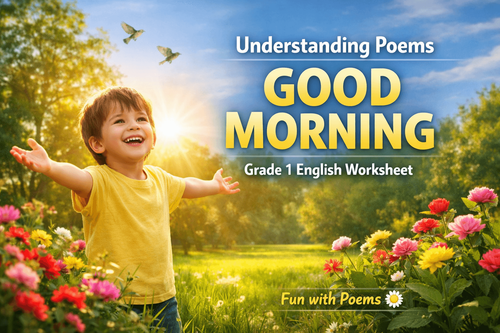

Good Morning Poem Questions Worksheet – Grade 1 PDF
A bright morning, chirping birds, and a cheerful “good morning” can make the whole day feel fresh and happy. In this Grade 1 English grammar worksheet on Understanding Poems: Good Morning, students explore a simple and joyful poem that helps them connect with nature and understand how a day begins in a positive way.
What Is the Topic?
This English grammar worksheet focuses on understanding poems. In this Grade 1 worksheet, students read a short and simple poem titled “Good Morning.” The goal is to help children understand what the poem is about, identify key details, and answer questions based on what they read.
Students learn how to:
• Read and understand simple lines from a poem
• Identify who or what is being talked about
• Recognize feelings and actions in the poem
• Answer both objective and subjective questions
The worksheet builds basic reading comprehension skills by encouraging students to think about the poem and respond to questions carefully.
What’s in This Worksheet?
This worksheet includes different types of questions and activities to help students understand the poem better.
1. A short poem titled “Good Morning” with simple and easy-to-read lines
2. Objective-type questions where students choose the correct answer
3. Questions that check clear facts from the poem
4. Subjective-type questions that ask students to think and answer in their own words
5. Questions that focus on feelings, actions, and understanding of the poem
6. Answers to all the questions provided at the end
This structure helps students practice reading comprehension step by step and prepares them for exams by improving their understanding skills.
Definitions, Examples, Techniques, and Tips
Definitions
Understanding poems means reading a poem and knowing what it is trying to say. It includes identifying who is in the poem, what is happening, and how things feel.
Examples
The poem includes lines such as:
“Good morning to the sun so bright,”
“Good morning to the sky so blue,”
“Flowers wake with colors new,”
These lines show greetings to different parts of nature like the sun, sky, and flowers.
Techniques
• Read the poem slowly and clearly
• Pay attention to repeated words like “Good morning”
• Notice what happens in the morning in the poem
• Think about how the child feels
Quick learning tips
• Look for keywords like sun, sky, birds, and flowers
• Focus on what wakes up or happens in the morning
• Understand the feeling of the poem (happy, fresh)
• Answer questions based only on what is written in the poem
Why Is It Important to Learn This?
Learning to understand poems is very important for students. It helps them improve their reading skills and understand meanings better.
This topic helps students:
• Build strong reading comprehension skills
• Learn new words and simple expressions
• Understand emotions and feelings in writing
• Develop interest in reading poems
It also helps students become more confident while answering questions in exams.
Where Will This Knowledge Help You?
Understanding poems will help students in many ways.
• In exams: Students can easily answer comprehension questions
• In writing: They can use better words and ideas
• In class: They can participate in discussions about poems
• In daily reading: They can enjoy and understand stories and poems
This knowledge makes reading more enjoyable and meaningful.
How to Use This Worksheet?
Follow these simple steps to make the most of this English grammar worksheet.
1. Read the poem carefully and try to understand each line
2. Attempt all the questions independently without looking at the answers
3. Review the answers carefully after completing the worksheet
4. Correct your mistakes and understand where you went wrong
5. Practice regularly to improve your reading comprehension skills
The solutions follow the exact worksheet order, so students should compare their answers carefully and check each question one by one.
Important Tips and Tricks
1. Read every line of the poem slowly before answering
2. Do not guess answers without understanding the question
3. Focus on keywords like sun, sky, flowers, and birds
4. For multiple-choice questions, read all options carefully before choosing
5. For subjective questions, think about what the poem says
6. If a question asks about feelings, look for words like happy and fresh
7. For open-ended questions, express your thoughts clearly
Complete Answer Key
Choose the correct answer.
1. a) The sun
2. a) Blue
3. b) Flowers
4. d) Birds
5. a) Happy
6. b) Be cheerful
Answer the following questions.
7. The sun, sky, and trees.
8. Happy and fresh.
9. Flowers and birds wake up.
10. I say good morning.
Starting your day with a cheerful poem like “Good Morning” makes learning fun and engaging. This Grade 1 English grammar worksheet helps students build strong reading skills while enjoying simple and meaningful poetry. Keep practicing, keep reading, and soon you will become very confident in understanding poems.