
Grade 1 Phonics Blending Guide with Practice Activities
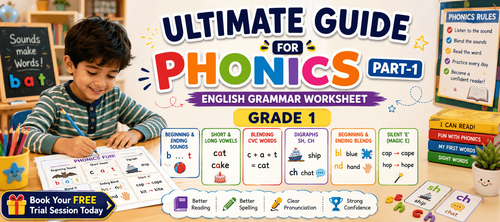

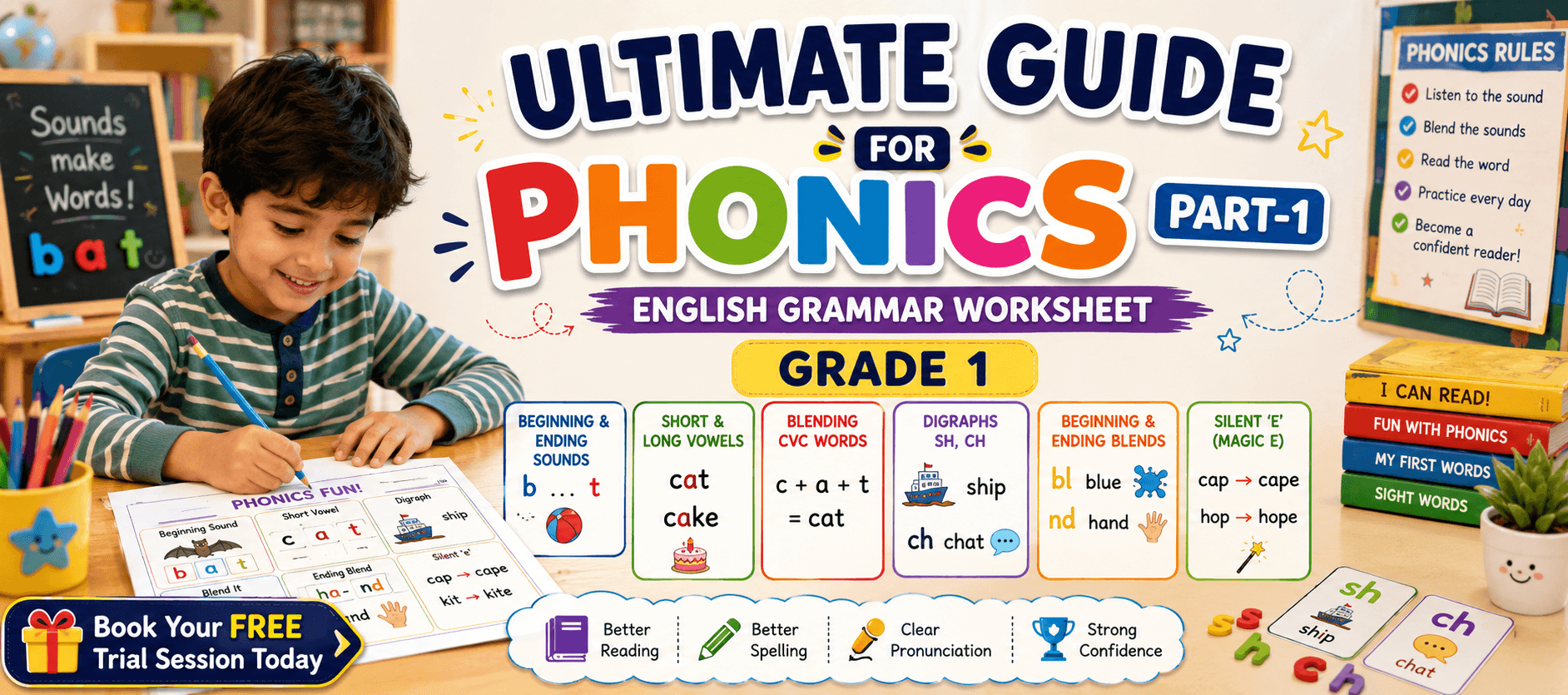
Ultimate Guide for Phonics Part-1 English Grammar Worksheet for Grade 1
Learning phonics is one of the most important steps in building strong reading and speaking skills. This English grammar worksheet for Grade 1 on Ultimate Guide for Phonics Part-1 helps children understand how letters and sounds work together to form words. Through engaging phonics activities and structured exercises, students improve pronunciation, spelling, reading fluency, and confidence in communication.
In this worksheet, Grade 1 learners practice beginning and ending sounds, short and long vowel sounds, blending CVC words, digraphs, beginning and ending blends, and silent ‘e’ words. The activities are designed in a simple and enjoyable format that helps young learners recognize sounds, read words correctly, and build a strong foundation in English language learning.
Download these English grammar worksheets and practice regularly to strengthen your language skills and build a strong foundation. You can also book a free trial to get expert guidance and improve your reading, writing, and comprehension abilities. The worksheets are designed in a simple and structured way to help K–8 students learn grammar concepts easily and use them confidently in everyday communication.
What Is the Topic?
This English grammar worksheet for Grade 1 focuses on phonics. Phonics is learning how letters and sounds go together to make words.
The worksheet explains that phonics helps children:
Sound out new words independently
Improve spelling and pronunciation
Build reading fluency and confidence
The worksheet introduces several important phonics concepts such as beginning and ending letter sounds, short and long vowel sounds, blending CVC words, digraphs, beginning and ending blends, and silent ‘e’.
Examples given in the worksheet include:
b /b/ bat /b/ /a/ /t/ = bat
sh /sh/ ship /sh/ /i/ /p/ = ship
ch /ch/ chat /ch/ /a/ /t/ = chat
oi /oi/ coin /k/ /oi/ /n/ = coin
What’s in This Worksheet?
1. Introduction to phonics and letter sounds.
2. Practice activities on beginning and ending letter sounds.
3. Exercises on short vowel and long vowel sounds.
4. Blending CVC word activities.
5. Digraph practice using sh and ch sounds.
6. Beginning blends and ending blends exercises.
7. Silent ‘e’ word recognition activities.
8. Matching, coloring, ticking, and fill-in-the-blank exercises.
9. Common phonics words used in everyday reading practice.
10. Structured activities that improve reading fluency and pronunciation.
Definitions, Examples, Techniques, and Tips
Definition
Phonics is learning how letters and sounds go together to make words.
Beginning Letter Sounds
The sound made by the first letter in a word.
Examples : /b/ in bat, /m/ in man, /t/ in tap
Ending Letter Sounds
The sound made by the last letter in a word.
Examples : /t/ in hat, /n/ in pen, /d/ in sad
Short Vowel Sounds
The simple vowel sounds in words where the vowel is not stretched or pronounced by name.
Examples : /a/ in cat, /e/ in bed, /i/ in pig, /o/ in log, /u/ in cup
Long Vowel Sounds
The vowel sounds that say the name of the letter.
Examples : /a/ in cake, /e/ in beet, /i/ in kite, /o/ in rope, /u/ in cube
Blending CVC Words
Blending means putting together the sounds of each letter to say the whole word.
Examples :
c+a+t = cat
p+e+n = pen
s+u+n = sun
Digraphs
Two letters that come together to make a single sound.
Examples :
sh in ship
sh in shop
ch in chat
ch in chin
Beginning Blends
Two consonants at the start of a word where both sounds are heard.
Examples : bl in blue, cr in crab, st in star, tr in tree
Ending Blends
Two consonants at the end of a word where both sounds are heard.
Examples : nd in hand, mp in lamp, st in nest
Silent ‘e’
A silent ‘e’ at the end of a word that makes the vowel before it say its name.
Examples :
cap → cape
kit → kite
hop → hope
Quick Learning Tips
1. Say each sound aloud while reading words.
2. Practice blending sounds slowly and clearly.
3. Focus on vowel sounds carefully.
4. Read phonics words every day for better fluency.
5. Practice identifying beginning and ending sounds regularly.
Why Is It Important to Learn This?
Learning phonics is important because it helps children become confident readers and speakers. Understanding letter sounds helps students read new words independently and improve pronunciation.
Phonics also strengthens spelling and listening skills. It helps students recognize word patterns and improves reading fluency step by step. For Grade 1 learners, phonics creates the foundation for future grammar, reading, and writing development.
Regular phonics practice also helps children participate more confidently in classroom reading activities and daily communication.
Where Will This Knowledge Help You?
Students will use phonics skills in many school and daily activities.
1. Reading storybooks and classroom texts.
2. Improving pronunciation while speaking.
3. Writing and spelling words correctly.
4. Completing English grammar worksheets and homework.
5. Identifying sounds in new words.
6. Building confidence in classroom participation.
7. Improving reading fluency and comprehension skills.
8. Learning advanced grammar concepts more easily in future classes.
How to Use This Worksheet?
1. Read all phonics examples carefully before solving the exercises.
2. Practice sounding out words slowly and clearly.
3. Attempt every activity independently first.
4. Match sounds carefully with letters and words.
5. Compare your answers with the complete answer key in the exact worksheet order.
6. Correct mistakes and practice difficult words again.
7. Practice reading phonics words aloud daily.
8. Revise beginning sounds, blends, vowels, and digraphs regularly.
Important Tips and Tricks
1. Listen carefully to the sound made by each letter.
2. Read words slowly while blending sounds together.
3. Practice short vowel and long vowel sounds separately.
4. Remember that digraphs make one combined sound.
5. Focus carefully on beginning and ending sounds.
6. Silent ‘e’ changes the vowel sound in a word.
7. Read every exercise carefully before answering.
8. Practice phonics words daily for better fluency.
9. Check spelling carefully while writing answers.
10. Examiners expect correct sound recognition and word reading skills.
Complete Answer Key
PHONICS
Why Is Phonics Important?
Phonics helps children:
Sound out new words independently
Improve spelling and pronunciation
Build reading fluency and confidence
Letter(s) Sound(s) Example Word Sounded Out As
b /b/ bat /b/ /a/ /t/ = bat
sh /sh/ ship /sh/ /i/ /p/ = ship
ch /ch/ chat /ch/ /a/ /t/ = chat
oi /oi/ coin /k/ /oi/ /n/ = coin
BEGINNING AND ENDING LETTER SOUNDS
Beginning Letter Sounds
The sound made by the first letter in a word.
Examples : /b/ in bat, /m/ in man, /t/ in tap
Ending Letter Sounds
The sound made by the last letter in a word.
Examples : /t/ in hat, /n/ in pen, /d/ in sad
Exercise 1
Color the beginning sound in blue and the ending sound in red based on the picture given.
1. t b s → Beginning sound: b Ending sound: t
2. g d b → Beginning sound: d Ending sound: g
3. f n m → Beginning sound: m Ending sound: f
4. k p n → Beginning sound: p Ending sound: k
5. n s r → Beginning sound: s Ending sound: n
6. h t b → Beginning sound: b Ending sound: t
7. r t c → Beginning sound: c Ending sound: r
8. p c d → Beginning sound: d Ending sound: p
9. t n s → Beginning sound: s Ending sound: t
10. g b z → Beginning sound: b Ending sound: g
SHORT VOWEL AND LONG VOWEL SOUNDS
Short Vowel Sounds
The simple vowel sounds in words where the vowel is not stretched or pronounced by name.
Examples : /a/ in cat, /e/ in bed, /i/ in pig, /o/ in log, /u/ in cup
Long Vowel Sounds
The vowel sounds that say the name of the letter.
Examples : /a/ in cake, /e/ in beet, /i/ in kite, /o/ in rope, /u/ in cube
Exercise 2
Tick the box – Is it short or long vowel?
1. CAP – Short Vowel
2. KITE – Long Vowel
3. PEN – Short Vowel
4. SUN – Short Vowel
5. ROPE – Long Vowel
6. CUBE – Long Vowel
7. DOG – Short Vowel
8. LEAF – Long Vowel
10. BIKE – Long Vowel
11. HOP – Short Vowel
BLENDING CVC WORDS
Blending means putting together the sounds of each letter to say the whole word.
Children learn to blend individual sounds to read three-letter words (consonant-vowel-consonant).
Examples :
c+a+t = cat
p+e+n = pen
s+u+n = sun
Exercise 3
Join the letters to form a CVC word. Say the sounds aloud as you solve each.
1. c + a + t → cat
2. p + e + n → pen
3. d + o + g → dog
4. m + a + n → man
5. r + u + n → run
6. s + i + t → sit
7. h + o + p → hop
8. l + i + d → lid
9. j + e + t → jet
10. f + u + n → fun
DIGRAPHS
(SH, CH)
Two letters that come together to make a single sound.
Examples :
sh in ship
sh in shop
ch in chat
ch in chin
Exercise4
Complete the name of the picture using digraphs from the box.
sh ch
1. shut
2. chair
3. chill
4. rich
5. shed
6. fish
7. shop
8. cash
9. shoe
BEGINNING BLENDS AND ENDING BLENDS
Beginning Blends
Two consonants at the start of a word where both sounds are heard.
Examples : bl in blue, cr in crab, st in star, tr in tree
Ending Blends
Two consonants at the end of a word where both sounds are heard.
Examples : nd in hand, mp in lamp, st in nest
Exercise5
Match the picture to the correct blend word.
flag
tree
nest
crab
lamp
frog
drum
hand
brush
skate
SILENT ‘E’ (MAGIC E)
A silent ‘e’ at the end of a word that makes the vowel before it say its name.
Examples :
cap → cape
kit → kite
hop → hope
Exercise 6
Tick the box – Is it silent ‘e’ or not?
1. CAKE – Silent ‘e’
2. CUBE – Silent ‘e’
3. PIN – Not silent ‘e’
4. CAP – Not silent ‘e’
5. ROPE – Silent ‘e’
6. KIT – Not silent ‘e’
7. TAPE – Silent ‘e’
8. LEAF – Not silent ‘e’
10. HUG – Not silent ‘e’
11. SET – Not silent ‘e’
Practicing phonics regularly helps Grade 1 students become stronger readers, writers, and speakers. By learning sounds, blends, vowels, digraphs, and silent ‘e’ words, students improve pronunciation, spelling, and reading fluency step by step. Continue practicing English grammar worksheets regularly to build a strong language foundation and develop confidence in communication and learning.