
Grade 2 Reading Comprehension: Picnic Diary Entry [PDF]
![Grade 2 Reading Comprehension: Picnic Diary Entry [PDF]](https://cdn5.planetspark.in/media/small_Grade_2_Reading_Comprehension_Picnic_Diary_Entry_PDF_3c301d9c3c.png)

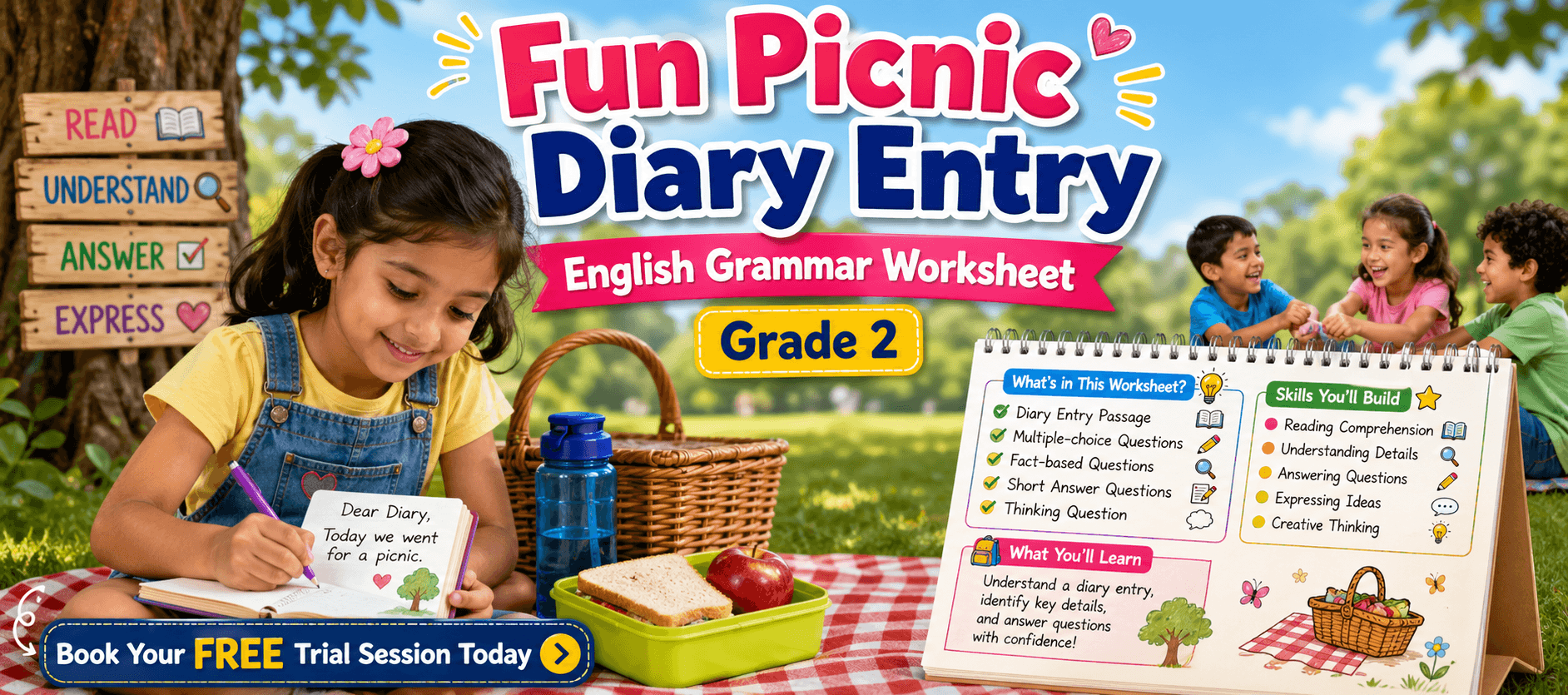
Fun Picnic Diary Entry English Grammar Worksheet for Grade 2 Students
Have you ever gone on a picnic and felt excited to write about your day? This English grammar worksheet for Grade 2 on Diary Entry: Picnic Day helps young learners understand how to read and enjoy a simple diary entry from everyday life. It takes students through a fun and relatable experience of a picnic day, helping them connect with the story while improving their reading comprehension skills.
Through this worksheet, students learn how to identify key details, understand actions, and answer different types of questions based on the passage. The diary format makes it easy for Grade 2 learners to relate to the writer’s feelings and experiences. This not only builds reading skills but also encourages children to express their own thoughts clearly.
Download these English grammar worksheets and practice regularly to strengthen your language skills and build a strong foundation. You can also book a free trial to get expert guidance and improve your reading, writing, and comprehension abilities. The worksheets are designed in a simple and structured way to help K–8 students learn grammar concepts easily and use them confidently in everyday communication.
What Is the Topic?
The topic of this English grammar worksheet for Grade 2 is a diary entry based on a picnic day. A diary entry is a short piece of writing where a person shares their daily experiences, thoughts, and feelings in a simple and personal way.
In this worksheet, students read a diary entry written by a child who describes their picnic day. They learn how events are written in order, how simple sentences are used, and how feelings are expressed. The focus is on understanding the passage and answering questions correctly.
Students are expected to:
Understand the sequence of events in the diary entry
Identify important details like place, activities, and actions
Answer both objective and subjective questions
Recognize how feelings and experiences are written in a diary
What’s in This Worksheet?
This English grammar worksheet for Grade 2 includes different types of questions designed to build reading comprehension skills:
1. Multiple-choice questions where students choose the correct answer based on the passage
2. Questions that test understanding of facts such as what the writer packed, where they sat, and what they did
3. Questions that focus on actions and details from the story
4. Short-answer questions that require students to write answers based on the passage
5. A thinking-based question that encourages students to imagine their own picnic plan
This worksheet supports exam preparation by helping students practice reading carefully, understanding questions, and selecting or writing correct answers.
Definitions, Examples, Techniques, and Tips
Definition
A diary entry is a short piece of writing where someone records their daily activities and feelings.
Example from the worksheet
The writer describes waking up early, packing a bag, going to the park, playing games, and returning home.
Techniques
Read the passage slowly and carefully
Look for keywords in the questions
Match the question with the correct part of the passage
Focus on actions and details mentioned in the story
Quick learning tips
Always read the question before looking for the answer
Pay attention to small details like objects, places, and actions
Re-read the passage if you are unsure
Practice writing answers in clear and simple sentences
Why Is It Important to Learn This?
Learning how to read and understand a diary entry is important for students because it helps improve their reading and thinking skills. It teaches them how to understand real-life situations and express ideas clearly.
This topic helps students:
Improve reading comprehension
Understand how to describe daily activities
Develop writing skills
Build confidence in answering questions
It also helps in school exams where students are asked to read passages and answer questions based on them.
Where Will This Knowledge Help You?
This knowledge will help students in many areas:
In exams
Students will be able to read passages and answer questions correctly
In writing tasks
They can write their own diary entries and describe events clearly
In class participation
Students can understand lessons better and respond to questions confidently
In daily life
They can share their experiences in a structured and meaningful way
How to Use This Worksheet?
1. Read the passage carefully and understand the story
2. Attempt all questions independently without help
3. Choose the correct answers for multiple-choice questions
4. Write clear answers for the short questions
5. Review your answers using the answer key
6. Correct any mistakes and learn from them
7. Practice regularly to improve your reading skills
The solutions follow the exact worksheet order, so students should compare their answers carefully and ensure accuracy.
Important Tips and Tricks
1. Always read the full passage before answering questions
2. Do not guess answers without checking the passage
3. Focus on keywords in both the question and the passage
4. For short answers, write complete sentences
5. Follow instructions carefully for each question
6. Practice neat and clear writing
7. Review your answers before finishing
Complete Answer Key
Choose the correct answer.
1. What did the writer pack in the bag?
c) Water bottle, sandwich and an apple
2. Where did the class sit?
a) Under a banyan tree
3. Which game did they play?
b) Relay race
4. What did the teacher ask the children to do?
c) Pick up wrappers and put them in the bin
5. Whom did the writer feed?
b) Sparrows
6. What did the writer draw on the bus?
d) Tree
Answer the following questions.
7. Write one line that shows what the writer gave the sparrows.
I fed crumbs to some small sparrows.
8. Why is it good to pick up wrappers at a picnic?
It keeps the park clean and safe for animals.
9. Write one sentence about how the writer felt.
I felt proud to help clean the park.
10. If you planned a picnic, what would you take and why?
I would take a water bottle and healthy snacks so everyone stays safe and energetic.
This English grammar worksheet for Grade 2 on Diary Entry: Picnic Day is a great way to build strong reading and comprehension skills. With regular practice, students can improve their understanding, answer questions confidently, and enjoy reading simple passages. Keep practicing and exploring more worksheets to become better at reading and writing every day.