
Grade 6 Literature Skills - Analyzing Dialogue for Character Insight [With Answers]
![Grade 6 Literature Skills - Analyzing Dialogue for Character Insight [With Answers]](https://cdn5.planetspark.in/media/small_Grade_6_Literature_Skills_Analyzing_Dialogue_for_Character_Insight_With_Answers_a4feff41f2.png)

Grade 6 Literature Skills Worksheet: Analyzing Dialogue for Character Insight
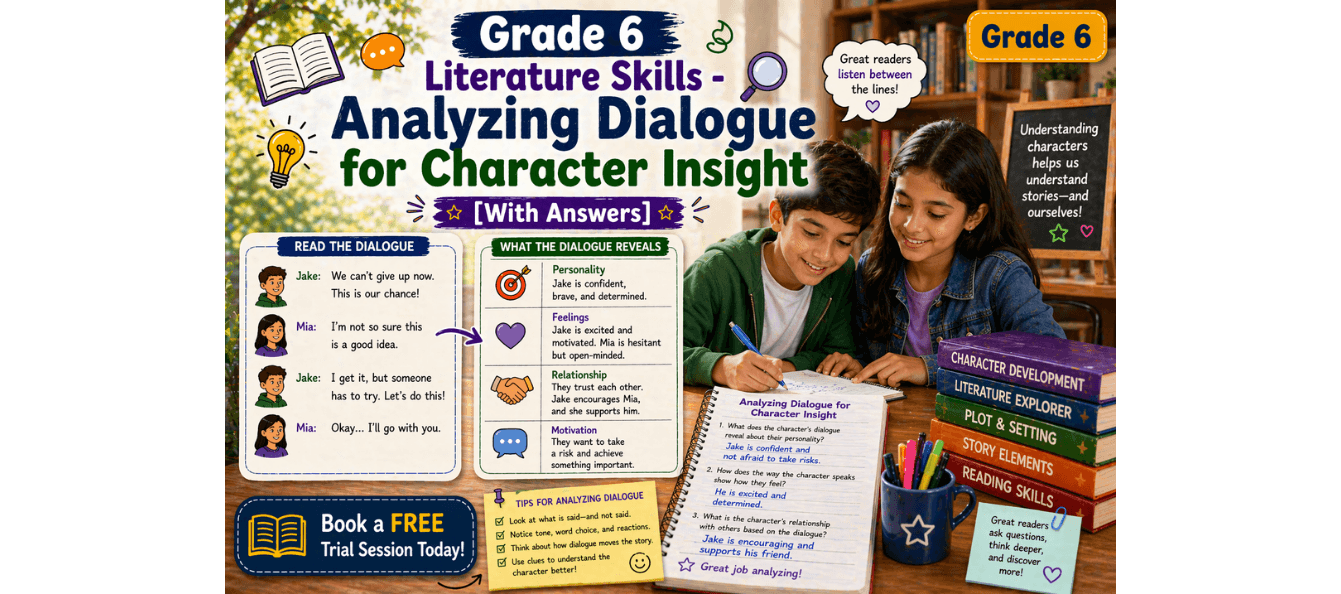
Dialogue is one of the most powerful ways to reveal a character's personality, emotions, and motivations in a story. For example, in "The Outsiders," Ponyboy’s dialogue shows his inner conflict and desire to belong. By analyzing how characters speak, we can understand their fears, desires, and relationships with others. This worksheet will help students practice analyzing dialogue to uncover character insights.
Learning how to analyze dialogue gives students a deeper understanding of characters and their development throughout a story. Download these English grammar worksheets and practice regularly to strengthen your language skills and build a strong foundation. You can also book a free trial to get expert guidance and improve your reading, writing, and comprehension abilities. The worksheets are designed in a simple and structured way to help K–8 students learn grammar concepts easily and use them confidently in everyday communication.
What Is the Topic?
This worksheet focuses on analyzing dialogue to understand character traits. Students will learn how to use dialogue to identify the motivations and personalities of characters.
What’s in This Worksheet?
1. Definitions of how dialogue reveals character
2. Multiple choice questions to identify character traits based on dialogue
3. Exercises to practice writing dialogue that reveals character traits
4. A short writing assignment to analyze dialogue in a scene
Definitions, Examples, Techniques, and Tips
- Dialogue: The conversation between characters in a story.
- Character Insight: The understanding of a character’s thoughts, feelings, and motivations based on their words and actions.
- Example of Dialogue: "I don’t want to go home," Ponyboy said, his voice trembling with fear. This reveals his insecurity and fear of his home life.
Why Is It Important to Learn This?
Analyzing dialogue helps students gain a better understanding of characters and enhances their reading comprehension. It also helps students improve their own writing by teaching them how to use dialogue to express emotions and personality.
Where Will This Knowledge Help You?
This knowledge is useful for literary analysis, character study, and creative writing, especially when developing characters and building relationships through conversation.
How to Use This Worksheet?
1. Identify the character traits revealed by dialogue in the provided examples.
2. Write your own dialogue that reveals character traits.
3. Review your answers and analyze how the dialogue deepens our understanding of the characters.
Important Tips and Tricks
1. Pay attention to the words characters use, their tone, and how they interact with others to learn about their personality.
2. Dialogue can reveal a lot about a character’s emotions, motivations, and relationships.
Complete Answer Key
Exercise 1 – Multiple Choice Questions
1. b) enthusiastic.
2. c) withdrawn.
3. a) honest.
4. c) hurt.
5. b) ashamed.
6. a) humility.
7. b) deeper.
8. a) friendship.
9. c) restored.
10. b) communication.
Exercise 2 – Fill in the Blanks
1. silently
2. sketching
3. whispered
4. kindness
5. corridor
6. friendship
7. practice
8. sunset
9. together
10. building
Exercise 3 – True or False
1. True
2. False
3. False
4. True
5. True
6. False
7. True
8. False
9. True
10. True
Exercise 4 – Underline the key phrase and write the context
Answers will depend on personal perspective and may vary. (Hint:- Identify the "who, what, when, and where" of the scene.)
Exercise 5 – Paragraph Fill in the Blanks (Context Clues)
1. silently / together
2. withdrawn
3. friendship
4. corridor
5. prize
6. honest
7. resentment / silence
8. together
By the end of this worksheet, students will be able to analyze dialogue to uncover important character insights and use it in their own writing.