
Grade 6 Literature Skills - Evaluating a Character’s Decision [Grammar Practice]
![Grade 6 Literature Skills - Evaluating a Character’s Decision [Grammar Practice]](https://cdn5.planetspark.in/media/small_Grade_6_Literature_Skills_Evaluating_a_Character_s_Decision_Grammar_Practice_f31a90ab7c.png)

Grade 6 English Grammar Worksheet - Evaluating a Character’s Decision
Evaluating a character's decision is an essential skill for understanding how individuals respond to challenges in stories. In this Grade 6 worksheet, students learn to analyze characters' choices and explore the consequences of those choices. This worksheet helps build critical thinking skills as students evaluate the motivations behind character decisions and assess how those decisions affect the plot.
Download these English grammar worksheets and practice regularly to strengthen your language skills and build a strong foundation. You can also book a free trial to get expert guidance and improve your reading, writing, and comprehension abilities. The worksheets are designed in a simple and structured way to help K–8 students learn grammar concepts easily and use them confidently in everyday communication.
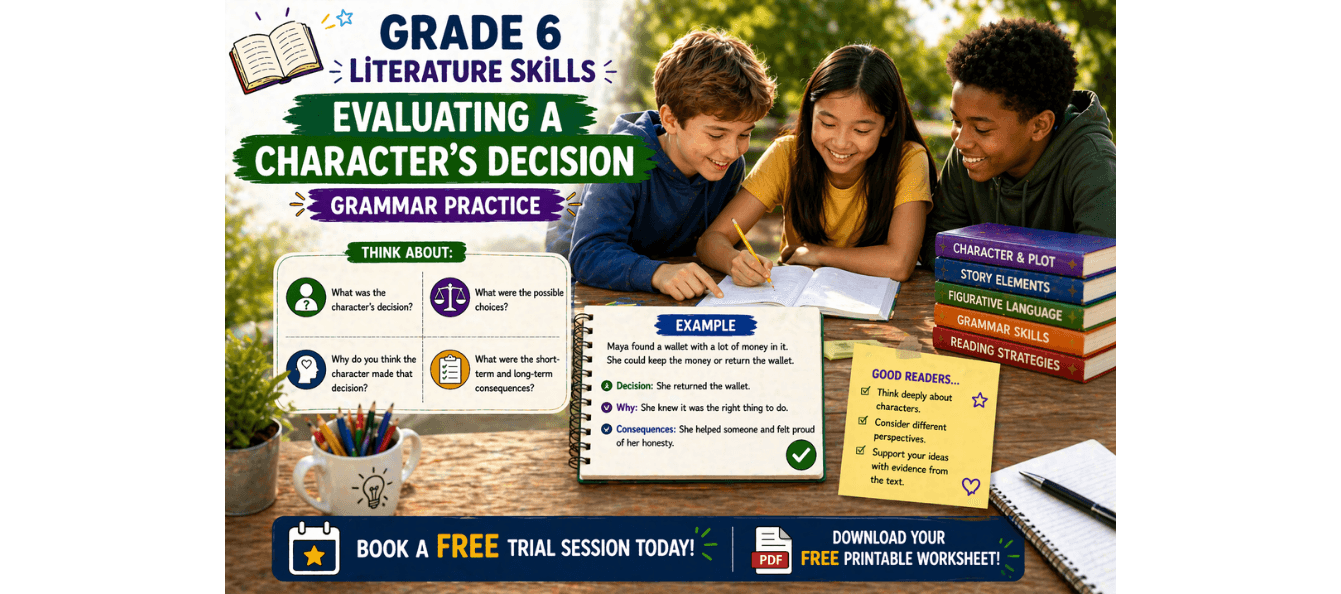
What is the Topic?
In this worksheet, students will analyze a character’s decision-making process. They will focus on understanding why a character chooses a particular course of action and how those decisions shape the story.
What’s in This Worksheet?
1. Multiple choice questions that test students' ability to evaluate a character's decisions.
2. Fill in the blanks to reflect the reasoning behind character choices.
3. True/False statements to identify the outcomes of decisions.
4. Exercises to practice writing about the consequences of decisions.
5. A short writing task to evaluate a character’s decision from a story.
Definitions, Examples, Techniques, and Tips
- Character’s Decision: The choice made by a character in response to a problem or situation.
- Example: In "The Lion King," Simba’s decision to run away from his responsibilities leads to significant consequences later in the story.
- Quick Learning Tips:
- Consider the character’s feelings, desires, and the environment before making a decision.
- Think about how the decision impacts other characters in the story.
Why Is It Important to Learn This?
Understanding a character's decision is vital for analyzing plot development. It helps students connect emotions, motivations, and consequences, which are key for storytelling and reading comprehension.
Where Will This Knowledge Help You?
This skill will help in analyzing texts, particularly when reading novels and short stories. It will also enhance writing by allowing students to create more relatable and realistic characters.
How to Use This Worksheet?
1. Attempt independently first: Read the provided stories and analyze the character’s decisions.
2. Review answers carefully: Check if your answers explain the reasons behind the character’s actions.
3. Correct mistakes: If you misunderstood a character’s decision, review the context again.
4. Practice regularly: Use similar examples in stories you read to practice.
Important Tips and Tricks
1. Think about why the character made the decision and how it aligns with their personality.
2. Look for key moments in the story when decisions shape the plot.
Complete Answer Key
Exercise 1 – Multiple Choice Questions
1. b) deadline.
2. a) painting.
3. b) contest.
4. c) Anvishree.
5. a) peaceful.
6. b) warmth.
7. a) kindness.
8. c) scholarship.
9. a) selfless.
10. c) ambition.
Exercise 2 – Fill in the Blanks
1. decision
2. hospital
3. painting
4. teaching
5. palette
6. cheerful
7. siblings
8. warmth
9. mention
10. ambition
Exercise 3 – True or False
1. True
2. True
3. False
4. False
5. True
6. True
7. False
8. True
9. False
10. True
Exercise 4 – Underline the key phrase and write the context
Answers will depend on personal perspective and may vary. (Hint:- Identify the "who, what, when, and where" of the scene.)
Exercise 5 – Paragraph Fill in the Blanks (Context Clues)
1. decision
2. teaching
3. together
4. mention
5. prize / award
6. beautiful / meaningful
7. day / afternoon
By practicing these exercises, students will develop a better understanding of character motivations and how decisions influence outcomes. Keep practicing, and soon you’ll be able to evaluate any character's decision critically.