
Grade 6 Literature Skills - Perspective & Bias in Narrative [Grammar Practice]
![Grade 6 Literature Skills - Perspective & Bias in Narrative [Grammar Practice]](https://cdn5.planetspark.in/media/small_Grade_6_Literature_Skills_Perspective_and_Bias_in_Narrative_Grammar_Practice_696d16a864.png)

Grade 6 English Grammar Worksheet - Perspective & Bias in Narrative
In this Grade 6 worksheet, students will explore the concept of perspective and bias in narrative writing. Understanding how a narrator’s perspective shapes the story is essential for analyzing literature. Bias, on the other hand, occurs when a narrator or writer presents information in a way that unfairly favors one side. This worksheet will help students recognize bias and learn to interpret different perspectives in storytelling.
Download these English grammar worksheets and practice regularly to strengthen your language skills and build a strong foundation. You can also book a free trial to get expert guidance and improve your reading, writing, and comprehension abilities. The worksheets are designed in a simple and structured way to help K–8 students learn grammar concepts easily and use them confidently in everyday communication.
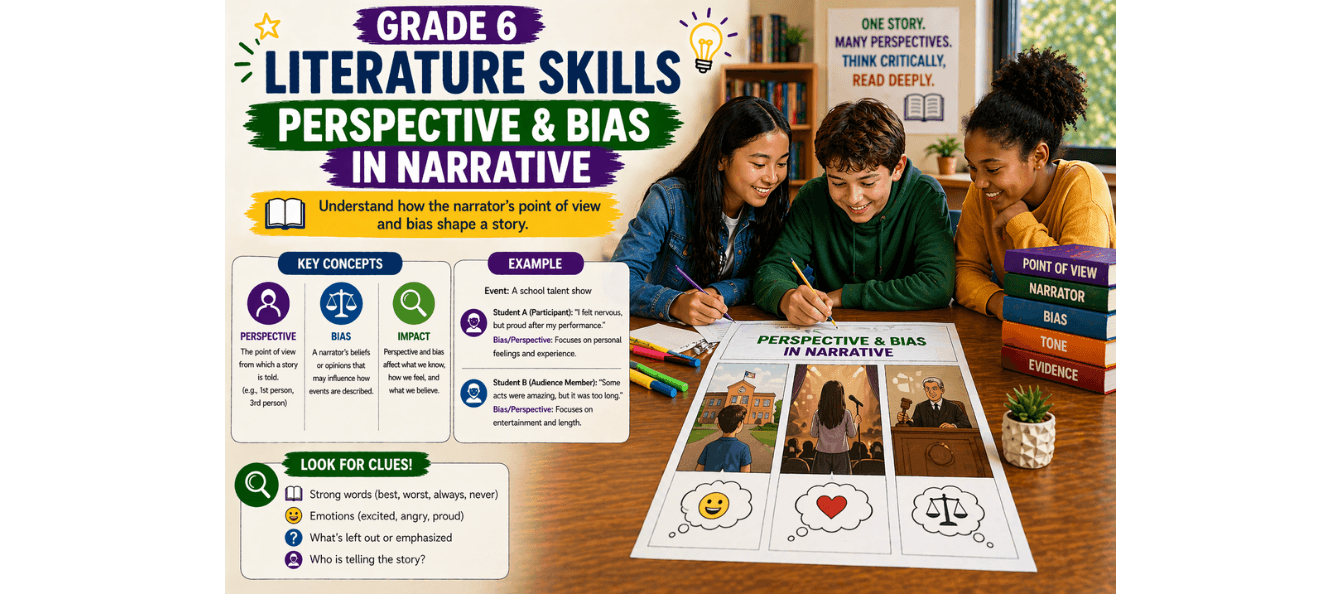
What is the Topic?
In this worksheet, students will learn about the importance of perspective in storytelling and how bias can influence the way a story is told. They will analyze examples of biased narratives and explore ways to interpret stories from different viewpoints.
What’s in This Worksheet?
1. Multiple choice questions on identifying biased perspectives in a story.
2. Fill in the blanks to describe how perspective shapes a narrative.
3. True/False statements about bias and perspective.
4. Exercises to practice identifying bias in various stories.
5. A short writing task to apply their understanding of perspective and bias.
Definitions, Examples, Techniques, and Tips
- Perspective: The point of view from which a story is told, which can be first-person, third-person, etc.
- Bias: The unfair presentation of information that favors one side over others.
- Example: A narrator who only describes a character’s good qualities, without mentioning their flaws, is biased.
- Quick Learning Tips:
- Pay attention to the narrator’s tone and the details they choose to highlight or ignore.
- Consider whether the narrator’s perspective affects your understanding of other characters or events.
Why Is It Important to Learn This?
Understanding perspective and bias is important because it allows students to critically evaluate stories. Recognizing bias helps students avoid being misled and ensures they can form their own objective understanding of the text.
Where Will This Knowledge Help You?
This skill is useful in literary analysis, persuasive writing, and everyday communication. It will also improve your ability to write with a fair and balanced perspective.
How to Use This Worksheet?
1. Read each passage carefully and identify the narrator’s perspective.
2. Analyze how the perspective shapes the story.
3. Write about how bias might influence the narrator’s view of events or characters.
Important Tips and Tricks
1. Look for words or phrases that seem emotionally charged—this may indicate bias.
2. Consider whether the narrator presents a balanced view or focuses on only one side of an issue.
Complete Answer Key
Exercise 1 – Multiple Choice Questions
1. b) perspective.
2. b) bias.
3. a) assumptions.
4. c) details.
5. a) complete.
6. c) balanced.
7. a) kindness.
8. b) evidence.
9. a) evidence.
10. c) beliefs.
Exercise 2 – Fill in the Blanks
1. counter
2. notebook
3. opinion
4. variety
5. considerate
6. manager
7. crowded
8. reliable
9. narrative
10. evidence
Exercise 3 – True or False
1. False
2. True
3. False
4. True
5. True
6. False
7. False
8. True
9. True
10. False
Exercise 4 – Underline the key phrase and write the context
Answers will depend on personal perspective and may vary. (Hint:- Identify the "who, what, when, and where" of the scene.)
Exercise 5 – Paragraph Fill in the Blanks (Context Clues)
1. experience / moment
2. perspective
3. bias
4. evidence
5. reliable / balanced
6. review / narrative
7. biased / narrow
8. assumptions / perspective
By practicing these exercises, students will improve their ability to analyze perspectives in literature and recognize bias in storytelling.
Book a free trial!