
Compare-Contrast in Text Structure: Reading Comprehension Exercises
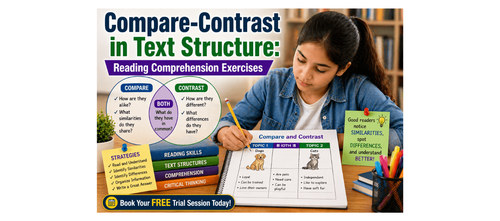

English grammar worksheet for Grade 7: Reading comprehension - text structure (compare-contrast)
When it comes to improving your reading comprehension and understanding how to compare and contrast different ideas, it's crucial to break down the topic into manageable parts. For Grade 7 students, this worksheet on reading comprehension - text structure (compare-contrast) provides an excellent opportunity to develop this skill. Understanding how to identify similarities and differences between two concepts is vital, not only for reading comprehension but also for improving writing, speaking, and critical thinking abilities. By practicing with this worksheet, students can sharpen their ability to analyze information and present their ideas clearly.
Download these English grammar worksheets and practice regularly to strengthen your language skills and build a strong foundation. You can also book a free trial to get expert guidance and improve your reading, writing, and comprehension abilities. The worksheets are designed in a simple and structured way to help K–8 students learn grammar concepts easily and use them confidently in everyday communication.
What is the topic?
The focus of this worksheet is on reading comprehension, particularly understanding the text structure for comparing and contrasting ideas. The skill involves identifying the similarities and differences between two things, which helps in both understanding and writing about various topics. Students will be learning how to analyze different perspectives in a given text and recognize how they are presented and compared. This skill is essential for students in Grade 7 as it builds their ability to understand complex information, think critically, and communicate effectively.
What’s in this worksheet?
This worksheet is designed to help students practice reading comprehension with a focus on compare and contrast. Here's what it includes:
1. **Multiple Choice Questions** – Students answer questions based on the given passage to test their understanding of how two concepts are compared.
2. **Fill in the Blanks** – Students use the correct words from a word bank to complete sentences, reinforcing their understanding of comparison and contrast.
3. **True and False Statements** – These statements help students evaluate the facts presented in the passage and decide if they are correct based on the text.
4. **Underline the Comparison or Contrast Words** – This exercise strengthens students' ability to identify words and phrases that signal comparison or contrast.
5. **Paragraph Completion** – Students fill in blanks in a paragraph that discusses the similarities and differences between two subjects.
Through these exercises, students practice crucial grammar skills, including identifying main ideas, analyzing information, and expressing their thoughts clearly. This worksheet is structured to support students in developing a deeper understanding of how to compare and contrast, which is essential for exams and everyday communication.
Definitions, examples, techniques, and tips
Here are some key definitions, examples, and tips that align directly with the worksheet content:
- **Definition of Comparison and Contrast**:
- **Comparison** shows how two things are alike. For example, both public and private transport are used for travel.
- **Contrast** shows how two things are different. For example, private vehicles are more flexible, while public transport is more affordable.
- **Examples**:
- **Comparison**: "Both public and private transport are used for travel."
- **Contrast**: "Public transport reduces traffic, while private transport contributes to traffic congestion."
- **Quick Learning Tips**:
- Look for keywords such as "similar," "both," or "on the other hand" when identifying comparisons.
- Contrast is usually highlighted with words like "but," "however," or "in contrast."
Why is it important to learn this?
Learning how to compare and contrast is crucial for students, especially in Grade 7, as it enhances their critical thinking and comprehension skills. This grammar topic helps students understand the relationships between different concepts, which improves their ability to analyze texts and make logical connections. The skill also aids in developing writing and speaking abilities by allowing students to clearly express differences and similarities between ideas. Whether in exams or classroom discussions, the ability to compare and contrast is fundamental for academic success and everyday communication.
Where will this knowledge help you?
The skills learned in this worksheet will be beneficial across various areas:
1. **Exams**: The ability to compare and contrast is a common requirement in reading comprehension sections of exams.
2. **Writing Tasks**: Whether writing essays, reports, or even creative pieces, students will often need to compare different ideas or perspectives.
3. **Class Participation**: This skill also enhances students’ ability to engage in discussions, debates, and group work by allowing them to articulate comparisons and contrasts effectively.
How to use this worksheet?
To make the most of this worksheet, follow these steps:
1. **Attempt independently first**: Try answering all the questions by yourself. This helps you assess your initial understanding of the topic.
2. **Review answers carefully**: After completing the worksheet, go back and check your answers. This step helps reinforce what you’ve learned.
3. **Correct mistakes**: If you made any errors, review the correct answers and try to understand why you made the mistake.
4. **Practice regularly**: Regular practice helps strengthen your grammar skills. The more you practice, the more confident you’ll become.
Remember, the solutions follow the exact worksheet order, so compare your answers carefully with the answer key provided to understand your strengths and areas for improvement.
Important tips and tricks
Here are some important tips to help you succeed in this worksheet and improve your grammar skills:
1. **Common Mistakes**:
- Not identifying comparison and contrast words: Always look for words like "but," "however," and "both" to signal comparisons and contrasts.
- Misunderstanding the meaning of keywords: Ensure you fully understand words like "similar," "different," "advantages," and "disadvantages."
2. **What Examiners Expect**:
- Examiners expect students to clearly identify and explain comparisons and contrasts in texts. Be precise and direct in your answers.
- When filling in blanks or choosing the correct answer, make sure you are consistent with the language used in the passage.
3. **How to Score Full Marks**:
- Pay attention to the exact wording in the worksheet and ensure your answers match the text precisely.
- Practice reading comprehension regularly to strengthen your ability to quickly identify comparison and contrast relationships in texts.
4. **How to Approach Activity-Based or Writing-Based Tasks**:
- In tasks that require you to write or complete paragraphs, focus on how the ideas are being compared or contrasted. Use appropriate comparison and contrast keywords to make your writing clear.
Complete answer key
⚠️ MOST CRITICAL SECTION
Exercise No. 1 – Multiple Choice Questions
1. transport
2. affordable
3. comfort
4. pollution
5. nothing
6. different
7. traffic
8. flexibility
9. compare
10. balance
Book a free trial!
Exercise No. 2 – Fill in the Blanks
1. compare
2. contrast
3. similar
4. advantages
5. disadvantages
6. public
7. private
8. travel
9. options
Exercise No. 3 – True or False
1. True
2. False
3. True
4. False
5. True
6. False
7. True
8. True
9. False
10. False
Book a free trial!
Exercise No. 4 – Underline the Words/Phrases Showing Comparison or Contrast
1. different
2. but
3. Both
4. flexibility
5. reduces
6. However
7. In contrast
8. Similarly
9. advantages
10. differ
Book a free trial!
Exercise No. 5 – Fill in the Blanks to Compare and Contrast
1. compares
2. different
3. similar
4. advantages
5. pollution
6. crowded
7. flexibility
8. travel
9. options
10. system
Book a free trial!