
Grade 7 Medieval India Social Studies Practice PDF
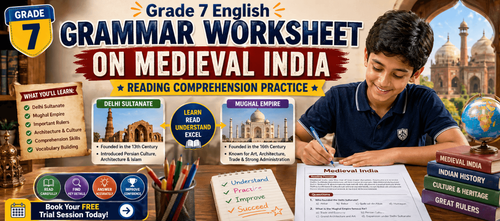

Grade 7 English Grammar Worksheet on Medieval India Reading Comprehension Practice
Reading passages help students improve their understanding, vocabulary, and ability to answer questions carefully. This Grade 7 Medieval India reading comprehension worksheet gives students a chance to learn important historical information while practicing comprehension skills in a simple and engaging way. Students read about the Delhi Sultanate and the Mughal Empire and then answer multiple-choice and descriptive questions based on the passage.
This worksheet is useful for improving reading skills, identifying key details, understanding historical passages, and making connections with information from the text. The questions are arranged in a structured format so students can practice step by step. By solving this Grade 7 worksheet regularly, students can become more confident in answering comprehension-based questions during classwork, homework, and examinations.
Download these English grammar worksheets and practice regularly to strengthen your language skills and build a strong foundation. You can also book a free trial to get expert guidance and improve your reading, writing, and comprehension abilities. The worksheets are designed in a simple and structured way to help K–8 students learn grammar concepts easily and use them confidently in everyday communication.
What Is the Topic?
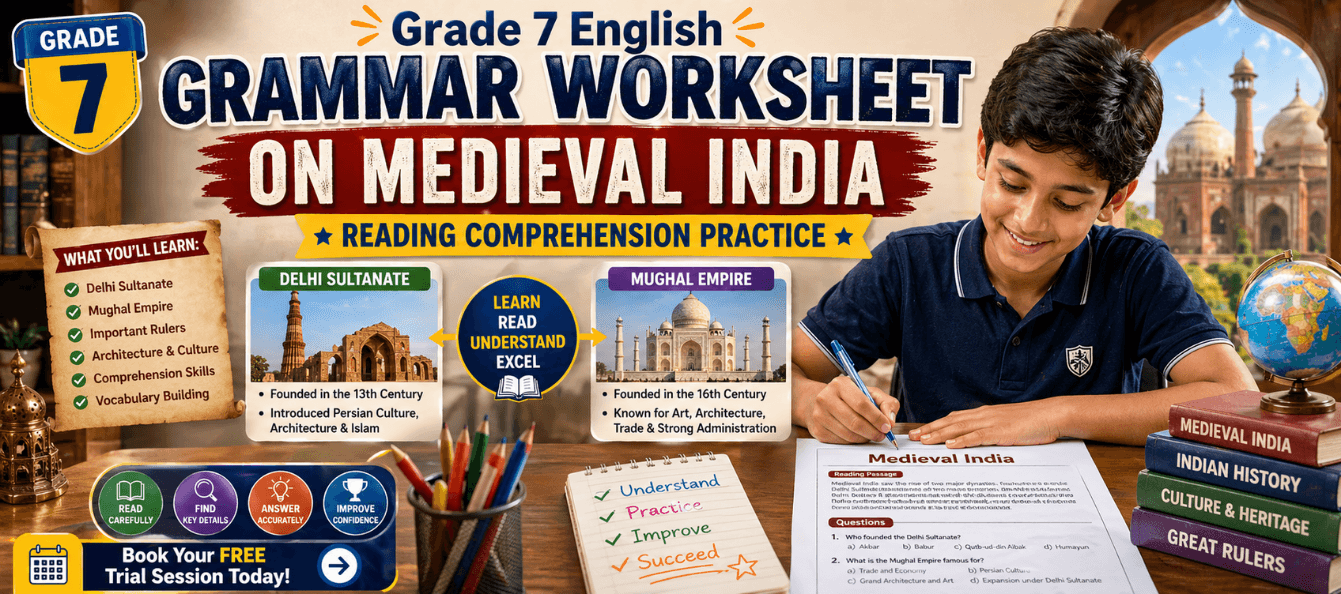
The topic of this worksheet is Medieval India reading comprehension. Students read a passage about two major dynasties in Medieval India: the Delhi Sultanate and the Mughal Empire. The worksheet explains how these dynasties influenced Indian society, culture, architecture, administration, trade, and economy.
Students learn about important rulers like Qutb-ud-din Aibak, Babur, and Akbar. They also understand the importance of the Taj Mahal and the contributions of the Mughal Empire. Through comprehension questions, students practice identifying facts, understanding meanings, and connecting ideas directly from the passage.
The worksheet also helps students improve their reading comprehension skills by answering objective and subjective questions in the correct order. Students are expected to read carefully, understand the passage properly, and answer according to the information given in the text.
What’s in This Worksheet?
1. A reading passage about Medieval India and important dynasties.
2. Multiple-choice questions based on important facts from the passage.
3. Short-answer questions that test understanding of the passage.
4. Questions that ask students to make connections with the text.
5. Vocabulary practice through synonym identification.
6. Questions arranged in a clear and structured order.
7. Practice for reading comprehension and answering skills.
8. Exercises that help students improve attention to detail.
9. Questions that support school exam preparation and class assessments.
10. Activities that strengthen understanding of historical reading passages.
Definitions, Examples, Techniques, and Tips
Definitions
The worksheet explains that Medieval India saw the rise of two major dynasties:
• The Delhi Sultanate
• The Mughal Empire
The Delhi Sultanate was established in the 13th century and was the first major Muslim empire in India.
The Mughal Empire was established in the early 16th century by Babur.
Examples
Examples from the worksheet include:
• The Taj Mahal as an example of Mughal architecture.
• Akbar as the most famous Mughal ruler.
• Persian culture and architecture introduced by the Delhi Sultanate.
Techniques
Students should:
• Read the passage slowly and carefully.
• Identify important names and facts.
• Match answers directly with the passage.
• Review the options before selecting the correct answer.
• Answer questions according to the order given.
Quick Learning Tips
• Focus on keywords like dynasties, architecture, rulers, and culture.
• Underline important details while reading.
• Read each question carefully before answering.
• Use information only from the passage.
• Revise difficult words and meanings.
Why Is It Important to Learn This?
Learning reading comprehension helps students understand passages better and answer questions correctly. This Medieval India worksheet also improves knowledge about important dynasties and rulers in Indian history.
Students become better at:
• Reading carefully
• Finding correct answers from a passage
• Understanding historical information
• Improving vocabulary
• Writing accurate responses
These skills are important for school exams, classroom learning, and daily academic activities. Reading comprehension also builds confidence in understanding long passages and answering different types of questions.
Where Will This Knowledge Help You?
This knowledge will help students in many ways:
• School examinations and assessments
• Reading comprehension practice tests
• Social Studies and English assignments
• Classroom discussions and participation
• Homework and revision activities
• Vocabulary improvement
• Understanding historical passages
• Developing reading confidence
• Answering objective and subjective questions correctly
Students who practice reading comprehension regularly become more confident readers and better writers.
How to Use This Worksheet?
1. Read the entire passage carefully before answering questions.
2. Understand important details like names of rulers, dynasties, and achievements.
3. Attempt all questions independently first.
4. Review each answer carefully after completing the worksheet.
5. Compare answers with the complete answer key in the exact worksheet order.
6. Correct mistakes properly after checking answers.
7. Practice reading comprehension regularly to improve accuracy and speed.
8. Focus on understanding the passage instead of guessing answers.
9. Read difficult words again and understand their meanings from the context.
10. Follow the serial number order while answering questions.
Important Tips and Tricks
1. Always read the full passage before attempting questions.
2. Pay attention to names, dates, rulers, and achievements.
3. Do not skip any line while reading the passage.
4. Read all options carefully before choosing the correct answer.
5. Use information only from the worksheet passage.
6. Write answers according to the exact order of questions.
7. Check spellings of important names like Qutb-ud-din Aibak, Babur, and Akbar.
8. For synonym questions, find the word directly connected to the meaning in the passage.
9. Examiners expect students to answer clearly and accurately.
10. Practice regularly to improve comprehension and writing confidence.
Complete Answer Key
Reading Passage:
Medieval India
Medieval India saw the rise of two major dynasties: the Delhi Sultanate and the Mughal Empire. The Delhi Sultanate, established in the 13th century, was the first major Muslim empire in India. It was founded by Qutb-ud-din Aibak, who later expanded it under the rule of his successors. The Delhi Sultanate helped introduce Persian culture, architecture, and Islam to India. The Mughal Empire, established in the early 16th century by Babur, was known for its grand architecture, including the Taj Mahal, and its contributions to art, culture, and administration. The Mughal period also saw a flourishing of trade and economy, and the empire expanded significantly under Akbar, its most famous ruler. The legacies of both dynasties shaped Indian society and culture for centuries.
Exercise No. 1
Choose the most appropriate option in relevance to this passage.
1. Who founded the Delhi Sultanate?
a) Akbar
b) Babur
c) Qutb-ud-din Aibak
d) Humayun
Answer: c) Qutb-ud-din Aibak
2. What is the Mughal Empire famous for?
a) Trade and economy
b) Persian culture
c) Grand architecture and art
d) Expansion under the Delhi Sultanate
Answer: c) Grand architecture and art
3. Who was the most famous ruler of the Mughal Empire?
a) Humayun
b) Babur
c) Akbar
d) Qutb-ud-din Aibak
Answer: c) Akbar
Exercise No. 2
Answer the following questions from the passage.
1. Who were the two major dynasties in Medieval India?
The Delhi Sultanate and the Mughal Empire were the two major dynasties.
2. What role did the Delhi Sultanate play in the cultural development of India?
It introduced Persian culture, architecture, and Islam to India.
3. What is the Taj Mahal associated with?
The Taj Mahal is associated with the Mughal Empire, especially under Shah Jahan.
Exercise No. 3
Read the questions carefully and answer the following by making connections with the text.
1. How did the Delhi Sultanate influence Indian culture?
The Delhi Sultanate introduced Persian culture and architecture, influencing later rulers.
2. What achievements are most closely linked with the Mughal Empire?
The Mughals are most known for their grand architecture, cultural contributions, and strong governance.
3. What key factors contributed to the Mughal Empire's success?
The Mughals succeeded due to strong leadership, administration, and a booming economy.
4. Find a synonym of “flourishing” from the passage.
Thriving
This Grade 7 Medieval India reading comprehension worksheet is a useful way to improve understanding, reading accuracy, and answering skills. By practicing regularly, students can become more confident in comprehension exercises and school examinations. Reading passages carefully and answering questions in the correct order helps students strengthen both comprehension and writing abilities. Continuous practice with worksheets like this can make learning easier, clearer, and more enjoyable for Grade 7 students.