
Grade 8 Passage-Based Vocabulary Questions Worksheet
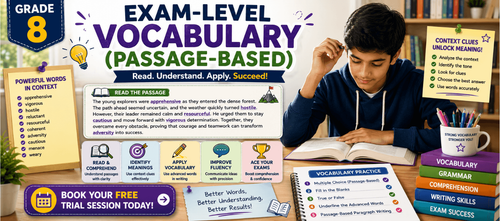

Improve Contextual Understanding with This Grade 8 Passage-Based Vocabulary Worksheet
Learning vocabulary through passages helps students understand word meanings more naturally and accurately. This Grade 8 Passage-Based Vocabulary Worksheet strengthens comprehension, context-clue interpretation, and advanced vocabulary application through engaging reading-based exercises.
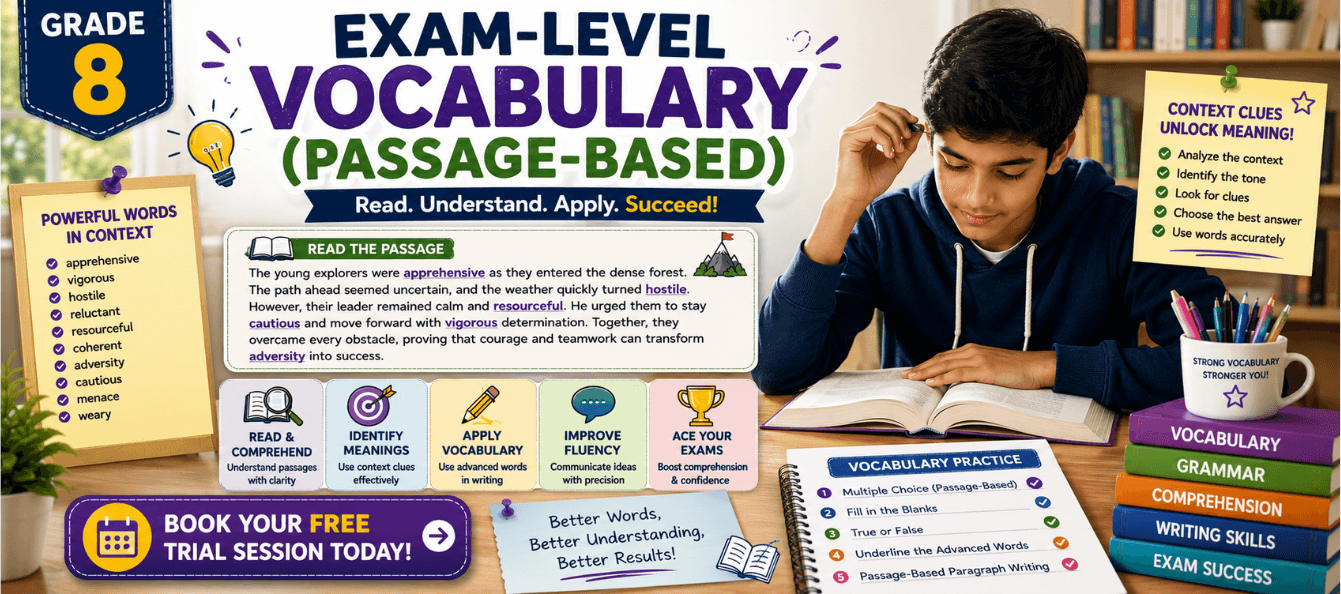
Students learn how words such as “apprehensive,” “vigorous,” “hostile,” “resourceful,” and “coherent” change meaning depending on passage context. Through mini-passages, contextual questions, and paragraph-writing activities, learners practice identifying vocabulary meaning, understanding tone, and using advanced words effectively in writing.
Download these English grammar worksheets and practice regularly to strengthen your language skills and build a strong foundation. You can also book a free trial to get expert guidance and improve your reading, writing, and comprehension abilities. The worksheets are designed in a simple and structured way to help K–8 students learn grammar concepts easily and use them confidently in everyday communication.
What Is the Topic?
Passage-based vocabulary focuses on understanding word meanings through surrounding sentences, tone, and context clues. This worksheet helps students improve reading comprehension and interpret advanced vocabulary naturally while reading short passages.
Students practice vocabulary such as:
- apprehensive
- vigorous
- reluctant
- menace
- weary
- hostile
- cautious
- resourceful
- coherent
- adversity
The worksheet encourages students to carefully analyze passage meaning before selecting or applying vocabulary words.
What’s in This Worksheet?
1. Multiple choice questions based on mini-passages
2. Fill in the blanks activities using contextual vocabulary
3. True and False exercises about vocabulary interpretation
4. Underline-the-word activities using advanced vocabulary
5. Passage-based paragraph writing tasks
6. Reading comprehension vocabulary exercises
7. Writing practice focused on contextual vocabulary application
Definitions, Examples, Techniques, and Tips
This worksheet helps students understand how context clues reveal vocabulary meaning naturally during reading. Students learn how supporting details, tone, and surrounding information improve comprehension accuracy.
Examples included in the worksheet are:
- “Riya felt apprehensive while waiting alone.”
- “The football team practiced with vigorous energy.”
- “The lawyer maintained a rational approach.”
- “The teacher gave a coherent explanation.”
Students also practice vocabulary such as:
- adversity
- scarcity
- burden
- zealous
- restraint
- futile
- astonished
- chaotic
- bewildered
- optimistic
The worksheet helps students:
- Improve contextual vocabulary understanding
- Strengthen reading comprehension
- Build analytical thinking skills
- Use advanced vocabulary naturally
- Develop stronger writing abilities
Why Is It Important to Learn This?
Passage-based vocabulary skills help students understand unfamiliar words without depending completely on dictionaries. Strong context-clue interpretation improves comprehension, writing quality, and academic confidence.
This grammar and vocabulary skill improves:
- Reading comprehension
- Analytical thinking
- Academic writing
- Vocabulary accuracy
- Sentence interpretation
- Exam preparation
Students who understand vocabulary through passages usually become stronger readers and more confident communicators.
Where Will This Knowledge Help You?
Understanding passage-based vocabulary helps students in many academic and real-life situations, including:
- School grammar assessments
- Reading comprehension exercises
- Essay and paragraph writing
- Competitive exams
- Debate and discussion activities
- Academic presentations
- Higher-level English assignments
These skills also help students understand difficult texts more independently.
How to Use This Worksheet?
1. Read each mini-passage carefully before answering.
2. Use context clues to understand vocabulary meaning naturally.
3. Focus on tone, situation, and supporting details while interpreting words.
4. Attempt all exercises independently before checking answers.
5. Compare your responses carefully with the answer key below.
6. Practice using advanced vocabulary in your own writing regularly.
7. Read passages aloud to improve comprehension and fluency.
The solutions follow the exact worksheet order, so students should compare their answers carefully.
Important Tips and Tricks
1. Context clues help readers understand unfamiliar vocabulary naturally.
2. Supporting details often reveal the meaning of difficult words.
3. Strong readers analyze tone and surrounding sentences carefully.
4. Always read the full passage before choosing an answer.
5. In underline-the-word activities, focus only on advanced vocabulary words.
6. Passage-based vocabulary improves comprehension accuracy.
7. Rewriting and paragraph-writing tasks strengthen vocabulary application skills.
8. Reading regularly helps students recognize advanced vocabulary more easily.
Complete Answer Key
Exercise No. 1
Multiple Choice Questions
1. worried
2. energetic
3. unwilling
4. problem
5. exhausted
6. boastful
7. distressed
8. alert
9. lucky
10. aggressive
Exercise No. 2
Fill in the Blanks
1. adversity, vigorous
2. neglect, deteriorate
3. customary, zealous
4. burden, scarcity
5. restraint, futile
Exercise No. 3
True or False
1. True
2. True
3. True
4. False
5. False
6. True
7. True
8. False
9. False
10. True
Exercise No. 4
Underline the Advanced Vocabulary Words
1. astonished, attentive
2. restless, composed
3. isolated, resourceful
4. chaotic, rational
5. bewildered, coherent
Exercise No. 5
Passage-Based Paragraph Writing (Sample Answers)
1. Village Facing Water Shortage
The villagers faced severe scarcity after months without rainfall. Carrying water from distant wells became a heavy burden for families every day. Despite the adversity, several resourceful volunteers worked together to store rainwater and support elderly residents during the difficult summer season.
2. Preparing for a Difficult Competition
Rohan remained zealous while preparing for the national debate competition. He practiced speaking daily and stayed optimistic even after several mistakes during rehearsals. His coach reminded him that giving up would be futile because consistent effort and discipline lead to improvement.
3. Helping People After a Natural Disaster
After the flood became a major catastrophe, volunteers quickly delivered food and medicine to affected families. Despite the adversity, the rescue teams remained resourceful and calm throughout the operation. Their zealous efforts helped many villagers find temporary shelter and essential supplies safely.
4. Solving Problems During a Group Project
The students faced adversity while completing the science project because several ideas failed repeatedly. However, the group remained resourceful and continued discussing better solutions. Their optimistic attitude helped them overcome difficulties and finish the assignment successfully before the submission deadline.
5. Getting Lost During a Mountain Trek
During the mountain trek, heavy fog caused the trail conditions to deteriorate rapidly. The exhausted hikers faced adversity after losing their map near the rocky path. Fortunately, a resourceful guide remained calm and helped the group return safely before nightfall.
Practicing this Grade 8 Passage-Based Vocabulary Worksheet helps students strengthen contextual understanding, improve reading comprehension, and develop stronger academic vocabulary skills. With regular practice, students can interpret unfamiliar words more confidently, understand passages more accurately, and communicate ideas more effectively.