
KG Small Letters Tracing Worksheet a–z Practice [PDF]
![KG Small Letters Tracing Worksheet a–z Practice [PDF]](https://cdn5.planetspark.in/media/small_KG_Small_Letters_Tracing_Worksheet_a_z_Practice_PDF_991a9b21c6.png)

KG Small Letters Tracing Worksheet a–z Practice [PDF]
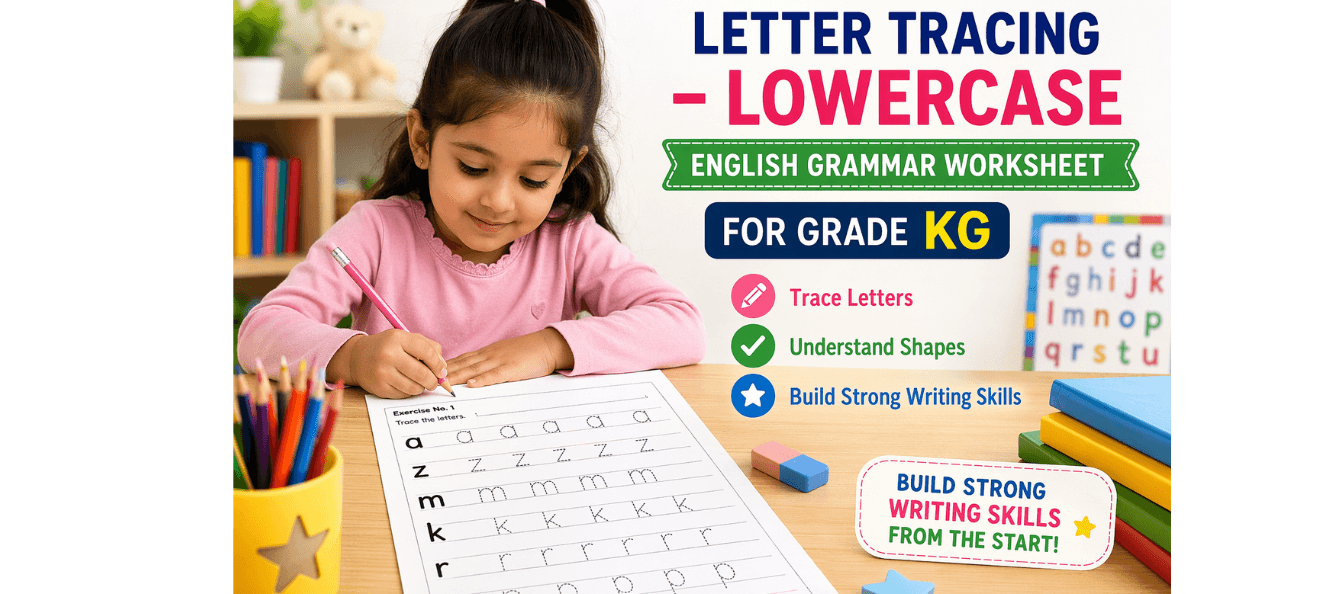
Recognizing and tracing letters becomes an exciting first step in a child’s learning journey. This English grammar worksheet for Grade KG on Letter Tracing – Lowercase helps young learners practice writing small letters while understanding their shapes and patterns. It builds strong early writing skills through simple and engaging activities.
Download these English grammar worksheets and practice regularly to strengthen your language skills and build a strong foundation. You can also book a free trial to get expert guidance and improve your reading, writing, and comprehension abilities. The worksheets are designed in a simple and structured way to help K–8 students learn grammar concepts easily and use them confidently in everyday communication.
What Is Letter Tracing – Lowercase?
Letter tracing means practicing how to write letters by following their shape. In Grade KG, students learn how to trace and write lowercase letters from a to z.
In this worksheet, children focus on identifying letter shapes, tracing them correctly, and understanding how different letters are formed.
What’s in This Worksheet?
This English grammar worksheet includes four types of exercises.
1. Tracing lowercase letters
2. True and false statements about letter shapes
3. Multiple choice questions based on letter features
4. Writing words based on given starting letters
These activities help children improve writing skills, letter recognition, and understanding of letter formation.
Definitions, Examples, Techniques, and Tips
Definition:
Letter tracing means following the shape of letters to learn how to write them correctly.
Examples:
The worksheet includes tracing letters like a, z, m, k, r, p, h, n, s, and d.
Techniques:
Students should follow the pattern carefully and trace each letter slowly.
Quick learning tips:
Hold the pencil properly and trace neatly along the lines.
Why Is It Important to Learn This?
Learning letter tracing is important because it helps children develop writing skills and understand letter shapes. It builds a strong foundation for reading and writing.
This skill also improves hand control and confidence.
Where Will This Knowledge Help You?
This knowledge is useful in many areas:
Exams: Helps in basic writing tasks
Writing tasks: Improves handwriting
Class participation: Builds confidence in writing
How to Use This Worksheet?
1. Look at each letter carefully
2. Trace along the given pattern
3. Practice writing the letter
4. Read each question carefully
5. Choose or write the correct answer
6. Compare answers in the same order
The solutions follow the exact worksheet order, so students should compare answers carefully.
Important Tips and Tricks
1. Trace slowly and neatly
2. Follow the exact shape of letters
3. Practice regularly
4. Hold the pencil correctly
5. Do not rush
6. Focus on letter formation
7. Repeat tracing for better learning
8. Keep writing practice fun
Complete Answer Key
Exercise No. 1
Trace the letter a:
a a a a a
Trace the letter z:
z z z z z
Trace the letter m:
m m m m
Trace the letter k:
k k k k k
Trace the letter r:
r r r r r
Trace the letter p:
p p p p p
Trace the letter h:
h h h h h
Trace the letter n:
n n n n n
Trace the letter s:
s s s s s
Trace the letter d:
d d d d d
Exercise No. 2
1. lowercase a has a small curve. – True
2. lowercase c is an closed curve. – False
3. lowercase u curves upward. – True
4. lowercase z uses straight lines. – True
5. lowercase k has two small slants. – True
6. lowercase b has a tall line. – True
7. lowercase r starts with a line. – True
8. lowercase t has a tall line. – True
9. lowercase m has three bumps. – True
10. lowercase v has three slanted lines. – False
Exercise No. 3
1. The letter shown is curved open. – c
2. The letter shown has two bumps. – m
3. The letter shown has a tall hook. – f
4. The letter shown has sharp edges. – z
5. The letter shown is one tall line. – l
6. The letter shown curves upward. – u
7. The letter shown has two slants. – v
8. The letter shown ends with a tail. – y
9. The letter shown starts with a curve. – a
10. The letter shown is zig-zag. – z
Exercise No. 4
1. j is for jam
2. c is for cup
3. y is for yak
4. b is for bed
5. m is for map
6. p is for pig
7. l is for log
8. f is for fox
9. r is for red
10. g is for gum
Tracing lowercase letters becomes easier with regular practice and careful attention to shapes. This Grade KG English grammar worksheet helps children build strong writing habits and improve letter recognition. Keep practicing every day to become confident in writing small letters.