
Learn Opposite Action Words with This Grade 2 Worksheet
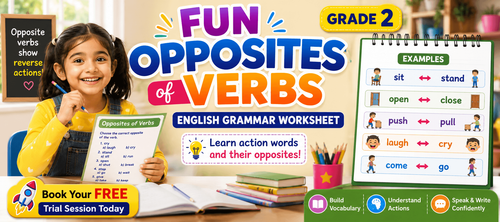

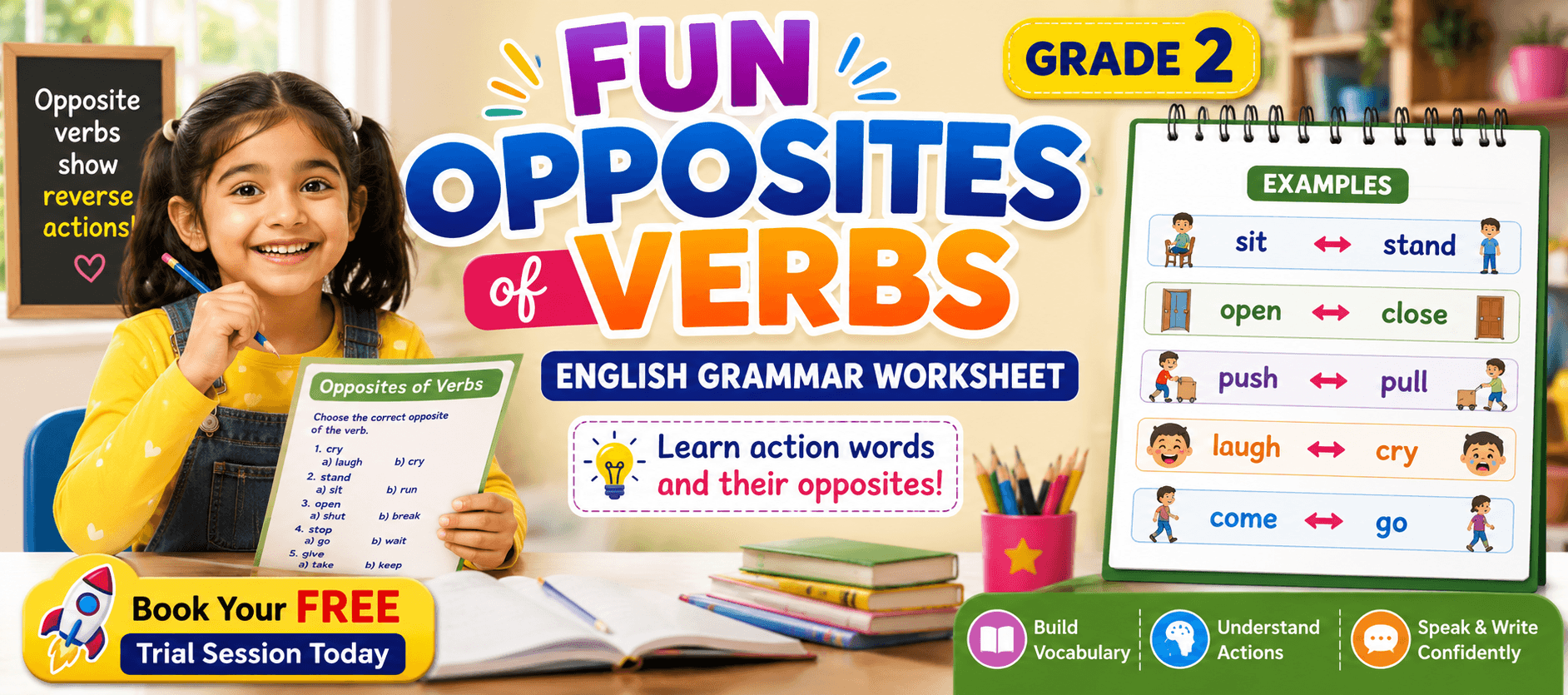
Fun Opposites of Verbs English Grammar Worksheet for Grade 2 Students
Learning grammar becomes more enjoyable when students understand how words can have opposite meanings. This English grammar worksheet for Grade 2 on Opposites of Verbs helps children learn action words and their opposites through simple and engaging exercises. By practicing opposite verbs, students improve vocabulary, grammar understanding, and sentence-reading skills in an easy and structured way.
In this worksheet, Grade 2 learners practice identifying the correct opposite of common action verbs such as sit, open, push, laugh, and come. The activities are designed using familiar words and simple examples so students can understand opposite actions clearly. Regular practice with opposite verbs helps children become more confident while speaking, reading, and writing sentences.
Download these English grammar worksheets and practice regularly to strengthen your language skills and build a strong foundation. You can also book a free trial to get expert guidance and improve your reading, writing, and comprehension abilities. The worksheets are designed in a simple and structured way to help K–8 students learn grammar concepts easily and use them confidently in everyday communication.
What Is the Topic?
Verb Opposites are action words that mean the opposite of each other.
When one verb shows an action, its opposite shows the reverse or different action.
This worksheet teaches students how opposite verbs work in pairs and how they describe opposite actions.
The worksheet includes examples such as:
1. sit – stand
2. open – close
3. push – pull
4. laugh – cry
5. come – go
Students are expected to learn:
1. How to identify opposite verbs
2. How opposite actions are connected
3. How to improve vocabulary using opposite words
4. How to understand action meanings clearly
5. How to choose the correct opposite verb
What’s in This Worksheet?
1. The worksheet begins with a simple explanation of opposites of verbs.
2. Students learn how opposite verbs describe reverse actions.
3. Several verb opposite examples are included for better understanding.
4. The worksheet contains multiple-choice questions.
5. Students choose the correct opposite for each verb.
6. The exercise uses familiar action words suitable for Grade 2 learners.
7. The worksheet improves vocabulary and grammar understanding.
8. These activities support classroom learning and grammar test preparation.
Definitions, Examples, Techniques, and Tips
Definition
Verb Opposites are action words that mean the opposite of each other.
When one verb shows an action, its opposite shows the reverse or different action.
Examples
1. sit – stand
2. open – close
3. push – pull
4. laugh – cry
5. come – go
Techniques
1. Read the given verb carefully before choosing the opposite.
2. Think about the reverse action of the word.
3. Eliminate incorrect options one by one.
4. Choose the word that shows the opposite action.
5. Read both words together to check whether they form opposite meanings.
Quick Learning Tips
1. Opposite verbs describe reverse actions.
2. Practice opposite word pairs regularly.
3. Read simple action sentences daily.
4. Revise common action verbs again and again.
5. Use opposite verbs while speaking and writing for better understanding.
Why Is It Important to Learn This?
Learning opposites of verbs is important because it improves vocabulary and sentence understanding. Opposite verbs help students understand action meanings clearly and use different words correctly while speaking and writing.
For Grade 2 students, learning opposite verbs strengthens grammar understanding and improves communication skills. It also helps children understand reading passages more easily and build better sentences.
This topic helps students:
1. Improve vocabulary
2. Understand action meanings
3. Build stronger grammar skills
4. Improve sentence reading
5. Speak and write more confidently
Regular practice also improves classroom participation and grammar confidence.
Where Will This Knowledge Help You?
Knowledge of opposite verbs helps students in many school and daily communication activities.
1. Grammar tests often include opposite word questions.
2. Students use opposite verbs during speaking and writing activities.
3. Reading comprehension becomes easier when students understand opposite meanings.
4. Vocabulary improves through regular opposite word practice.
5. Story writing becomes more meaningful with better word knowledge.
6. Classroom grammar activities become easier to complete.
7. Daily communication improves with stronger vocabulary skills.
How to Use This Worksheet?
1. Read the explanation of opposite verbs carefully before starting the exercise.
2. Read each verb slowly and understand its meaning.
3. Think about the reverse or opposite action.
4. Read all answer options carefully before choosing the correct one.
5. Attempt all questions independently before checking answers.
6. Compare your answers carefully with the complete answer key below.
7. The solutions follow the exact worksheet order, so review every answer properly.
8. Correct mistakes carefully and understand why the chosen word is the opposite verb.
9. Practice opposite verb pairs regularly to improve vocabulary and grammar skills.
Important Tips and Tricks
1. Always understand the meaning of the verb before choosing the opposite.
2. Opposite verbs usually show reverse actions.
3. Read all options carefully before answering.
4. Eliminate incorrect answers one by one.
5. Practice common opposite word pairs regularly.
6. Read action words aloud to improve memory.
7. Examiners expect students to identify correct opposite meanings.
8. Avoid guessing answers without understanding the verb.
9. Revise difficult opposite words regularly.
10. Practice using opposite verbs in simple sentences daily.
Complete Answer Key
Exercise
Choose the correct opposite of the verb.
1. cry – laugh
2. stand – sit
3. open – shut
4. stop – go
5. give – take
6. throw – catch
7. rise – fall
8. sleep – wake
Regular practice with opposites of verbs helps Grade 2 students improve vocabulary and grammar confidence in a simple and enjoyable way. This English grammar worksheet on Opposites of Verbs makes learning easy through clear explanations and engaging practice questions. By practicing regularly, students can strengthen their reading, writing, and speaking abilities while building a strong grammar foundation for future learning.