
Learn Opposite Words with Class 1 Grammar Worksheets
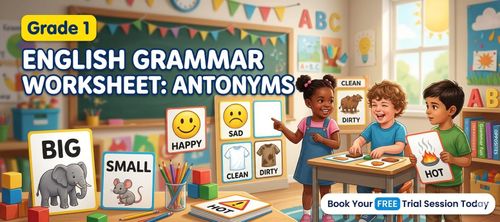

English grammar worksheet for Grade 1 – Antonyms
Antonyms are words that mean the opposite of each other. For Grade 1 students, learning antonyms helps them expand their vocabulary and understand how words can change meaning. This worksheet introduces children to simple antonyms through easy exercises. By practicing these, students will learn how to identify opposite words and use them correctly in sentences.
Download these English grammar worksheets and practice regularly to strengthen your language skills and build a strong foundation. You can also book a free trial to get expert guidance and improve your reading, writing, and comprehension abilities. The worksheets are designed in a simple and structured way to help K–8 students learn grammar concepts easily and use them confidently in everyday communication.
What Is the Topic?
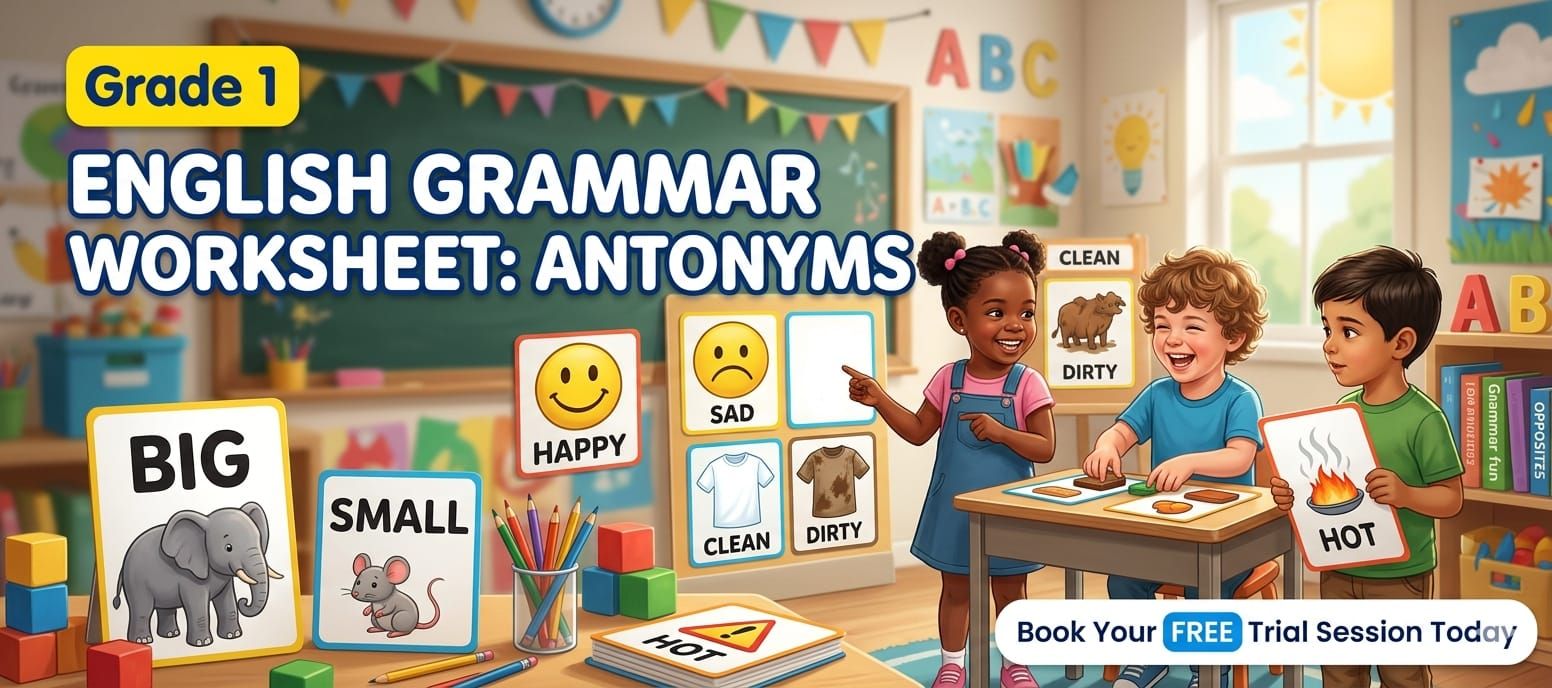
Antonyms are words that have opposite meanings. For example, hot and cold, big and small. In this worksheet, students will learn how to match words with their opposites. The goal is to help Grade 1 learners understand how antonyms make language richer and more expressive.
What’s in This Worksheet?
1. Fill-in-the-blank questions with antonym options.
2. Practice sentences that show how opposite words are used.
3. Exercises that strengthen vocabulary skills.
4. Activities designed to prepare students for exams and classwork.
Definitions, Examples, Techniques, and Tips
Definition: Antonyms are words that mean the opposite of each other.
Examples: Happy and sad, clean and dirty, soft and hard.
Techniques: Read the sentence carefully, identify the word, and choose its opposite.
Quick learning tips: Remember that antonyms show contrast, so always look for the opposite meaning.
Why Is It Important to Learn This?
Antonyms are important because they help students express ideas clearly. They make writing more interesting and speaking more precise. Learning antonyms at Grade 1 level builds strong vocabulary skills that are useful in exams and everyday communication.
Where Will This Knowledge Help You?
In exams, antonyms are tested in vocabulary and grammar sections.
In writing tasks, antonyms make descriptions more detailed.
In class participation, antonyms help students explain differences and contrasts.
How to Use This Worksheet?
1. Attempt each question independently first.
2. Review the given answers carefully.
3. Correct mistakes and understand why the antonym fits.
4. Practice regularly to build confidence.
Remember: The solutions follow the exact worksheet order. Students should compare their answers carefully with the key.
Important Tips and Tricks
1. Do not confuse antonyms with synonyms.
2. Always check the meaning of the word before choosing its opposite.
3. Examiners look for accuracy, so double-check your choice.
4. For activity-based tasks, follow the instructions exactly as given.
Complete Answer Key
Fill in the blanks with the correct antonym from the options given below.
1. The water is hot, but the ice is cold.
2. The elephant is big, but the mouse is small.
3. My hands were dirty, now they are clean.
4. The rock is hard, but the pillow is soft.
5. The sun is bright, but the room is dark.
6. She is happy, but he is sad.
Learning antonyms in Grade 1 is a big step toward mastering English grammar. With regular practice, students will feel more confident in their writing and speaking. Keep practicing these worksheets to strengthen your skills and enjoy learning grammar every day.