
Learn Subject-Verb Agreement Rules for Grade 2 Students
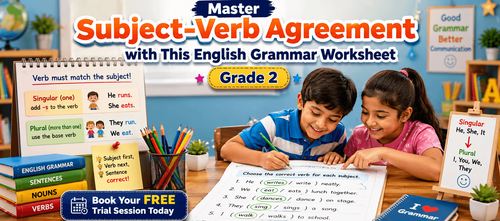

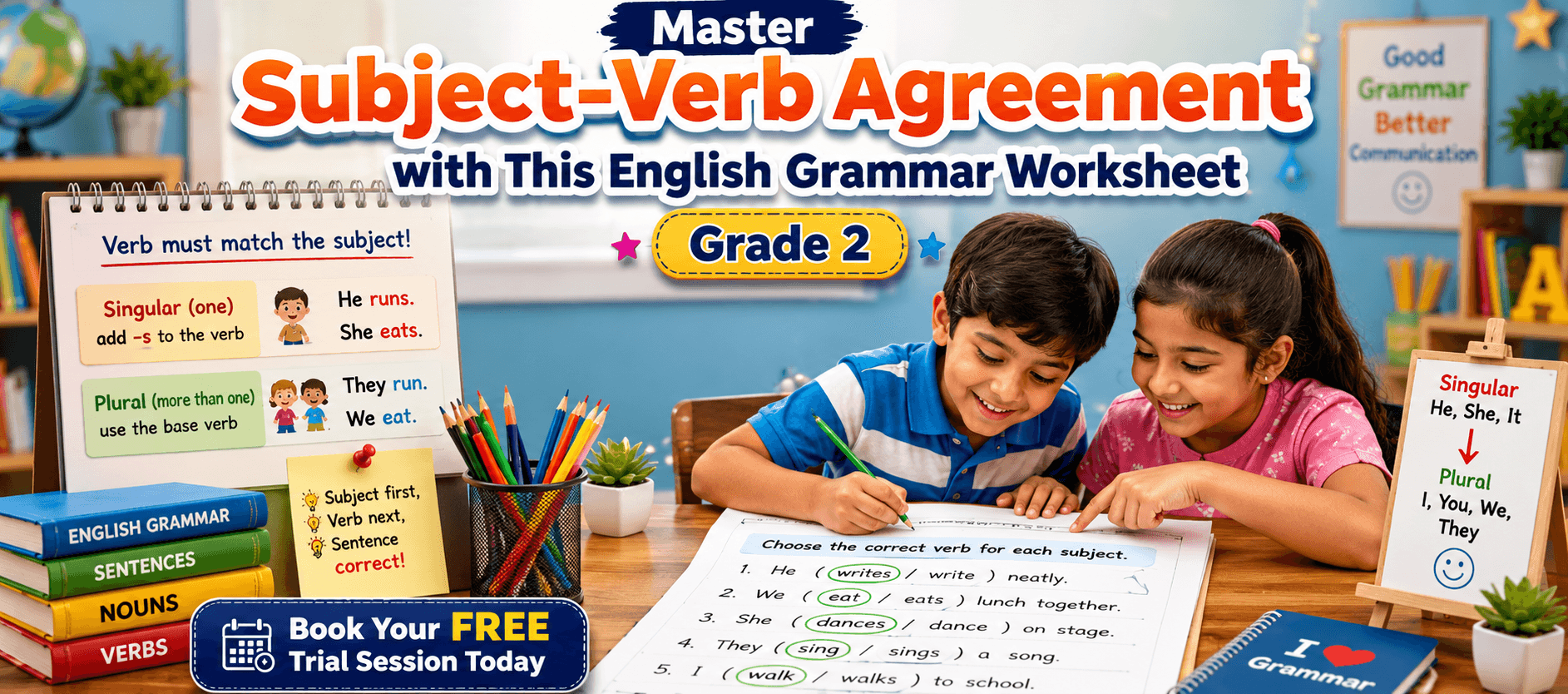
Master Subject-Verb Agreement with This English Grammar Worksheet for Grade 2
Grammar becomes easier and more enjoyable when students learn how subjects and verbs work together correctly in sentences. This English grammar worksheet for Grade 2 on Subject-Verb Agreement helps children understand how verbs change depending on the subject used in a sentence. Through simple examples and sentence-based exercises, students learn to form grammatically correct sentences with confidence.
In this worksheet, Grade 2 learners practice choosing the correct verb forms for singular and plural subjects. The activities are designed in a simple and structured way so children can easily understand sentence patterns and improve their grammar skills. By practicing regularly, students strengthen their reading, writing, and sentence-building abilities while developing confidence in everyday communication.
Download these English grammar worksheets and practice regularly to strengthen your language skills and build a strong foundation. You can also book a free trial to get expert guidance and improve your reading, writing, and comprehension abilities. The worksheets are designed in a simple and structured way to help K–8 students learn grammar concepts easily and use them confidently in everyday communication.
What Is the Topic?
Subject-verb agreement means the verb must match the subject in a sentence. This worksheet teaches students how singular subjects and plural subjects use different verb forms.
The worksheet explains that if the subject is one person or thing, we add -s to the verb. If the subject is more than one, we use the base form of the verb. Students learn this rule through examples and practice sentences.
The worksheet includes examples such as:
1. He / She / It runs, eats
2. I / You / We / They run, eat
3. Ria dances
4. The dogs bark
Students are expected to learn:
1. How verbs change according to the subject
2. How to identify singular and plural subjects
3. How to choose the correct verb form
4. How to form grammatically correct sentences
5. How to improve sentence understanding
What’s in This Worksheet?
1. The worksheet begins with a simple explanation of subject-verb agreement.
2. Students learn the rule for singular and plural subjects.
3. Examples are provided to show how verbs change with different subjects.
4. The worksheet includes fill-in-the-blank sentences with two verb choices.
5. Students must choose the correct verb for each subject.
6. The exercise includes common subjects such as he, she, we, they, it, you, and animals.
7. The worksheet helps students improve grammar accuracy and sentence structure.
8. These activities support school grammar practice and exam preparation.
Definitions, Examples, Techniques, and Tips
Definition
Subject-verb agreement means the verb must match the subject in a sentence.
If the subject is one person or thing, we add -s to the verb.
If the subject is more than one, we use the base form of the verb.
Examples
1. She runs fast.
2. They run every morning.
3. Ria dances well.
4. The dogs bark loudly.
Techniques
1. First identify the subject in the sentence.
2. Check whether the subject is singular or plural.
3. Use verbs ending in -s for one person or thing.
4. Use the base form of the verb for more than one subject.
5. Read the complete sentence again to check if it sounds correct.
Quick Learning Tips
1. He, She, and It usually take verbs ending in -s.
2. I, You, We, and They usually use the base form of the verb.
3. Read sentences carefully before choosing the answer.
4. Practice short sentences daily for better understanding.
5. Revise grammar rules regularly to avoid mistakes.
Why Is It Important to Learn This?
Learning subject-verb agreement is important because it helps students form correct sentences. Proper matching between subjects and verbs makes speaking and writing clear and grammatically correct.
For Grade 2 students, this topic builds a strong grammar foundation and improves sentence formation skills. Understanding subject-verb agreement also helps children read sentences correctly and communicate confidently.
This grammar concept helps students:
1. Write accurate sentences
2. Improve speaking skills
3. Understand sentence patterns
4. Avoid common grammar mistakes
5. Perform better in grammar tests and classwork
Regular practice also increases confidence in reading and writing activities.
Where Will This Knowledge Help You?
Knowledge of subject-verb agreement is useful in many academic and daily communication situations.
1. Students use subject-verb agreement while writing sentences in school.
2. Grammar exams often include questions about choosing correct verbs.
3. Correct sentence structure improves classroom writing activities.
4. Reading comprehension becomes easier when students understand sentence patterns.
5. Students can speak more confidently using correct grammar.
6. Story writing and paragraph writing improve with proper subject-verb agreement.
7. Daily conversations become clearer and more meaningful.
How to Use This Worksheet?
1. Read the rule of subject-verb agreement carefully before attempting the exercise.
2. Identify the subject in every sentence first.
3. Decide whether the subject is singular or plural.
4. Choose the correct verb form based on the subject.
5. Attempt all questions independently before checking answers.
6. Compare your answers carefully with the complete answer key given below.
7. The solutions follow the exact worksheet order, so review every sentence properly.
8. Correct mistakes and understand why the correct verb matches the subject.
9. Practice similar sentence patterns regularly to improve grammar skills.
Important Tips and Tricks
1. Always identify the subject before selecting the verb.
2. Singular subjects usually take verbs ending in -s.
3. Plural subjects usually use the base form of the verb.
4. Do not choose the verb quickly without reading the complete sentence.
5. Read each sentence aloud to check whether it sounds correct.
6. Pay close attention to subjects like He, She, It, We, and They.
7. Examiners expect students to choose verbs that correctly match the subject.
8. Avoid confusion between singular and plural nouns.
9. Practice grammar exercises regularly to improve accuracy.
10. Revise difficult sentences again to strengthen understanding.
Complete Answer Key
Exercise 1
Choose the correct verb for each subject.
1. He writes neatly.
2. We eat lunch together.
3. She dances on stage.
4. They sing a song.
5. I walk to school.
6. It jumps high.
7. You read stories.
8. The cat sleeps on the mat.
9. My parents work at the hospital.
10. The bird flies in the sky.
Regular practice with subject-verb agreement helps Grade 2 students improve grammar accuracy and sentence-building confidence. This English grammar worksheet on Subject-Verb Agreement makes learning simple through clear examples and structured exercises. By practicing these sentence patterns regularly, students can strengthen their reading, writing, and speaking skills while building a strong grammar foundation for future learning.