
Learn Than and Then with Grade 2 Grammar Exercises
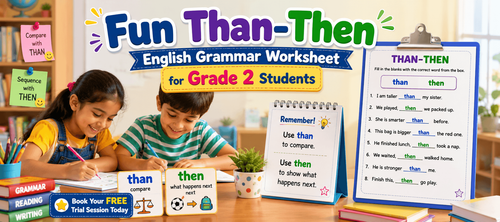

Fun Than-Then English Grammar Worksheet for Grade 2 Students
Learning small grammar words can make a big difference in sentence writing and speaking skills. This English grammar worksheet for Grade 2 on Than-Then helps students understand the correct usage of two commonly confused words in English. Through simple fill in the blanks activities, children learn how to compare things using “than” and describe the order of actions using “then.” These exercises improve sentence understanding, grammar accuracy, and confidence in everyday communication.
Students in Grade 2 often confuse words that sound similar but have different meanings. This worksheet gives them structured practice to identify the correct word based on sentence meaning. By solving easy and relatable examples, students strengthen both grammar and reading comprehension skills in an enjoyable and engaging way.
Download these English grammar worksheets and practice regularly to strengthen your language skills and build a strong foundation. You can also book a free trial to get expert guidance and improve your reading, writing, and comprehension abilities. The worksheets are designed in a simple and structured way to help K–8 students learn grammar concepts easily and use them confidently in everyday communication.
What Is the Topic?
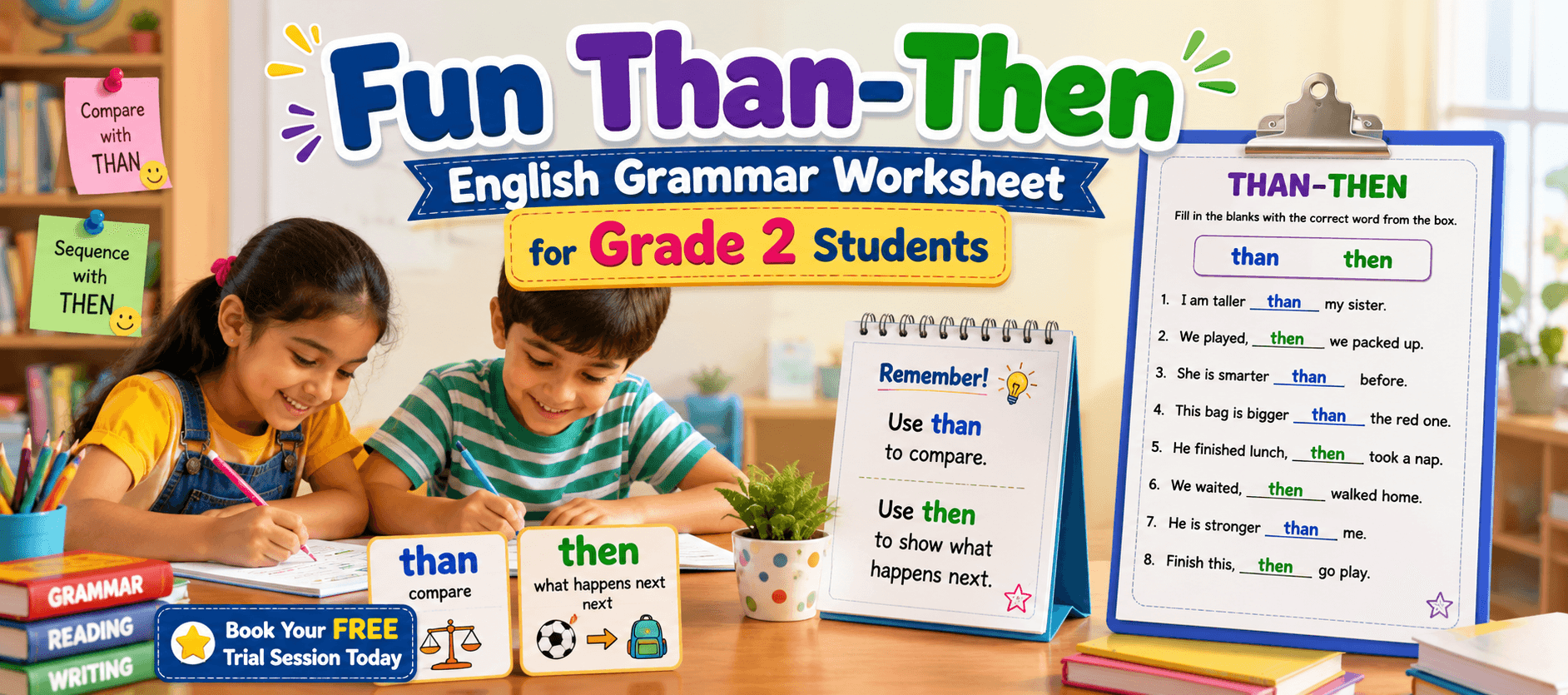
This English grammar worksheet focuses on the correct use of the words “than” and “then.” These two words may sound similar, but they are used differently in sentences.
The word “than” is used when comparing two people, places, things, or ideas. It helps students show differences between objects or actions.
The word “then” is used to describe what happens next or after something else. It helps students understand sequence and order in sentences.
In this Grade 2 worksheet, students learn how to:
• Identify the correct word based on sentence meaning
• Understand comparison sentences
• Understand sequence and action order
• Improve sentence-building skills
• Use grammar words correctly in writing and speaking
The worksheet uses short and simple sentences that are easy for young learners to understand and complete independently.
What’s in This Worksheet?
1. Fill in the blanks questions
Students complete each sentence using either “than” or “then” from the given word box.
2. Comparison-based sentences
Some sentences compare two people or objects. These questions help students understand when to use “than.”
3. Sequence and action-order sentences
Some sentences describe actions happening one after another. These questions help students understand when to use “then.”
4. Sentence understanding practice
Students read carefully and choose the correct word based on the meaning of the sentence.
5. Grammar skill development
The worksheet improves:
• Reading comprehension
• Vocabulary understanding
• Sentence construction
• Grammar accuracy
6. Exam preparation support
This worksheet helps students practice common grammar questions often included in school exams and classroom activities.
Definitions, Examples, Techniques, and Tips
Definition of “than”
“Than” is used to compare two things.
Examples from the worksheet:
• I am taller than my sister.
• This bag is bigger than the red one.
• He is stronger than me.
Definition of “then”
“Then” is used to show what happens next.
Examples from the worksheet:
• We played, then we packed up.
• He finished lunch, then took a nap.
• Finish this, then go play.
Simple technique to identify the correct word
Students can ask:
• Is the sentence comparing something?
Use “than.”
• Is the sentence showing what happens next?
Use “then.”
Quick learning tips
• Read the entire sentence carefully before choosing the word.
• Look for comparison words like bigger, taller, stronger, or smarter.
• Look for action sequences that happen one after another.
• Practice similar sentence patterns regularly.
• Speak the sentence aloud to understand its meaning better.
Why Is It Important to Learn This?
Learning the correct use of “than” and “then” is important because these words are commonly used in daily communication. Even though they sound similar, they have different meanings and uses.
This grammar topic helps students:
• Write clearer sentences
• Avoid common grammar mistakes
• Improve reading comprehension
• Understand sentence meaning properly
• Speak more confidently
Using the correct word also improves sentence accuracy in school assignments, exams, and conversations.
Students who understand comparison words and sequence words can communicate ideas more clearly and correctly.
Where Will This Knowledge Help You?
This grammar concept is useful in many everyday learning situations.
1. School exams
Students often get fill in the blanks and sentence correction questions based on confusing word pairs like “than” and “then.”
2. Classroom activities
Correct grammar usage helps students participate confidently in speaking and writing tasks.
3. Sentence writing
Students can create better and more meaningful sentences by using the correct word.
4. Reading comprehension
Understanding sentence meaning becomes easier when students know whether a sentence is showing comparison or sequence.
5. Daily communication
Students use these words while talking about actions, comparisons, and everyday events.
How to Use This Worksheet?
1. Read each sentence carefully
Understand whether the sentence is comparing something or describing actions in order.
2. Choose the correct word
Select either “than” or “then” based on the sentence meaning.
3. Complete all questions independently
Try solving the worksheet without help first to improve confidence and understanding.
4. Review the complete answer key carefully
The solutions follow the exact worksheet order. Compare your answers carefully and check for mistakes.
5. Correct mistakes properly
Rewrite incorrect answers and understand why the correct word fits the sentence.
6. Practice regularly
Repeated practice helps students remember grammar rules more easily and use them correctly in daily writing.
Important Tips and Tricks
1. Look for comparison clues
Words like taller, stronger, smarter, and bigger usually require “than.”
2. Look for action-order clues
If one action happens after another, use “then.”
3. Read the sentence fully
Do not choose the answer without understanding the complete meaning.
4. Avoid confusing similar-sounding words
“Than” and “then” may sound alike, but they have completely different uses.
5. Practice sentence reading
Reading sentences aloud can help students understand whether the sentence compares or sequences actions.
6. Focus on grammar accuracy
Examiners expect correct word usage even in simple fill in the blanks exercises.
7. Revise regularly before exams
Small grammar topics are often included in tests, worksheets, and classroom assignments.
Complete Answer Key
THAN-THEN
Fill in the blanks with the correct word from the box.
than then
1. I am taller than my sister.
2. We played, then we packed up.
3. She is smarter than before.
4. This bag is bigger than the red one.
5. He finished lunch, then took a nap.
6. We waited, then walked home.
7. He is stronger than me.
8. Finish this, then go play.
Practicing grammar topics like Than-Then regularly helps Grade 2 students improve sentence understanding and grammar confidence. Small grammar rules become easier with repeated practice and careful reading. By solving worksheets like this, students can build stronger writing and speaking skills step by step. Continue practicing English grammar worksheets to become more confident in using correct words in everyday communication and school activities.