
Learn Verbs Easily with This Class 2 Grammar Worksheet
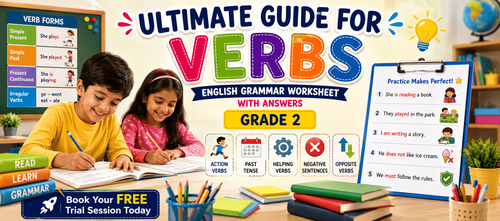

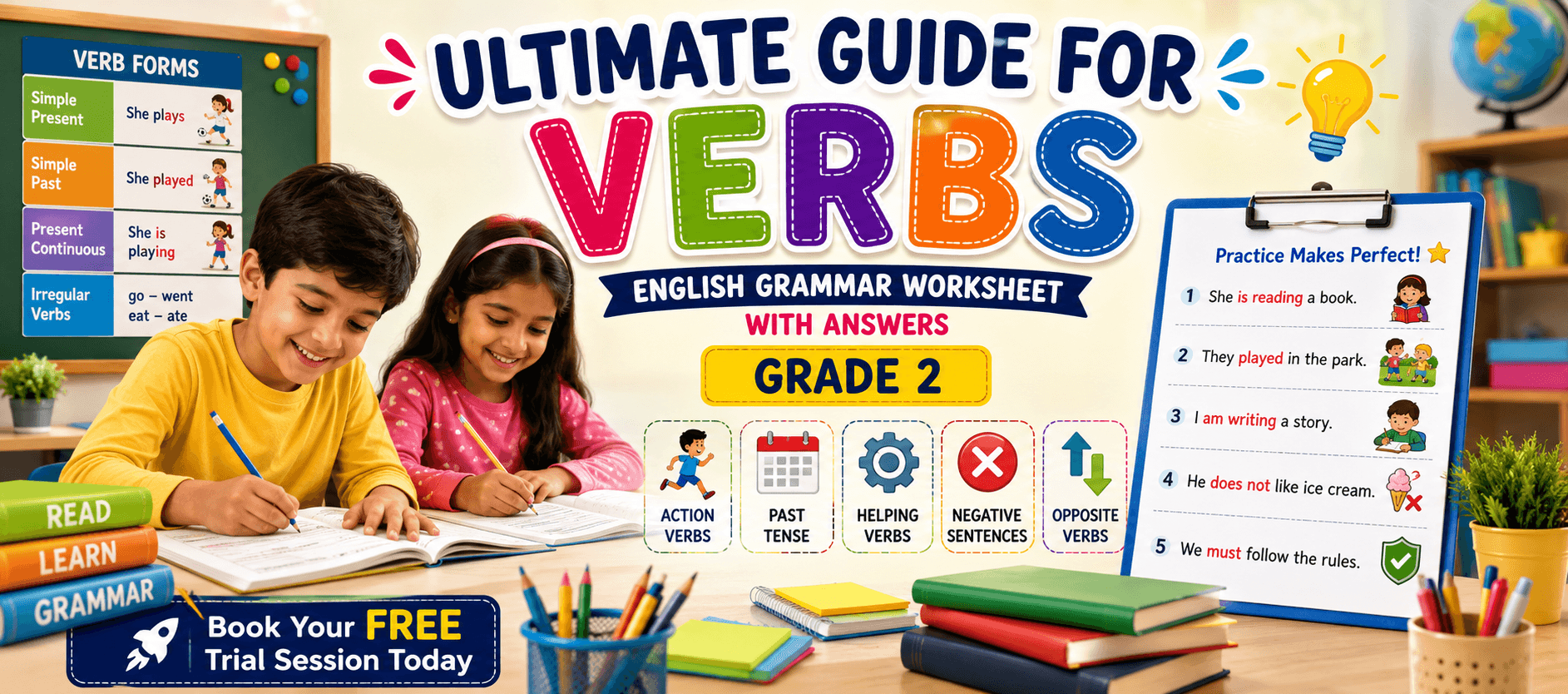
Ultimate Guide for Verbs 2 English Grammar Worksheet for Grade 2 With Answers
Learning verbs becomes more meaningful when students understand how actions change according to time and sentence structure. This English grammar worksheet for Grade 2 on Verbs helps children practice simple present tense, simple past tense, irregular verbs, present continuous tense, negative sentences, helping verbs, and opposite verbs through engaging exercises and clear examples. By practicing these grammar concepts regularly, students improve sentence formation, reading comprehension, writing accuracy, and communication confidence in an easy and structured way.
In Grade 2, students begin learning how verbs are used to describe actions happening every day, actions completed in the past, and actions happening right now. This worksheet introduces learners to present tense forms, regular and irregular past tense verbs, and present continuous tense patterns using simple activities and sentence-based exercises. Through grammar practice, students strengthen vocabulary skills and become more comfortable using verbs correctly in both speaking and writing.
Download these English grammar worksheets and practice regularly to strengthen your language skills and build a strong foundation. You can also book a free trial to get expert guidance and improve your reading, writing, and comprehension abilities. The worksheets are designed in a simple and structured way to help K–8 students learn grammar concepts easily and use them confidently in everyday communication.
What Is the Topic?
Verbs are action words that show what someone or something is doing. This Grade 2 English grammar worksheet focuses on different verb forms and how verbs change according to tense and sentence structure.
Students learn:
• Simple present tense
• Simple past tense
• Irregular verbs
• Present continuous tense
• Negative sentences
• Helping verbs
• Opposite verbs
The worksheet helps children understand how verbs are used correctly in everyday English communication.
What’s in This Worksheet?
1. Simple Present Tense Activities
Students rewrite sentences using the correct present tense verb forms.
2. Regular Past Tense Exercises
Children change verbs into past tense forms by adding -ed.
3. Irregular Verb Practice
Students learn special past tense forms that do not follow regular spelling rules.
4. Present Continuous Tense Activities
Learners practice using is, am, and are with verb-ing forms.
5. Action Verb Identification
Students circle action verbs in complete sentences.
6. Helping Verb Exercises
The worksheet includes practice using was, were, can, may, and must.
7. Negative Sentence Practice
Students rewrite sentences using do not and does not.
8. Opposite Verb Activities
Children practice identifying opposite action words.
9. Structured Grammar Learning
The worksheet uses simple instructions and sentence-based practice suitable for Grade 2 learners.
10. Exam Preparation Support
These exercises strengthen grammar understanding and improve classroom performance.
Definitions, Examples, Techniques, and Tips
Definition of Simple Present Tense
We use the present tense to talk about things that happen often or every day.
Examples
• He paints well.
• I play football.
• She reads books.
Definition of Simple Past Tense
We add -ed to regular verbs to show something happened in the past.
Examples
• walk – walked
• play – played
• jump – jumped
• call – called
Definition of Irregular Verbs
Some verbs do not follow the -ed rule in past tense. These are called irregular verbs.
Examples
• go – went
• come – came
• eat – ate
• see – saw
Definition of Present Continuous Tense
Present continuous tense tells us what is happening right now.
Examples
• I am eating.
• She is reading.
• They are playing.
Quick Learning Tips
• Read the subject carefully before choosing the verb
• Practice verb forms regularly
• Learn irregular verbs through repetition
• Observe helping verbs carefully
• Read each sentence fully before answering
Why Is It Important to Learn This?
Learning verb tenses is important because verbs help students describe actions correctly in speaking and writing. Understanding present tense, past tense, and continuous tense improves grammar accuracy and sentence-building confidence.
This topic helps students:
• Write correct sentences
• Improve communication skills
• Understand time-related actions
• Strengthen grammar knowledge
• Build confidence in English activities
Verb practice also supports reading comprehension and classroom participation.
Where Will This Knowledge Help You?
Students use verbs in many school and daily communication activities.
• Grammar tests
• Story writing
• Sentence formation
• Reading exercises
• Homework assignments
• Classroom speaking activities
• English comprehension tasks
Understanding correct verb forms helps students communicate more clearly in both written and spoken English.
How to Use This Worksheet?
1. Read Every Grammar Rule Carefully
Understand each explanation before attempting the exercises.
2. Solve the Questions Independently
Try answering every question carefully on your own.
3. Follow the Worksheet Order
The solutions follow the exact worksheet order, so students should compare answers carefully.
4. Review Incorrect Answers
Correct mistakes and understand why the correct verb form is used.
5. Practice Daily
Regular grammar practice improves sentence formation and vocabulary skills.
6. Revise Verb Forms Often
Practice present tense, past tense, and continuous tense forms regularly for better understanding.
Important Tips and Tricks
1. Identify the Subject First
Always check who or what is performing the action before choosing the verb form.
2. Learn Helping Verbs Carefully
Understand where to use is, am, are, was, were, can, may, and must.
3. Remember Irregular Verbs
Irregular verbs do not follow the normal -ed rule, so they need extra practice.
4. Practice Present Continuous Sentences
Use helping verbs correctly with verb-ing forms.
5. Avoid Common Grammar Mistakes
Check singular and plural subjects carefully while writing sentences.
6. Read Questions Slowly
Careful reading helps students choose correct verb forms.
7. Practice Negative Sentences
Understand how do not and does not change sentence meaning.
8. Improve Vocabulary Through Verbs
Learning action words regularly improves reading and communication skills.
Complete Answer Key
Exercise 1
Rewrite the sentence using the correct verb form.
1. She jumps on the trampoline.
2. I like chocolate.
3. He reads comics every day.
4. They run fast in the race.
5. We drink milk in the morning.
6. My dog barks at strangers.
7. The sun rises in the east.
8. You talk loudly in class.
9. It shines brightly.
10. The girl paints with watercolors.
Exercise 2
Change the verb to its past form.
1. played
2. worked
3. talked
4. cleaned
5. washed
6. helped
7. looked
8. opened
9. finished
10. painted
Exercise 3
Choose the correct past tense form of the verb.
1. ate
2. went
3. bought
4. took
5. saw
6. came
7. drank
8. ran
9. made
10. gave
Exercise 4
Fill in the blanks using is/am/are + verb-ing.
1. am writing
2. is reading
3. are playing
4. are making
5. is drawing
6. are singing
7. is raining
8. are running
9. is barking
10. am listening
Practice Worksheet
Exercise 1
Circle the action verb in each sentence.
1. roars
2. brush
3. dance
4. cooks
5. claps
Exercise 2
Choose the correct option – was or were.
1. were
2. was
3. was
4. were
5. were
Exercise 3
Match the picture to the correct sentence.
1. He is painting the wall.
2. She is skipping with a rope.
3. They are eating lunch together.
4. It is barking loudly.
5. She is writing on the blackboard.
Exercise 4
Rewrite the sentence in the negative form using "do not" or "does not".
1. He does not play the guitar.
2. I do not drink tea in the evening.
3. They do not go to the library.
4. She does not like cold coffee.
5. We do not eat noodles every Sunday.
Exercise 5
Fill in the blank with can, may, or must.
1. must
2. can
3. May
4. must
5. can
Exercise 6
Write the opposite verb.
1. stop
2. rest
3. listen
4. dirty
5. dry
Practicing this Grade 2 English grammar worksheet on Verbs helps students improve grammar accuracy, sentence-building confidence, vocabulary skills, and communication abilities. By practicing present tense, past tense, helping verbs, and continuous tense regularly, children become more confident using English correctly in everyday speaking and writing activities. Continued grammar practice will help students perform better in school assignments, classroom exercises, and English assessments.