
Master Singular and Plural Nouns in Class 3 Free PDF
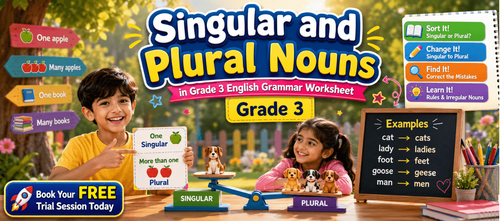

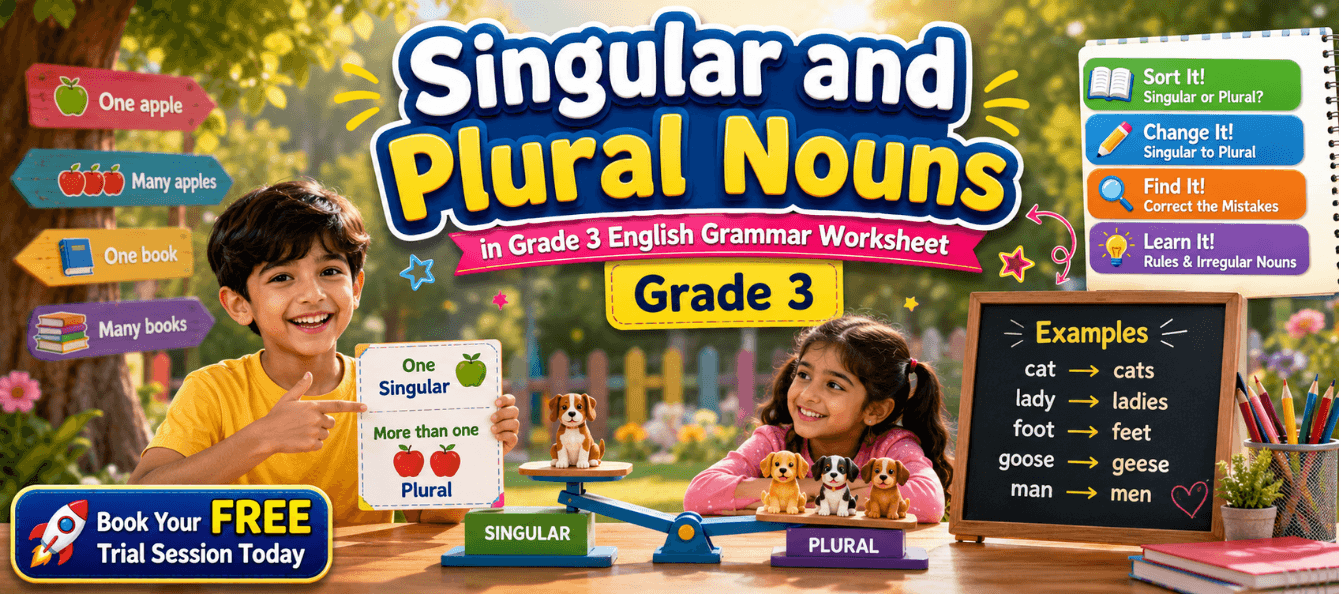
Singular and Plural Nouns in Grade 3 English Grammar Worksheet Free PDF
Learning singular and plural nouns is an important part of grammar for young learners. This Grade 3 English grammar worksheet on singular and plural nouns helps students understand how words change when talking about one person, place, animal, or thing and more than one person, place, animal, or thing. Through engaging exercises like sorting words, sentence correction, singular to plural conversion, and rewriting sentences, students get plenty of practice in identifying and using nouns correctly.
This worksheet is designed in a simple and fun way so that Grade 3 students can build confidence while learning grammar rules. The activities encourage careful reading, correct spelling, and sentence writing practice. By completing each section step by step, students can improve their grammar skills and learn how singular and plural nouns are used in everyday English communication.
Download these English grammar worksheets and practice regularly to strengthen your language skills and build a strong foundation. You can also book a free trial to get expert guidance and improve your reading, writing, and comprehension abilities. The worksheets are designed in a simple and structured way to help K–8 students learn grammar concepts easily and use them confidently in everyday communication.
What Is Singular and Plural Nouns?
A singular noun means one person, place, animal, or thing.
Examples:
one apple
one book
one dog
“I have one pencil in my hand.“
A plural noun means more than one person, place, animal, or thing.
Examples:
two apples
many books
“I have two pencils in my bag.“
Students also learn that we usually add –s or –es to make nouns plural. This English grammar worksheet for Grade 3 helps students understand how words change from singular form to plural form through examples and exercises.
What’s in This Worksheet?
1. Students sort words into singular and plural categories.
2. Students rewrite sentences by changing singular nouns into plural nouns.
3. Students fill in missing singular and plural noun forms.
4. Students identify and correct plural noun mistakes in sentences.
5. The worksheet includes engaging fun exercises such as:
Sentence Correction
Singular to Plural
One Word
Sorting exercise
6. The worksheet supports grammar learning through simple examples and structured practice activities.
7. Students practice spelling changes in nouns such as:
foot → feet
goose → geese
knife → knives
man → men
8. The exercises help students prepare for school grammar tests and improve sentence-writing skills.
Definitions, Examples, Techniques, and Tips
Definition of singular nouns:
A singular noun means one person, place, animal, or thing.
Examples:
one apple
one book
one dog
Definition of plural nouns:
A plural noun means more than one person, place, animal, or thing.
Examples:
two apples
many books
Examples from the worksheet:
cat → cats
lady → ladies
knife → knives
wolf → wolves
goose → geese
man → men
Technique for learning plural nouns:
1. Read the noun carefully.
2. Check whether the noun means one or more than one.
3. Add –s or –es where needed.
4. Learn special plural forms through practice.
5. Rewrite sentences carefully using correct plural nouns.
Quick learning tips:
1. Words like cat become cats by adding –s.
2. Words like box become boxes by adding –es.
3. Words ending with y may change to ies.
4. Some nouns change completely, like foot to feet.
5. Read every sentence carefully before rewriting it.
Why Is It Important to Learn This?
Learning singular and plural nouns is important because students use nouns in speaking, reading, and writing every day. Understanding whether a noun means one or more than one helps students make correct sentences.
This grammar topic also improves sentence structure and helps students avoid spelling mistakes. When students learn plural forms correctly, they become more confident while answering grammar questions in school.
Singular and plural nouns are also important for reading comprehension and communication. Students can understand stories, instructions, and conversations better when they know the difference between singular and plural words.
Where Will This Knowledge Help You?
1. In grammar exams and class tests.
2. In sentence-writing activities.
3. In reading comprehension exercises.
4. During classroom discussions and speaking activities.
5. While writing paragraphs, stories, and answers.
6. In daily English communication.
7. In identifying correct spelling patterns for nouns.
8. In improving overall grammar confidence.
How to Use This Worksheet?
1. Read the instructions carefully before starting each exercise.
2. Attempt every question independently first.
3. Follow the exact order of the worksheet questions while answering.
4. Rewrite the sentences carefully using correct plural nouns.
5. Compare your answers carefully with the correct answers.
6. Review spelling changes in singular and plural nouns.
7. Practice difficult words again and again.
8. The solutions follow the exact worksheet order, so students should compare answers carefully and check every question step by step.
Important Tips and Tricks
1. Add –s to many nouns to make them plural.
Example:
cat → cats
2. Add –es to nouns ending with certain sounds.
Example:
box → boxes
3. Change some nouns ending in y to ies.
Example:
lady → ladies
4. Learn irregular plural nouns carefully.
Example:
foot → feet
goose → geese
man → men
5. Read the complete sentence before rewriting it.
6. Check spelling carefully while changing nouns to plural form.
7. Avoid common mistakes such as:
foots
sheeps
mans
knifes
childs
womans
deers
8. Rewrite corrected sentences neatly and completely.
9. Practice sorting singular and plural nouns regularly.
10. Carefully follow instructions like rewrite, fill in, sort, and correct while solving grammar worksheets.
Complete Answer Key
Exercise 1
SINGULAR
sheep
rabbit
foot
peach
lion
cat
desk
book
mouse
table
glass
bird
child
cup
monkey
PLURAL
apples
brushes
cows
socks
tomatoes
chairs
toys
men
dogs
ladies
babies
boxes
wolves
sandwiches
girls
oxen
pens
dresses
pencils
horses
benches
Exercise 2
1. Ducks swim in the ponds near the trees.
2. The boys see the cats and the dogs in the parks.
3. I packed my shirts and books for the trips.
4. The children play with the toys and the balls.
5. She puts the plates and the cups on the tables.
6. Mice hide behind the boxes near the chairs.
7. The ladies buy the loaves of bread and the knives.
8. The men read the stories about the heroes.
Exercise 3
cat → cats
box → boxes
lady → ladies
baby → babies
tooth → teeth
foot → feet
goose → geese
knife → knives
wolf → wolves
man → men
Exercise 4
1. I have two feet.
2. The sheep are in the field.
3. There are many men at the meeting.
4. We bought new knives for the picnic.
5. The children are playing outside.
6. Look at the group of women dancing.
7. I packed my colors and brushes.
8. He saw two deer near the lake.
This Grade 3 English grammar worksheet on singular and plural nouns is a fun and useful way to practice important grammar skills. By solving exercises regularly, students can improve spelling, sentence writing, and grammar confidence. Careful practice with singular and plural nouns helps students write correct sentences and communicate more clearly in English. Keep practicing regularly and continue building strong grammar skills step by step.