
My Body Printable Reading Worksheet for Grade 2 Students
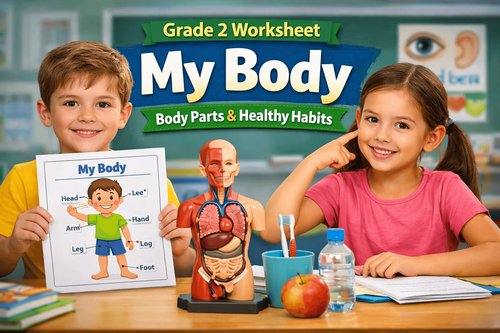

My Body Printable Reading Worksheet for Grade 2 Students
Learning about our body is one of the most exciting topics for young learners because it connects directly to everyday life. Children use their eyes to see, ears to hear, and hands to play and write every day without even realizing how amazing their body is. This English grammar worksheet for Grade 2 based on the topic “My Body” helps students understand how different body parts work together and how healthy habits keep us active, safe, and ready to learn.
What Is the Topic?
The topic “My Body” introduces Grade 2 students to important body parts and their functions through an informative reading passage. The worksheet explains how different parts of the body help us perform daily activities such as seeing, hearing, tasting, walking, writing, and playing.
Students learn that eyes help us see colours, shapes, and people around us. Ears help us hear sounds like music and voices. The nose helps us smell different things, while the tongue helps us taste different types of food. Hands and legs help us move and perform everyday actions.
The passage also teaches healthy habits such as brushing teeth twice a day, washing hands before eating, bathing regularly, eating healthy food, sleeping well, and drinking enough water. Students are expected to understand both body functions and the importance of taking care of their body.
What’s in This Worksheet?
1. A short informative reading passage about the human body written in simple language suitable for Grade 2 learners.
2. Objective-type multiple-choice questions that check clear facts from the passage.
3. Question-answer tasks that test understanding of ideas explained in the text.
4. Thinking-based questions that encourage students to connect information from the passage with real-life situations.
5. Vocabulary development through synonym identification.
6. A structured learning sequence that moves from basic comprehension to deeper understanding.
7. Practice designed to strengthen reading comprehension skills while reinforcing knowledge about body parts and healthy habits.
Definitions, Examples, Techniques, and Tips
Definitions
The worksheet explains that the body has many important parts that help us do different things each day. Each body part has a specific role that supports daily life and learning.
Examples from the passage
Eyes help us see colours, shapes, and people around us.
Ears help us hear sounds like music, honking cars, and our teacher’s voice.
The nose helps us smell flowers, food, and smoke so we stay safe.
The tongue helps us taste sweet, salty, sour, and bitter foods.
Hands help us write, play, and hold things.
Legs help us walk, run, and jump.
Healthy habits mentioned in the worksheet include brushing teeth twice a day, washing hands before eating, bathing regularly, eating healthy food, sleeping well, and drinking enough water.
Techniques used in the worksheet
Students first read a short passage carefully.
They answer factual questions to check understanding.
They respond to descriptive questions based on the passage.
They make connections between reading and real-life habits.
They learn new vocabulary by identifying a synonym.
Quick learning tips
Read the passage slowly and understand each sentence.
Look for keywords related to body parts and healthy habits.
Match each question directly with information from the passage.
Think about how the information connects to daily activities.
Why Is It Important to Learn This?
Learning about the body helps children understand themselves better. When students know how body parts function, they become more aware of their health and daily habits. This topic also builds reading comprehension skills because students learn to locate information, understand meanings, and answer questions accurately.
Understanding healthy habits encourages children to care for their body, stay active, and remain ready to learn and play. This English grammar worksheet supports both academic learning and personal development by combining reading skills with real-life knowledge.
Where Will This Knowledge Help You?
Students use this knowledge in many situations:
During school exams where reading comprehension passages appear regularly.
While answering classroom questions related to health and daily routines.
In writing tasks that require describing body parts or habits.
During discussions and class participation when talking about healthy lifestyles.
In everyday life by practicing habits that keep the body strong and energetic.
How to Use This Worksheet?
1. Read the passage independently first and understand how each body part helps us.
2. Attempt all questions carefully without looking at answers.
3. Review the solutions provided after completing the worksheet.
4. Compare your responses carefully with the answer key.
5. Correct mistakes and reread the passage for better understanding.
6. Practice regularly to improve reading comprehension skills.
The solutions below follow the exact worksheet order. Students should compare every response carefully with the worksheet answers.
Important Tips and Tricks
1. Read every question carefully before choosing an option.
2. Look back at the passage to find exact information instead of guessing.
3. Remember that objective questions check facts directly from the text.
4. For descriptive questions, answers must match ideas explained in the passage.
5. Writing-based questions may have different responses because students connect ideas personally.
6. Vocabulary questions test understanding of word meaning in context.
7. Examiners expect clear understanding of the passage rather than memorization.
8. Always revise healthy habits mentioned in the reading passage.
Complete Answer Key
My Body
Our body has many important parts that help us do different things each day; our eyes help us see colours, shapes, and people around us; our ears help us hear sounds like music, honking cars, and our teacher’s voice; the nose helps us smell flowers, food, and even smoke so we stay safe; our tongue helps us taste sweet, salty, sour, and bitter foods; our hands help us write, play, and hold things, while our legs help us walk, run, and jump; to keep our body healthy, children must brush their teeth twice a day, wash their hands before eating, and bathe regularly; eating healthy food, sleeping well, and drinking enough water also keep the body strong; when we take care of our body, we feel energetic and ready to learn and play.
Exercise No. 1
Choose the most appropriate option in relevance to this passage.
1. Which body part helps us see things?
Answer: c) Eyes
2. Which body part helps us hear?
Answer: c) Ears
3. What should children do before eating?
Answer: a) Wash their hands
Exercise No. 2
Answer the following questions from the passage.
1. It helps us taste sweet, salty, sour, and bitter foods.
2. They make the body strong and ready for activities.
3. It keeps teeth clean and prevents cavities.
Exercise No. 3
Read the questions carefully and answer the following by making connections with the text.
1. A healthy body helps children learn, play, and stay safe.
2. Answers will vary; students choose a habit they follow.
3. Hands help writing, eyes help reading, ears help listening.
4. “Active”
Learning about the human body becomes meaningful when students connect reading with real-life habits. This Grade 2 English grammar worksheet on “My Body” helps learners understand body functions, healthy routines, and reading comprehension skills together. With regular practice, students become confident readers who understand information clearly and apply it in daily life and school activities. Keep practicing, stay curious, and continue exploring new topics through reading.