
Phonics Blends Practice PDF for Class 1 Students
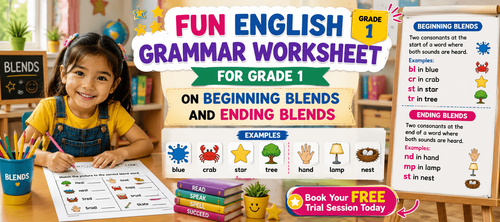

Fun English Grammar Worksheet for Grade 1 on Beginning Blends and Ending Blends
Learning blends is an important part of early phonics practice for young learners. In Grade 1, students begin to understand how consonants work together in words while keeping both sounds clearly heard. This English grammar worksheet on Beginning Blends and Ending Blends helps children recognize common blend sounds and connect them with simple words and pictures. Through engaging activities and examples, students improve their reading, pronunciation, spelling, and word recognition skills in a fun and structured way.
Download these English grammar worksheets and practice regularly to strengthen your language skills and build a strong foundation. You can also book a free trial to get expert guidance and improve your reading, writing, and comprehension abilities. The worksheets are designed in a simple and structured way to help K–8 students learn grammar concepts easily and use them confidently in everyday communication.
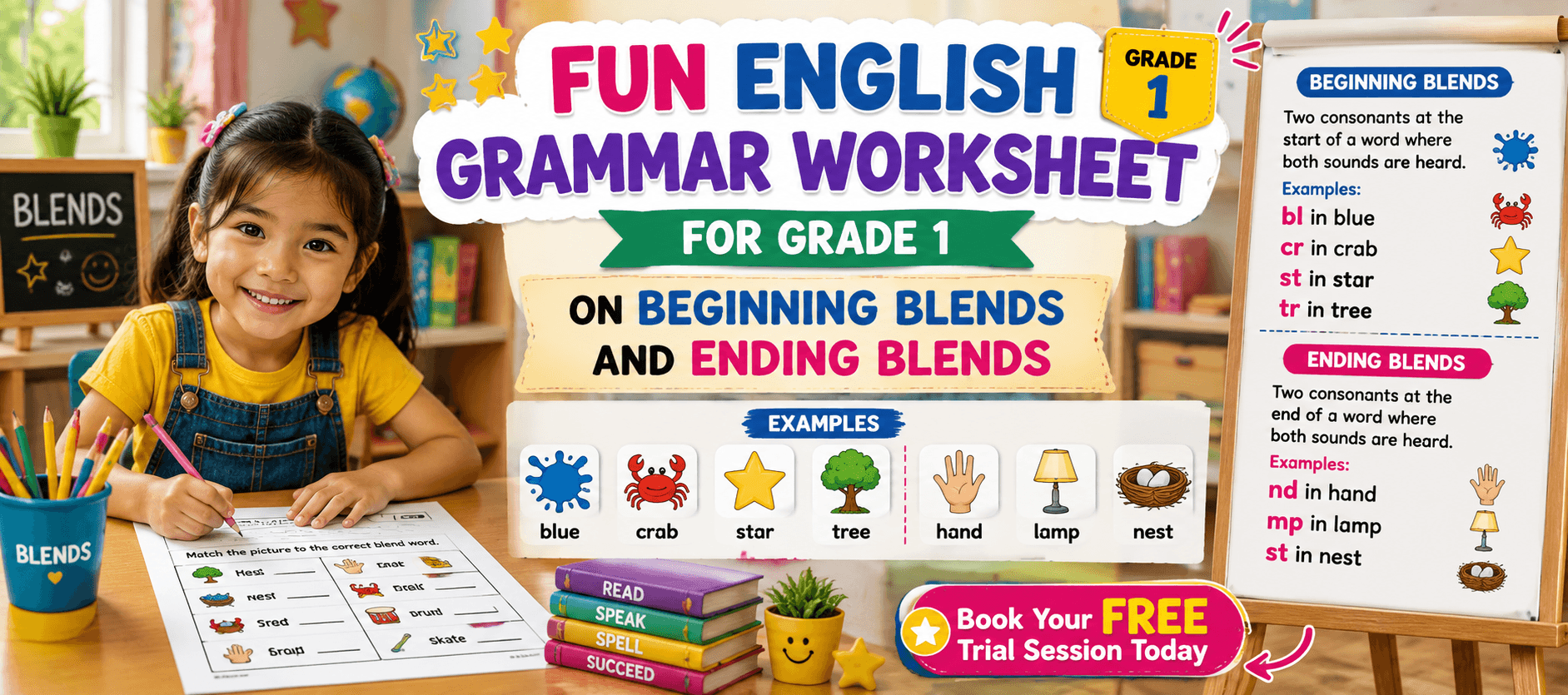
What Is Beginning Blends and Ending Blends?
Beginning blends are two consonants at the start of a word where both sounds are heard. Ending blends are two consonants at the end of a word where both sounds are heard.
Beginning Blends
Examples : bl in blue, cr in crab, st in star, tr in tree
Ending Blends
Examples : nd in hand, mp in lamp, st in nest
This Grade 1 English grammar worksheet helps students identify beginning and ending blends in simple words and match words correctly with pictures.
What’s in This Worksheet?
1. Introduction to beginning blends
Students learn that beginning blends are consonant sounds heard together at the start of a word.
2. Introduction to ending blends
Students learn that ending blends are consonant sounds heard together at the end of a word.
3. Blend examples
The worksheet includes examples such as blue, crab, star, tree, hand, lamp, and nest.
4. Picture matching activity
Students match pictures to the correct blend words.
5. Reading practice
Learners practice reading words containing beginning and ending blends.
6. Phonics skill development
The worksheet improves sound recognition and pronunciation skills.
7. Vocabulary building
Students learn new words containing blend sounds.
Definitions, Examples, Techniques, and Tips
Definitions
Beginning Blends
Two consonants at the start of a word where both sounds are heard.
Ending Blends
Two consonants at the end of a word where both sounds are heard.
Examples
Beginning Blends
Examples : bl in blue, cr in crab, st in star, tr in tree
Ending Blends
Examples : nd in hand, mp in lamp, st in nest
Techniques
1. Say both consonant sounds clearly
Pronounce each sound in the blend carefully.
2. Read the word slowly
Listening carefully helps identify the blend sound.
3. Use picture clues
Pictures help students recognize the correct word.
4. Practice regularly
Repeated blend practice improves reading fluency and pronunciation.
Quick Learning Tips
1. Both sounds in the blend should be heard clearly.
2. Read words slowly and carefully.
3. Focus on the consonants at the beginning or end of the word.
4. Practice common blend words regularly.
5. Use pictures to identify words easily.
Why Is It Important to Learn This?
Learning beginning blends and ending blends is important because it helps students read and pronounce words correctly. Blend recognition improves phonics and spelling skills while supporting fluent reading. Students who understand blends can identify sound patterns in words more confidently.
This Grade 1 English grammar worksheet also helps children improve vocabulary and listening skills. Recognizing blends strengthens the foundation for reading longer and more complex words in future learning.
Where Will This Knowledge Help You?
1. Reading practice
Students can read blend words more fluently.
2. Spelling improvement
Understanding blends helps children spell words correctly.
3. Pronunciation skills
Correct blend sounds improve speaking confidence.
4. Classroom activities
Students can participate confidently in phonics lessons.
5. Writing tasks
Blend recognition supports accurate writing.
6. Exams and assessments
Blend identification is important in early English learning activities.
How to Use This Worksheet?
1. Read the definitions carefully
Understand what beginning blends and ending blends are before starting.
2. Say the words aloud
Pronounce the blend sounds clearly while reading each word.
3. Observe the pictures carefully
Look at each picture before matching it with the word.
4. Attempt independently first
Try to identify the correct blend word without help.
5. Compare answers carefully
The solutions follow the exact worksheet order, so students should compare answers carefully.
6. Correct mistakes
Review incorrect answers and practice the blend sounds again.
7. Practice regularly
Repeated blend practice improves phonics and reading fluency.
Important Tips and Tricks
1. Pronounce both consonant sounds clearly
Do not skip any sound in the blend.
2. Read slowly
Careful reading helps students identify the blend correctly.
3. Use picture clues
Pictures help identify the correct word quickly.
4. Practice common blends regularly
Frequent practice improves reading and spelling skills.
5. Focus on beginning and ending sounds
Listen carefully to where the blend appears in the word.
6. Follow instructions carefully
Match the correct picture with the correct blend word.
7. Practice aloud daily
Reading aloud improves confidence and pronunciation.
Complete Answer Key
BEGINNING BLENDS AND ENDING BLENDS
Beginning Blends
Two consonants at the start of a word where both sounds are heard.
Examples : bl in blue, cr in crab, st in star, tr in tree
Ending Blends
Two consonants at the end of a word where both sounds are heard.
Examples : nd in hand, mp in lamp, st in nest
Exercise
Match the picture to the correct blend word.
1. flag
2. tree
3. nest
4. crab
5. lamp
6. frog
7. drum
8. hand
9. brush
10. skate
Practicing beginning blends and ending blends regularly helps Grade 1 students improve their phonics, pronunciation, reading, and spelling skills. This English grammar worksheet on Beginning Blends and Ending Blends gives children simple examples and engaging activities to recognize blend sounds confidently. With regular practice, students can identify blend words more easily and build a strong foundation for future English learning.