
Picture-Based Adjective Practice Worksheet for Grade 2
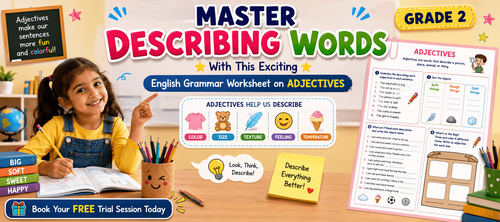

Master Describing Words With This Exciting Grade 2 English Grammar Worksheet on Adjectives
Describing words make communication more interesting and meaningful. When students say big elephant, soft pillow, sweet cake, or happy girl, they are using adjectives. Adjectives help children describe people, places, animals, and things clearly by explaining their qualities, colors, sizes, shapes, and feelings. This English grammar worksheet for Grade 2 on adjectives introduces young learners to describing words through interactive sentence exercises, sorting activities, object descriptions, and drawing tasks.
Learning adjectives becomes easier when children connect grammar with real-life objects and fun classroom activities. This worksheet helps students identify adjectives correctly and understand how they improve sentence meaning. Through observation-based and picture-friendly activities, Grade 2 learners strengthen vocabulary, reading comprehension, sentence-building skills, and confidence in communication.
Download these English grammar worksheets and practice regularly to strengthen your language skills and build a strong foundation. You can also book a free trial to get expert guidance and improve your reading, writing, and comprehension abilities. The worksheets are designed in a simple and structured way to help K–8 students learn grammar concepts easily and use them confidently in everyday communication.

What Is the Topic?
Adjectives are words that describe a person, place, animal, or thing.
This Grade 2 adjectives worksheet teaches students how to identify describing words in sentences and object descriptions. Adjectives explain qualities such as size, color, texture, shape, feeling, and appearance. Words like big, small, soft, cold, sweet, bright, and tall are examples of adjectives because they provide more information about nouns.
Students practice identifying adjectives through sentence activities, sorting exercises, object riddles, and drawing tasks. These activities help children understand how adjectives make language more detailed and expressive.
What’s in This Worksheet?
1. The worksheet begins with a simple explanation of adjectives along with easy examples.
2. Students underline adjectives in given sentences.
3. A sorting activity helps learners classify objects based on describing words like soft, rough, and cold.
4. A description-based exercise encourages students to identify objects using adjectives.
5. A creative drawing activity helps students connect adjectives with pictures and labels.
6. The worksheet improves grammar understanding, vocabulary, and observation skills.
7. Students practice adjectives related to texture, size, color, feeling, appearance, and temperature.
8. The activities support classroom learning and preparation for grammar exercises and tests.
Definitions, Examples, Techniques, and Tips
Definition
Adjectives are words that describe a person, place, animal, or thing.
Examples From the Worksheet
Big elephant
Soft pillow
Beautiful flowers
Cold ice cream
Happy child
Tall tree
Big
Small
Red
Soft
Tall
Blue
Sweet
Happy
Soft
Rough
Cold
Bright
Sharp
Gray
Long
Green
Techniques Used in the Worksheet
1. Underlining adjectives in sentences.
2. Sorting objects into adjective categories.
3. Reading descriptions carefully to identify objects.
4. Connecting describing words with real-life objects.
5. Understanding adjectives through drawing and labeling activities.
Quick Learning Tips
1. Look for words that describe nouns.
2. Notice colors, textures, sizes, and feelings carefully.
3. Read each sentence slowly to identify the adjective.
4. Practice describing objects around you.
5. Use adjectives regularly while speaking and writing.
Why Is It Important to Learn This?
Adjectives are important because they make sentences more detailed and meaningful. Without adjectives, communication would sound plain and incomplete. Describing words help students explain how something looks, feels, tastes, or appears.
For Grade 2 students, adjectives improve vocabulary, reading ability, speaking confidence, and writing skills. Learning adjectives also helps children understand stories, instructions, and classroom discussions more clearly. Regular grammar practice strengthens communication and helps students express ideas confidently.
Adjectives also encourage observation skills because students learn to notice details about objects, animals, people, and places around them.
Where Will This Knowledge Help You?
1. In school grammar worksheets and classroom activities.
2. During sentence-writing and creative writing tasks.
3. While reading stories and understanding descriptions.
4. In grammar exams and comprehension exercises.
5. During speaking activities and classroom participation.
6. While describing objects, animals, and people in daily life.
7. During drawing and labeling activities.
How to Use This Worksheet?
1. Read the explanation about adjectives carefully before starting the exercises.
2. Observe every sentence and object description carefully.
3. Attempt all exercises independently before checking answers.
4. Compare your answers carefully with the complete answer key.
5. The solutions follow the exact worksheet order, so review every answer step by step.
6. Correct mistakes carefully after reviewing your work.
7. Practice identifying adjectives in everyday conversations and reading passages.
8. Revise describing words regularly to improve grammar confidence.
Important Tips and Tricks
1. Remember that adjectives describe nouns.
2. Look for words that describe size, color, texture, shape, feeling, or appearance.
3. Read each sentence carefully before identifying the adjective.
4. In sorting activities, focus on the quality described by the object.
5. Observe clues carefully in object description exercises.
6. Practice common adjectives like big, soft, sweet, cold, and bright regularly.
7. Use adjectives while speaking and writing simple sentences daily.
8. Examiners expect students to identify and use adjectives correctly.
9. Keep spelling neat and accurate while writing answers.
10. Practice regularly to strengthen vocabulary and grammar skills.
Complete Answer Key
ADJECTIVES
Adjectives are words that describe a person, place, animal, or thing.
Big elephant
Soft pillow
Beautiful flowers
Cold ice cream
Happy child
Tall tree
Exercise 1
Underline the describing word (adjective) in each sentence.
1. big
2. small
3. red
4. soft
5. tall
6. blue
7. sweet
8. happy
Exercise 2
Soft things:
Blanket
Feather
Cotton Ball
Stuffed Toy
Wool
Rough things:
Tree Bark
Brick
Rope
Stone
Cactus
Cold things:
Cold Water
Ice Cube
Ice Cream
Snow
Chilled Milk
Exercise 3
What am I?
1. Cloud
2. Ice cream
3. Ball
4. Coin
5. Banana
6. Sun
7. Tree
8. Pencil
9. Watch
10. Elephant
Exercise4
What's in the Bag?
Imagine a bag with 4 different items. Draw and color them with clear adjectives and label each one.
Learning adjectives becomes enjoyable when students practice describing words through interactive and creative activities. This English grammar worksheet for Grade 2 on adjectives helps children improve vocabulary, grammar understanding, sentence-building skills, and communication confidence. With regular practice, students can easily identify and use adjectives correctly in both classroom activities and everyday conversations.