
Playground Story for KG Students – Reading & Questions Activity
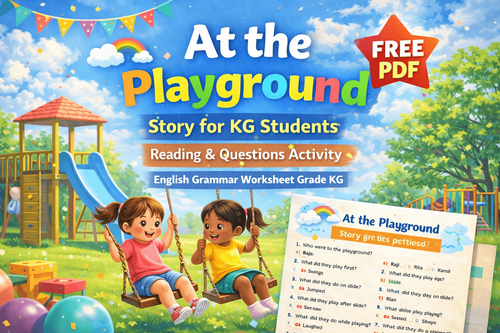

Playground Story for KG Students – Reading & Questions Activity | English Grammar Worksheet Grade KG
Playgrounds are exciting places where children laugh, play, and enjoy time with their friends. Many young learners love activities like swings, slides, and see-saws. Stories about playgrounds are fun to read because they describe familiar experiences. This English grammar worksheet for Grade KG titled “At the Playground” helps students practice reading comprehension using a short and simple story about a fun day at the playground.
What Is Reading Comprehension?
Reading comprehension means understanding what we read. When students read a short story, they learn how to find important details, recognize characters, and answer simple questions based on the text.
In Grade KG, reading comprehension activities focus on short passages from everyday life. These passages help children improve their reading ability while learning how to identify key facts from the story.
In this English grammar worksheet, students read a short story about two children who go to the playground and enjoy playing different games. After reading the passage, students answer questions that check whether they understood the story correctly.
Through this activity, students learn how to read carefully and choose the correct answer based on the information in the passage.
What’s in This Worksheet?
1. A short reading passage about a fun day at the playground.
2. Simple sentences that describe what the children did at the playground.
3. Multiple-choice questions that test understanding of the story.
4. Questions that focus on characters, actions, and events in the story.
5. An activity that encourages students to read carefully before selecting answers.
6. Practice that strengthens reading comprehension skills for Grade KG students.
This English grammar worksheet is designed to help young learners practice understanding simple stories while improving their ability to answer questions correctly.
Definitions, Examples, Techniques, and Tips
Definition of Reading Passage
A reading passage is a short piece of text that students read to understand the meaning and answer questions related to it.
Example from the Worksheet
In the story, Sita and Rani go to the playground near their house. They enjoy playing different games and spend time laughing and having fun.
Technique: Read the Story Carefully
Students should read each sentence slowly. This helps them understand what is happening in the story and who the characters are.
Technique: Look for Important Words
Words such as names, places, and actions often help students find the correct answer.
For example, the passage mentions the playground, swings, slide, and see-saw. These details help answer the questions correctly.
Technique: Think About the Order of Events
The story explains what happened first, next, and last. Paying attention to this order helps students answer questions about actions in the story.
Quick Learning Tips
• Read the passage once carefully.
• Read the questions after reading the story.
• Look back at the passage if needed.
• Choose the option that matches the information in the story.
Why Is It Important to Learn This?
Reading comprehension is an important skill for students in Grade KG. It helps children understand stories, instructions, and classroom lessons.
When students practice reading comprehension through worksheets like this English grammar worksheet, they learn how to read with attention and think about what they read.
This skill also helps students improve their vocabulary, memory, and confidence when reading aloud in class.
Learning through simple stories makes reading enjoyable and helps children develop strong language skills at an early stage.
Where Will This Knowledge Help You?
Reading comprehension practice helps students in many ways.
Students use these skills during school tests and classroom activities. When teachers ask questions about a story, students can answer correctly because they understand the text.
These skills also help children while reading storybooks, listening to teachers, and completing homework assignments.
Reading comprehension practice also encourages students to participate in classroom discussions because they understand the story better.
How to Use This Worksheet?
1. First, read the passage slowly and carefully.
2. Try to understand what is happening in the story and who the characters are.
3. Attempt the questions independently without help.
4. Look at each option and choose the correct answer.
5. After finishing, review the answers carefully.
6. Compare your answers with the solutions provided.
7. Practice similar reading passages regularly to improve comprehension skills.
The solutions in the answer key follow the exact order of the questions in the worksheet so students can easily compare their responses.
Important Tips and Tricks
1. Always read the passage before answering the questions.
2. Do not guess answers without checking the story.
3. Pay attention to names and places mentioned in the passage.
4. Look for action words such as played, laughed, slid, and clapped.
5. Read all the options before selecting the correct answer.
6. Make sure the chosen answer matches the information in the passage.
7. Practicing reading comprehension worksheets regularly helps students become confident readers.
Complete Answer Key
Reading Passage:
At the Playground
Sita and Rani went to the playground near their house. They had their summer vacation. They played on swings and others. Then they slid down the slide. They laughed and clapped. They played see-saw too. They went home after play. At home, they told their mother about the fun day and that they are going to go tomorrow as well.
Choose the correct answer.
1. Who went to playground?
✓ c) Sita, Rani
2. What did they play first?
✓ a) Swings
3. What did they do on slide?
✓ a) Slid
4. What did they play after slide?
✓ a) See-saw
5. What did they do while playing?
✓ a) Laughed
6. What did they clap with?
✓ a) Hands
7. When did they go home?
✓ d) After play
8. Who did they talk to at home?
✓ b) Mother
9. Where did they go?
✓ a) Playground
10. Who went home together?
✓ c) Sita, Rani
Reading stories about everyday activities makes learning enjoyable for young students. This Grade KG English grammar worksheet helps children practice reading carefully and understanding simple passages. By completing activities like the Playground story worksheet, students become more confident readers and improve their ability to answer questions based on what they read.