
Printable Hard Soft C and G Grammar Worksheet for Kids
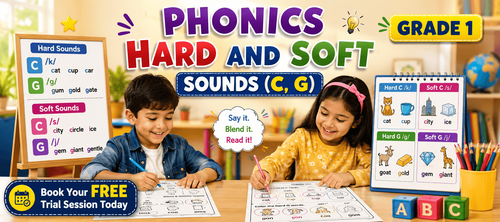

Printable English Grammar Worksheet for Grade 1 on Phonics Hard and Soft Sounds (C, G)
Learning letter sounds is an important step in building strong reading and speaking skills for young learners. In Grade 1, students begin to understand that some letters can make different sounds depending on the letters around them. This English grammar worksheet on Phonics Hard and Soft Sounds (C, G) helps children recognize how the letters C and G can produce both hard and soft sounds in different words. Through blending practice, word recognition, coloring activities, and sound-based exercises, students improve pronunciation, spelling, reading fluency, and phonics understanding in a simple and enjoyable way. The worksheet uses easy examples and engaging tasks to help students identify sound patterns confidently while practicing common English words.
Download these English grammar worksheets and practice regularly to strengthen your language skills and build a strong foundation. You can also book a free trial to get expert guidance and improve your reading, writing, and comprehension abilities. The worksheets are designed in a simple and structured way to help K–8 students learn grammar concepts easily and use them confidently in everyday communication.
What Is the Topic?
This worksheet teaches students about hard and soft sounds made by the letters C and G. In phonics, some letters can make different sounds depending on which letters follow them. Students learn how to identify these sound patterns and pronounce words correctly.
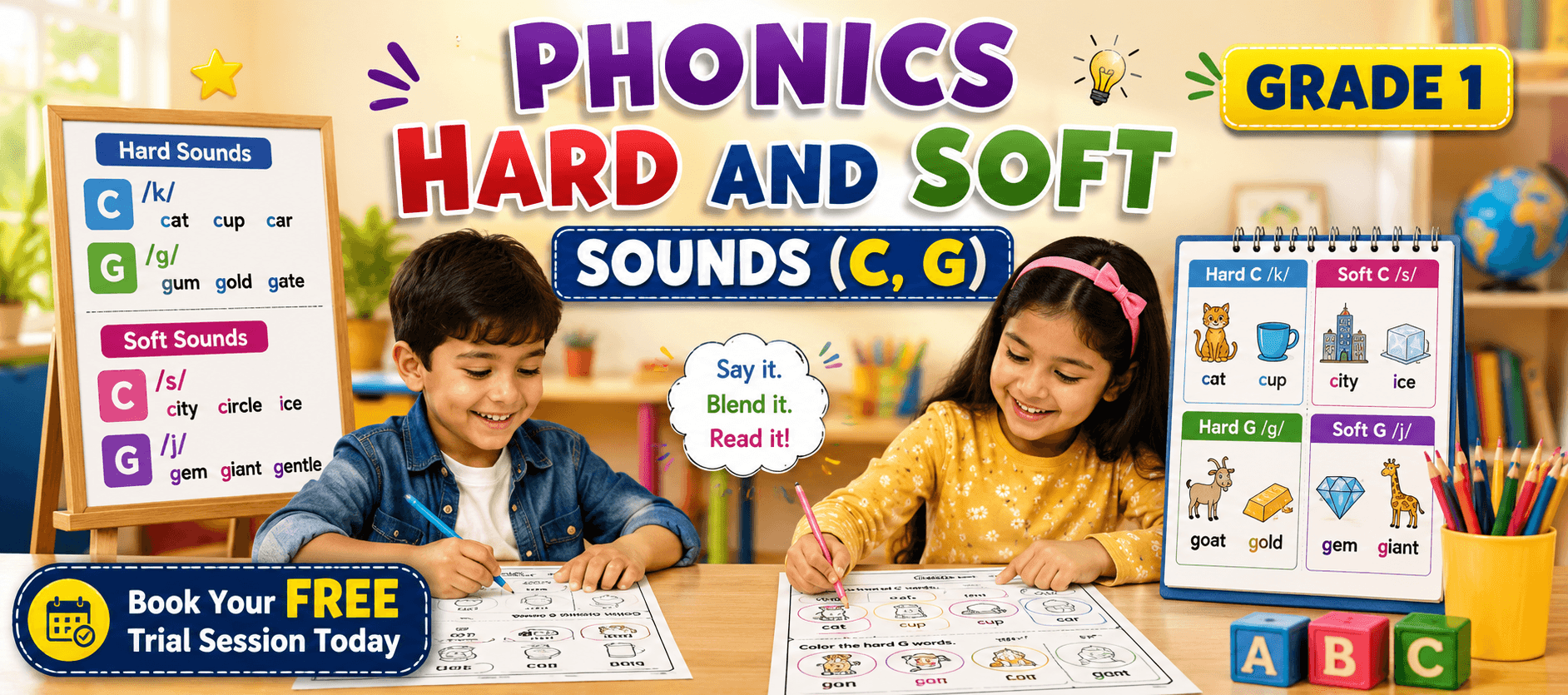
The worksheet explains that hard C sounds like /k/ and appears in words such as cat, cup, and car. It also explains that soft C sounds like /s/ and appears when C is followed by e, i, or y in words such as city, circle, and ice.
Students also learn that hard G sounds like /g/ in words such as gum, gold, and gate, while soft G sounds like /j/ in words such as gem, giant, and gentle.
The activities help students practice blending sounds, identifying correct words, coloring words based on sound patterns, and forming words using letters.
What’s in This Worksheet?
1. Introduction to the hard sound of C with examples and blending practice.
2. Explanation of the soft sound of C with pronunciation guidance.
3. Hard sound of G activities with blending examples.
4. Soft sound of G lessons with word practice.
5. Sound blending exercises using letters and phonics patterns.
6. Circle-the-word activities for identifying hard C sounds.
7. Word sorting exercises for soft C sounds.
8. Coloring activities for identifying hard G words.
9. Letter-joining exercises to create words with soft G sounds.
10. Pronunciation practice using simple Grade 1 vocabulary.
11. Phonics-based grammar exercises that improve reading and spelling.
Definitions, Examples, Techniques, and Tips
Hard Sound of C
Hard C sounds like /k/ — like a strong “kkk” sound.
Examples:
cat, cup, cap, can, car
Blending examples:
/c/ + /a/ + /t/ → cat
/c/ + /u/ + /p/ → cup
/c/ + /a/ + /n/ → can
Soft Sound of C
Soft C sounds like /s/ — a soft hissing “sss” sound.
It happens when C is followed by e, i, or y.
Examples:
city, circle, cereal, face, ice
Blending examples:
/si/ (soft c sound) + /ty/ → city
/f/ + /a/ + /s/ + /e/ → face
/i/ + /s/ + /e/ → ice
Hard Sound of G
When G is followed by a, o, or u, it makes a hard /g/ sound.
Examples:
gum, gap, gold, gate
Blending examples:
/g/ + /o/ + /t/ → goat
/g/ + /u/ + /m/ → gum
/g/ + /o/ + /ld/ → gold
Soft Sound of G
When G is followed by e, i, or y, it makes a soft /j/ sound.
Examples:
gem, giant, germ, gentle
Blending examples:
/j/ (soft sound of g) + /e/ + /m/ → gem
/g/ + /e/ + /rm/ → germ
Quick learning tips from the worksheet:
1. Say each sound slowly before blending the full word.
2. Listen carefully to whether the sound is hard or soft.
3. Practice reading aloud to improve pronunciation.
4. Observe the letters that come after C and G.
5. Repeat blending exercises regularly for better fluency.
Why Is It Important to Learn This?
Learning hard and soft sounds helps students read words correctly and improve pronunciation. Many English words contain letters that change sounds depending on spelling patterns, so understanding these rules helps children become more confident readers.
This topic also strengthens spelling skills because students learn how certain letter combinations affect pronunciation. By practicing hard and soft sounds, children can recognize word patterns more quickly and improve reading fluency during classroom activities.
These phonics skills also support listening, vocabulary building, and speaking confidence. Students become better at identifying sounds while reading aloud and communicating clearly.
Where Will This Knowledge Help You?
Understanding hard and soft sounds helps students in many daily learning situations.
1. Reading English words more accurately.
2. Improving pronunciation during speaking activities.
3. Completing phonics and grammar worksheets confidently.
4. Building stronger spelling skills during exams and class tests.
5. Participating actively in classroom reading sessions.
6. Recognizing sound patterns while learning new vocabulary.
7. Strengthening reading fluency and communication skills.
How to Use This Worksheet?
1. Read each sound explanation carefully before starting the exercises.
2. Practice saying the sounds aloud while blending the letters.
3. Attempt all questions independently first.
4. Look carefully at the letters following C and G before choosing answers.
5. Circle, color, and write words neatly and carefully.
6. Review your answers after completing every section.
7. Compare your work with the solutions in the exact worksheet order.
8. Correct mistakes carefully and practice difficult words again.
9. Repeat the blending exercises regularly to improve fluency.
Important Tips and Tricks
1. Remember that hard C sounds like /k/.
2. Remember that soft C sounds like /s/.
3. Soft C usually appears before e, i, or y.
4. Hard G sounds strong like /g/ in goat.
5. Soft G sounds like /j/ in gem.
6. Read every word carefully before identifying the sound.
7. Practice saying each sound aloud while solving the exercises.
8. Focus on spelling patterns to avoid mistakes.
9. During coloring and circling activities, check the sound carefully before selecting the word.
10. Neat and careful practice helps students score better in phonics activities and grammar tests.
Complete Answer Key
Exercise 1
cup
car
cake
cat
cot
cab
cut
cob
can
cap
Exercise 2
lace
city
rice
ice
face
nice
race
cent
dice
mice
Exercise 3
GAP
GOAT
GOOD
GOLD
GARDEN
GAS
GUM
GATE
GAME
Exercise4
1. germ
2. gel
3. gym
4. giant
5. page
6. huge
7. cage
8. age
9. edge
10. sage
Learning hard and soft sounds becomes easier with regular phonics practice and sound blending activities. This Grade 1 English grammar worksheet on Phonics Hard and Soft Sounds (C, G) helps students strengthen pronunciation, spelling, vocabulary, and reading confidence through engaging exercises and simple examples. By practicing these sound patterns regularly, children can become more fluent readers and confident English learners. Keep practicing the sounds aloud and continue exploring new words to build strong phonics skills every day.