
Printable Time Words Worksheet for Grade 2 Students
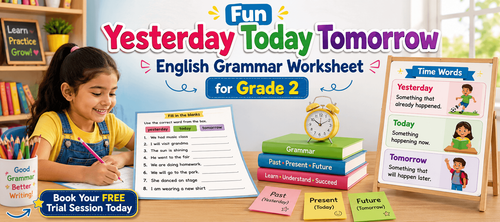

Fun Yesterday Today Tomorrow English Grammar Worksheet for Grade 2
Understanding time words is an important part of learning grammar and sentence formation in early classes. This English grammar worksheet for Grade 2 on Yesterday, Today, Tomorrow helps students learn how to talk about past, present, and future events correctly. Through simple fill in the blanks activities and everyday examples, students improve their understanding of time-related words in an easy and enjoyable way.
In Grade 2, students begin learning how to describe actions that happen at different times. Words such as yesterday, today, and tomorrow help children understand when something happened, is happening, or will happen. This worksheet introduces these important time words through familiar daily situations such as homework, visiting grandma, going to the park, and wearing a new shirt. Students learn to read each sentence carefully and identify the correct time word using context clues.
Download these English grammar worksheets and practice regularly to strengthen your language skills and build a strong foundation. You can also book a free trial to get expert guidance and improve your reading, writing, and comprehension abilities. The worksheets are designed in a simple and structured way to help K–8 students learn grammar concepts easily and use them confidently in everyday communication.
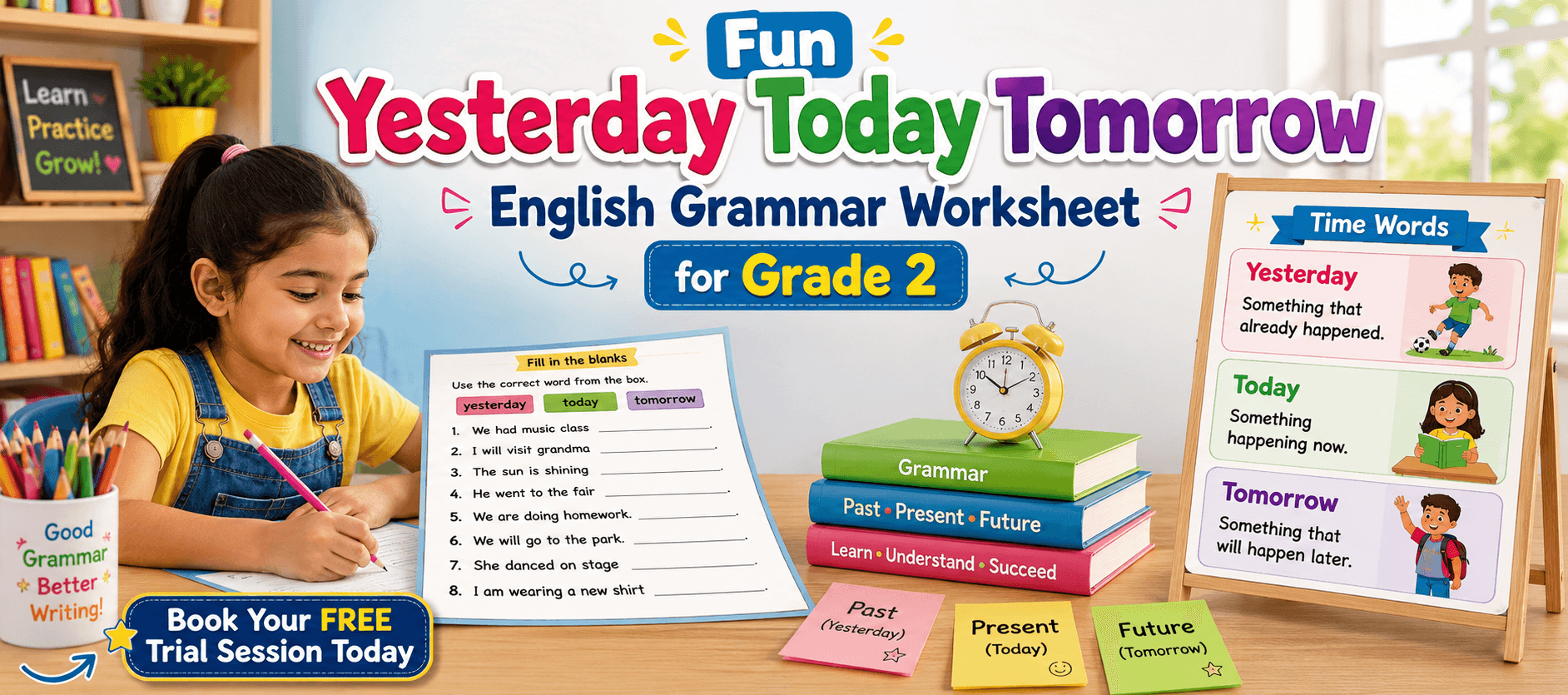
What Is Yesterday Today Tomorrow?
Yesterday, today, and tomorrow are time words that help us understand when an action happens.
Yesterday talks about something that already happened.
Today talks about something happening now.
Tomorrow talks about something that will happen later.
This worksheet helps Grade 2 students identify these time words correctly by reading sentence clues carefully. Students learn how actions change depending on whether they happened in the past, are happening in the present, or will happen in the future.
The worksheet uses simple daily life examples that are easy for young learners to understand and relate to.
What’s in This Worksheet?
1. Fill in the blanks questions based on time words
2. Practice using yesterday, today, and tomorrow correctly
3. Simple sentence-based grammar activities
4. Everyday situations that help students understand time concepts
5. Reading and thinking practice connected to sentence clues
6. Vocabulary-building activities suitable for Grade 2 students
7. Grammar exercises focused on past, present, and future understanding
8. Easy and student-friendly worksheet structure
9. Sentence comprehension practice for identifying correct time words
10. Grammar activities useful for classroom learning and exam preparation
Definitions, Examples, Techniques, and Tips
The worksheet focuses on three important time words:
yesterday
today
tomorrow
Yesterday is used for actions that already happened.
Today is used for actions happening now.
Tomorrow is used for actions that will happen later.
Students can improve grammar understanding by carefully reading each sentence and observing action clues. Words such as went and danced often show past actions, while words such as are doing and is shining show present actions. Future actions often include words such as will.
The worksheet helps students connect grammar with real-life activities and improve sentence understanding through simple practice.
Why Is It Important to Learn This?
Learning yesterday, today, and tomorrow helps students describe actions correctly based on time. These words are commonly used in daily speaking, reading, and writing activities.
Understanding time words improves sentence-building and communication skills. Students become better at explaining when events happened, are happening, or will happen.
This grammar topic is important for Grade 2 students because it strengthens comprehension and helps children organize events clearly while speaking and writing. It also builds a strong foundation for learning tenses and advanced grammar topics later.
Where Will This Knowledge Help You?
Yesterday, today, and tomorrow are useful in many school and daily communication activities.
This knowledge helps students during:
1. English grammar exams
2. Sentence writing practice
3. Reading comprehension activities
4. Daily conversations
5. Classroom participation
6. Storytelling activities
7. Homework and assignment writing
8. Understanding past, present, and future events
9. Speaking activities in class
10. Improving communication confidence
Students who understand time words can explain actions and events more clearly in both spoken and written English.
How to Use This Worksheet?
1. Read the words in the word box carefully before starting the exercise.
2. Understand the meanings of yesterday, today, and tomorrow.
3. Read each sentence completely before choosing the answer.
4. Look for action clues that show whether the event happened before, is happening now, or will happen later.
5. Attempt all questions independently first.
6. Compare your answers carefully with the complete answer key provided below.
7. Correct mistakes and revise difficult sentences regularly.
8. Follow the exact worksheet order while checking answers.
9. Practice using time words in daily conversations.
10. Revise grammar activities regularly to improve understanding and confidence.
Important Tips and Tricks
1. Words such as went and danced usually show past actions and often use yesterday.
2. Words such as is and are doing usually show present actions and often use today.
3. Sentences with will usually show future actions and often use tomorrow.
4. Read the complete sentence carefully before choosing the answer.
5. Observe action words closely to identify the correct time word.
6. Practice using yesterday, today, and tomorrow in daily speaking activities.
7. Avoid guessing without understanding the sentence meaning.
8. During exams, check whether the sentence talks about past, present, or future events.
9. Revise worksheet examples regularly for better grammar understanding.
10. Regular practice improves sentence comprehension and communication skills.
Complete Answer Key
Fill in the blanks with the correct word from the box.
yesterday
today
tomorrow
1. We had music class yesterday.
2. I will visit grandma tomorrow.
3. The sun is shining today.
4. He went to the fair yesterday.
5. We are doing homework today.
6. We will go to the park tomorrow.
7. She danced on stage yesterday.
8. I am wearing a new shirt today.
Practicing yesterday, today, and tomorrow regularly helps Grade 2 students improve grammar understanding, sentence formation, and communication skills. This English grammar worksheet on Yesterday, Today, Tomorrow uses simple daily life examples and easy sentence-based activities to help children understand time words clearly. With regular practice, students can confidently describe past, present, and future events in both speaking and writing activities.